Why it works: Mace and clove are a kitchen classic. They rank in the top 6% of all ingredient pairs, and cooks put them together in 8,400 recipes. Both carry methyleugenol, which smells clove, spice. The science ↓
Beef Tongue
Ingredients
Directions
Cook the tongue
Put the fresh tongue in enough water to cover it.
Simmer for six to seven hours.
Season and serve
Half an hour before serving, add the wine, walnut catsup, mace, and cloves.
Serve hot.
Transcribed from a scanned cookbook and modernised for today's kitchens. Where the book gave no heat or time, or said "a moderate oven", the temperatures and times here may be modern equivalents rather than the book's own figures.
Explore the science
The flavor team
The pairs that carry this dish. Each one is judged two ways: how much their aromas overlap, and how often cooks already put them together.
-
Mace + clovetop 6% of all pairsSmell alikelowCooked together8,400 recipes
Shared aroma: methyleugenol (clove, spice).
-
Walnut + clovetop 9% of all pairsSmell alikestrongCooked together1,592 recipes
Shared aroma: eucalyptol (eucalyptus, herbal).
-
Wine + clovetop 15% of all pairsSmell alikelowCooked together2,958 recipes
Shared aroma: cis-isoeugenol (clove, spicy).
-
Beef + walnuttop 16% of all pairsSmell alikemoderateCooked together460 recipes
Shared aroma: 2,4-nonadienal (fatty, green).
-
Beef + clovetop 18% of all pairsSmell alikemoderateCooked together5,462 recipes
Shared aroma: cuminaldehyde (Spicy, cumin).
Ranks compare each pair with 20,000 random ingredient pairs on CompKitchen. How we score pairs
What each ingredient does
- Beef tongue
- Is the main cut that becomes tender through long, slow simmering.
- Wine
- Adds acidity and aroma that brighten the rich, savory flavor of the meat.
- Walnut catsup
- Contributes a dark, tangy, savory depth to the sauce.
The step that matters
Simmering time. Beef tongue is a tough, collagen-rich muscle. Long, gentle simmering at low heat breaks down connective tissue into gelatin, making the meat tender. Rushing the cook or boiling hard leaves it tough and can make the meat stringy.
Swap the walnut
How well each one fits the dish's main ingredients (beef, wine, mace, clove):
- Chestnutfits about as well
- Beansfits about as well
- Walnutthe original
- Peasfits about as well
Fit is the average pairing score against beef, wine, mace, clove. Candidates are from the same food group and used in at least 100 recipes.
“What each ingredient does” and “The step that matters” were written by Claude from this recipe’s own method and reviewed in samples by CompKitchen.
More beef tongue recipes
You might also like
 Roast Beef211 recipes
 Beef Loaf175 recipes
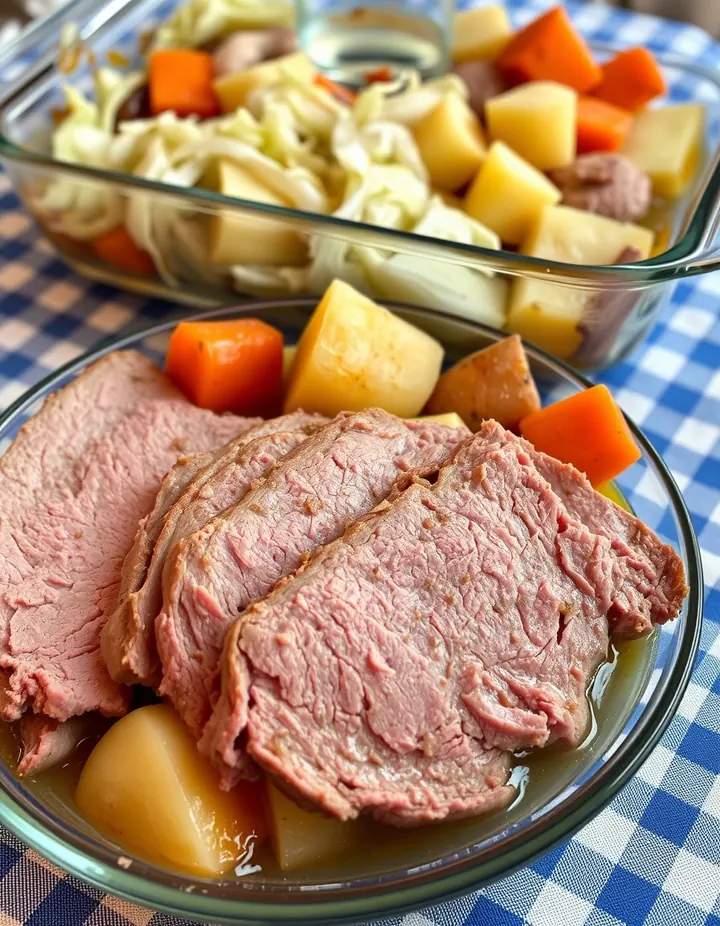 Corned Beef87 recipes
 Beef Broth67 recipes
The free Flavor Lab newsletter: one surprising pairing a week and the molecular reason it works, in 60 seconds. No spam, unsubscribe anytime.
Prefer an account? Create a free account to save pairings and unlock the full chemistry.