Why it works: Pepper and lemon match in chemistry and in kitchens. They rank in the top 3% of all ingredient pairs, and cooks put them together in 27,047 recipes. Both carry trans-2-nonenal, which smells cardboard, fatty. The science ↓
A Boned Jellied Turkey
Ingredients
Directions
Prepare the turkey
Using a sharp knife, carefully remove the flesh from the turkey bones, starting at the back of the neck.
Cut off the wings at the joints and remove the thigh and leg bones, leaving the legs whole.
Withdraw the carcass and sew up the openings with a needle and thread, except for the neck.
In a bowl, combine the corned tongue and fresh pork, season with salt, cayenne, and white pepper.
Fill the turkey with the meat mixture, turn the neck skin back, and sew it tightly.
Wrap the turkey in a cloth and tie the ends.
Cook and set
Place the wrapped turkey in a pot of warm water and boil for 2 hours.
After boiling, place the turkey on a dish with another dish on top and a weight, leaving the cloth on, and let it cool completely.
Remove the cloth and any fat or threads.
Make the jelly
Dissolve the gelatin in ½ pint of boiling water.
Add lemon juice, vinegar, and salt to the gelatin mixture.
Pour the jelly mixture onto a dish the size of the turkey and let it cool until stiff.
Dissolve another box of gelatin in 1 cup cold water and 2 cups boiling water.
Flavor the second gelatin mixture as before (with lemon juice, vinegar, and salt).
Pour small amounts of this jelly into plates.
Optionally color the jelly with burnt sugar or slices of raw beet.
Once the jelly is set, cut it into shapes for decoration.
Transcribed from a scanned cookbook and modernised for today's kitchens. Where the book gave no heat or time, or said "a moderate oven", the temperatures and times here may be modern equivalents rather than the book's own figures.
Explore the science
The flavor team
The pairs that carry this dish. Each one is judged two ways: how much their aromas overlap, and how often cooks already put them together.
-
Pepper + lemontop 3% of all pairsSmell alikestrongCooked together27,047 recipes
Shared aroma: trans-2-nonenal (cardboard, fatty).
-
Turkey + porktop 7% of all pairsSmell alikemoderateCooked together830 recipes
Shared aroma: trans-2-decenal (waxy, orange).
-
Pepper + vinegartop 14% of all pairsSmell alikemoderateCooked together27,814 recipes
Shared aroma: 4'-methylacetophenone (bitter almond).
-
Turkey + peppertop 15% of all pairsSmell alikemoderateCooked together1,636 recipes
Shared aroma: myristicin (spice, warm).
-
Vinegar + sugartop 15% of all pairsSmell alikemoderateCooked together20,806 recipes
Shared aroma: beta-damascenone (apple, rose).
Ranks compare each pair with 20,000 random ingredient pairs on CompKitchen. How we score pairs
What each ingredient does
- Gelatine
- Sets the liquid into a firm jelly that holds the sliced turkey and decorations.
- Fresh pork
- Adds rich fat and moisture to the filling, keeping the cooked meat juicy.
- Corned tongue
- Contributes savory, salty flavor and meaty texture to the filling.
The step that matters
Let the turkey cool under weight. Pressing the wrapped turkey while it cools keeps it compact and evenly shaped, so the slices hold together cleanly. Cooling it fully before unwrapping lets the filling firm up, which makes neat cutting possible.
Swap the white pepper
How well each one fits the dish's main ingredients (turkey, pork, pepper, lemon, vinegar, sugar):
- Thymefits better
- Sagefits better
- Marjoramfits better
- White pepperthe original
Fit is the average pairing score against turkey, pork, pepper, lemon, vinegar, sugar. Candidates are from the same food group and used in at least 100 recipes.
“What each ingredient does” and “The step that matters” were written by Claude from this recipe’s own method and reviewed in samples by CompKitchen.
You might also like
 Lemon Sauce236 recipes
 Pork Cake107 recipes
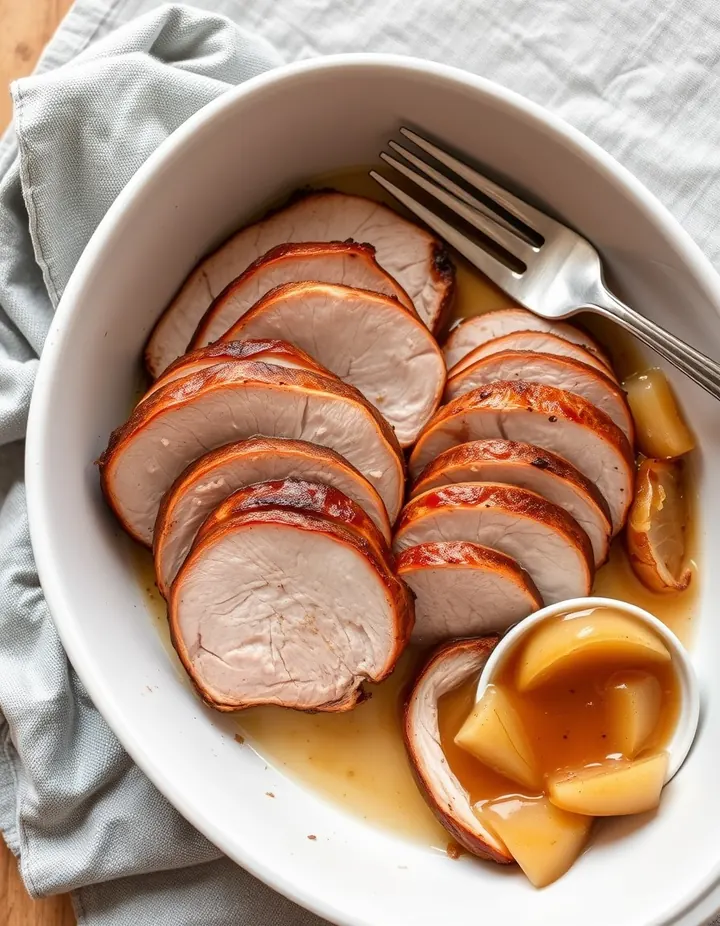 Roast Pork82 recipes
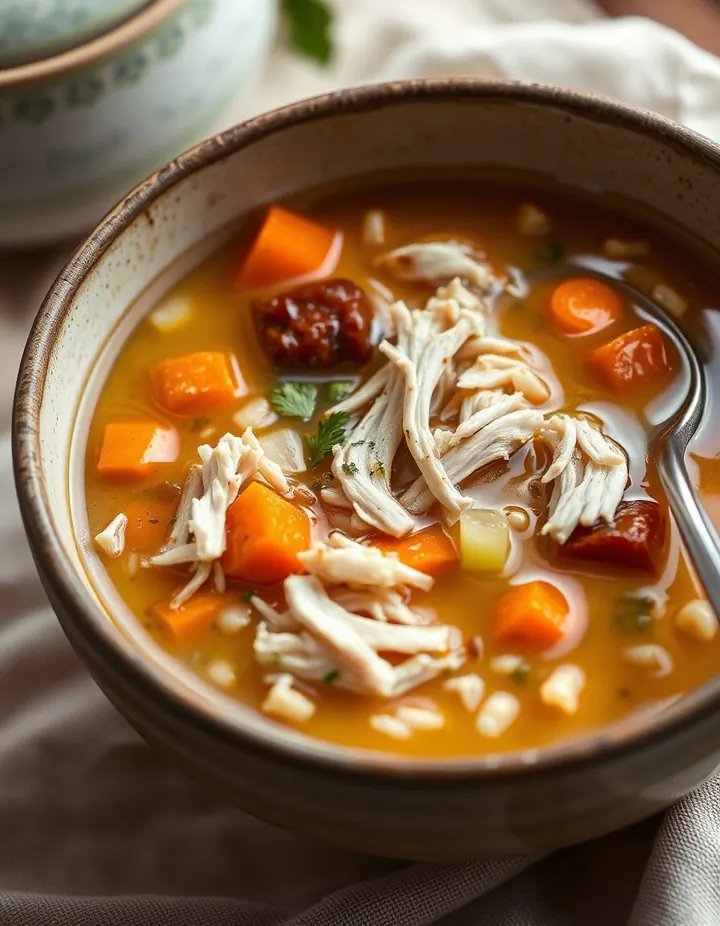 Turkey Soup71 recipes
The free Flavor Lab newsletter: one surprising pairing a week and the molecular reason it works, in 60 seconds. No spam, unsubscribe anytime.
Prefer an account? Create a free account to save pairings and unlock the full chemistry.