Why it works: Butter and flour are a kitchen classic. They rank in the top 12% of all ingredient pairs, and cooks put them together in 124,287 recipes. Both carry isobutyraldehyde, which smells malty, green. The science ↓
A Chipoulate of Rabbit
Ingredients
Directions
Prepare the rabbit
Cut the rabbits as for a la duchesse.
Blanch the rabbits in boiling water.
Transfer the rabbits to cold water.
Remove the second skin from the rabbits.
Trim ragged pieces from the rabbits.
Stew
Line a stewpan with bacon.
Add the rabbits, stock, onions, herbs, and mace to the stewpan.
Boil the bacon for 30 minutes.
Trim the bacon.
Cut the bacon into small pieces.
Add the bacon pieces to the stewpan.
Cover the stewpan with bacon and paper.
Simmer on low heat for 1 hour.
Strain the cooking liquid.
Skim off the fat.
Make the sauce and serve
Melt butter in a stewpan.
Add enough flour to thicken the sauce.
Stir in the strained liquid.
If needed, add more stock to make enough sauce.
Bring the sauce to a boil.
Add sherry.
Return the rabbit to the sauce to heat through.
Add lemon juice and sugar.
Serve the rabbit on a dish with hard-boiled egg yolks mixed in.
Pour sauce over the rabbit.
Garnish with croutons.
Transcribed from a scanned cookbook and modernised for today's kitchens. Where the book gave no heat or time, or said "a moderate oven", the temperatures and times here may be modern equivalents rather than the book's own figures.
Explore the science
The flavor team
The pairs that carry this dish. Each one is judged two ways: how much their aromas overlap, and how often cooks already put them together.
-
Butter + flourtop 12% of all pairsSmell alikelowCooked together124,287 recipes
Shared aroma: isobutyraldehyde (malty, green).
-
Rabbit + oniontop 13% of all pairsSmell alikemoderateCooked together1,292 recipes
Shared aroma: decanal (soap, orange peel).
-
Rabbit + flourtop 13% of all pairsSmell alikemoderateCooked together1,067 recipes
Shared aroma: acetaldehyde (pungent, ethereal).
-
Butter + sherrytop 14% of all pairsSmell alikemoderateCooked together3,505 recipes
Shared aroma: ethyl octanoate (fruity, wine).
-
Rabbit + lemontop 15% of all pairsSmell alikemoderateCooked together626 recipes
Shared aroma: decanal (soap, orange peel).
Butter and flour barely smell alike, yet cooks put them together in 124,287 recipes: they work on texture and structure more than aroma.
Ranks compare each pair with 20,000 random ingredient pairs on CompKitchen. How we score pairs
What each ingredient does
- Rabbits
- Provide the main meat, which becomes tender during the long, gentle simmer.
- Bacon
- Lines the pan and adds smoky, savoury fat and flavour to the stock.
- Flour
- Thickens the strained cooking liquid into a smooth, cohesive sauce.
- Sherry
- Adds aromatic depth and a sharp, fruity note to the finished sauce.
- Lemon juice
- Adds acidity that brightens the rich sauce and balances the sugar.
- Hard-boiled egg yolks
- Add richness and a creamy texture to the dish when mixed in.
The step that matters
Skim off the fat. Rendered fat floats on the stock and would make the sauce greasy and heavy if left in. Removing it before thickening gives a cleaner, silkier sauce.
Swap the mace
How well each one fits the dish's main ingredients (rabbit, onion, butter, flour, sherry, lemon, sugar):
- Thymefits better
- Parsleyfits better
- Cinnamonfits better
- Macethe original
Fit is the average pairing score against rabbit, onion, butter, flour, sherry, lemon, sugar. Candidates are from the same food group and used in at least 100 recipes.
“What each ingredient does” and “The step that matters” were written by Claude from this recipe’s own method and reviewed in samples by CompKitchen.
You might also like
 Lemon Sauce236 recipes
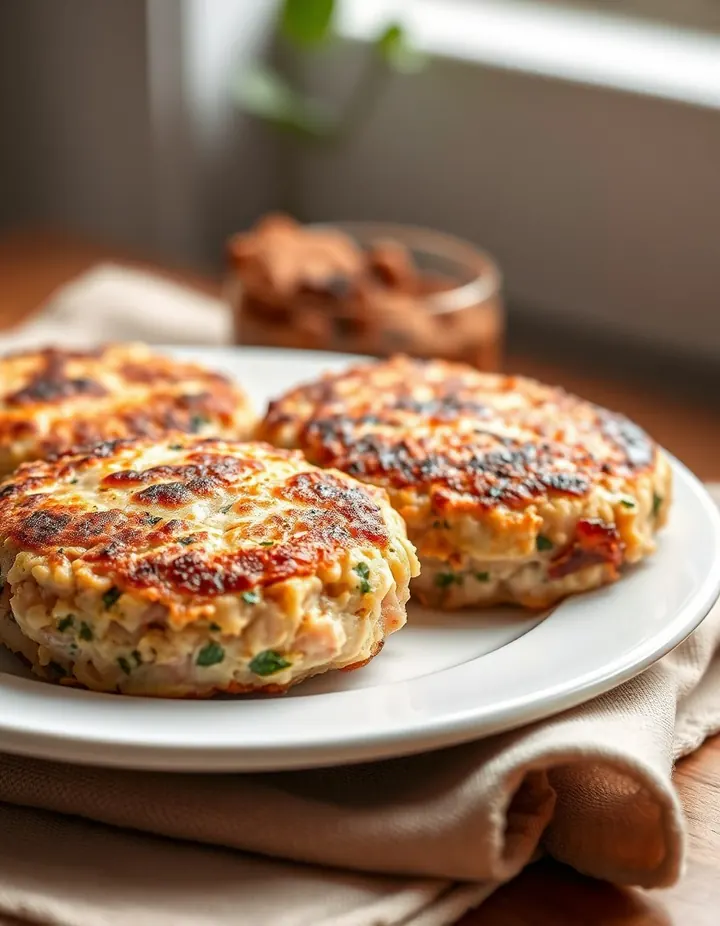 Rabbit Patties6 recipes
 Tomato Soup526 recipes
 Brown Bread461 recipes
The free Flavor Lab newsletter: one surprising pairing a week and the molecular reason it works, in 60 seconds. No spam, unsubscribe anytime.
Prefer an account? Create a free account to save pairings and unlock the full chemistry.