Why it works: Celery and carrot match in chemistry and in kitchens. They rank in the top 1% of all ingredient pairs, and cooks put them together in 10,173 recipes. Both carry myristicin, which smells spice, warm. The science ↓
Boned Turkey in Jelly
Ingredients
Directions
Prepare the turkey
Stuff the turkey legs and wings with a little chicken force and force meat.
Insert the whole tongue into the turkey, placing the large part on top of the breast.
Fill the turkey with force meat, but do not overfill to prevent bursting during cooking.
Truss the turkey for roasting.
Cook in broth
In a large saucepan, combine turkey bones, giblets, onion, celery, tomatoes, carrot, herbs, tongue trimmings, peppercorns, cloves, and water or stock.
Bring the broth to a boil.
Skim the broth.
Wrap the turkey in a buttered cloth and place it on top.
Cook for 3 to 5 hours, depending on the size of the turkey.
Remove the pan from heat and let the turkey cool in the liquid.
Set in aspic and serve
Once cool, remove the string and brush the turkey with thick glaze.
Strain the pan contents and make the liquid into aspic jelly.
Set a little jelly in a mold large enough to hold the turkey.
Place the turkey in the mold and fill with jelly.
Turn out when cold and garnish with chopped jelly, lemon, and parsley, or use anchovy butter and blocks of jelly instead.
Transcribed from a scanned cookbook and modernised for today's kitchens. Where the book gave no heat or time, or said "a moderate oven", the temperatures and times here may be modern equivalents rather than the book's own figures.
Explore the science
The flavor team
The pairs that carry this dish. Each one is judged two ways: how much their aromas overlap, and how often cooks already put them together.
-
Celery + carrottop 1% of all pairsSmell alikestrongCooked together10,173 recipes
Shared aroma: myristicin (spice, warm).
-
Celery + tomatotop 4% of all pairsSmell alikemoderateCooked together3,377 recipes
Shared aroma: 4'-methylacetophenone (bitter almond).
-
Carrot + clovetop 5% of all pairsSmell alikestrongCooked together5,873 recipes
Shared aroma: cuminaldehyde (Spicy, cumin).
-
Tomato + carrottop 6% of all pairsSmell alikestrongCooked together3,606 recipes
Shared aroma: 2-isopropyl-3-methoxypyrazine (earthy, pea).
-
Onion + carrottop 6% of all pairsSmell alikemoderateCooked together21,601 recipes
Shared aroma: 2-isopropyl-3-methoxypyrazine (earthy, pea).
Ranks compare each pair with 20,000 random ingredient pairs on CompKitchen. How we score pairs
What each ingredient does
- Turkey
- Forms the main body of the dish, and its meat sets the texture once chilled.
- Force meat
- Adds moisture and richness inside the bird, keeping the cooked meat from drying out.
- Cooked ox tongue
- Adds a dense, savoury meat that is sliced to show as a contrasting filling.
- Water or stock
- Forms the cooking liquid that gently poaches the turkey and later becomes the aspic.
- Aspic jelly
- Sets into a clear gel around the turkey, giving a firm, glossy coating when cold.
The step that matters
Cook in broth. The broth must stay below a hard boil so the turkey poaches gently and stays moist. Cooling it in the liquid also keeps the meat tender and gives clear stock for the aspic.
Swap the clove
How well each one fits the dish's main ingredients (turkey, chicken, onion, celery, tomato, carrot, butter):
- Thymefits better
- Parsleyfits better
- Garlicfits better
- Clovethe original
Fit is the average pairing score against turkey, chicken, onion, celery, tomato, carrot, butter. Candidates are from the same food group and used in at least 100 recipes.
“What each ingredient does” and “The step that matters” were written by Claude from this recipe’s own method and reviewed in samples by CompKitchen.
You might also like
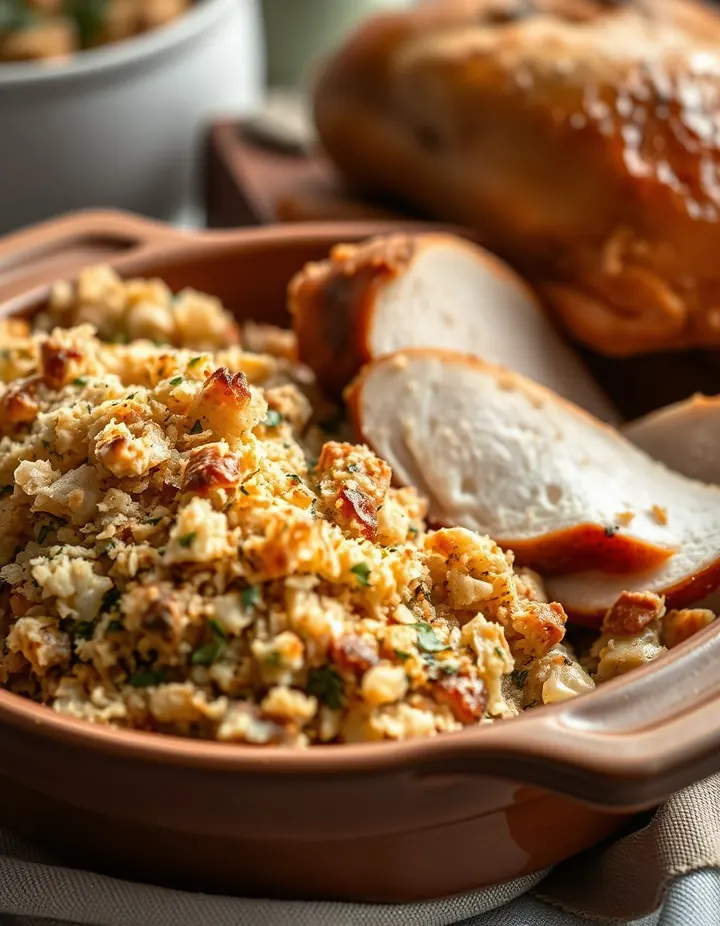 Turkey Stuffing6 recipes
 Tomato Soup526 recipes
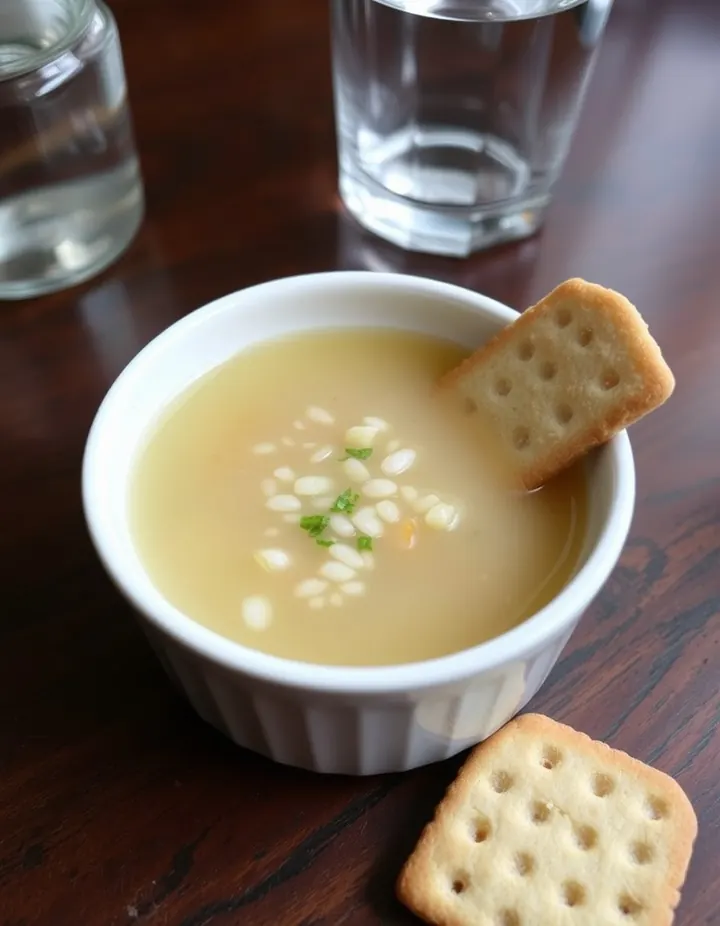 Chicken Broth257 recipes
 Lemon Sauce236 recipes
The free Flavor Lab newsletter: one surprising pairing a week and the molecular reason it works, in 60 seconds. No spam, unsubscribe anytime.
Prefer an account? Create a free account to save pairings and unlock the full chemistry.