Why it works: Beef and sugar are a kitchen classic. They rank in the top 37% of all ingredient pairs, and cooks put them together in 5,435 recipes. Both carry beta-damascenone, which smells apple, rose. The science ↓
Salting Meat
Ingredients
Directions
Brine the beef
Prepare a brine strong enough to float an egg using alum salt and saltpetre for beef.
Soak the beef in the brine for 9 days.
Dry and cure
Hang the beef in a dry place for 2-3 days after soaking for smoking.
Pack hams in a cask with layers of salt and saltpetre, skin side down.
Let the hams cure for 6 weeks, then smoke with hickory sawdust for 4-5 days.
Transcribed from a scanned cookbook and modernised for today's kitchens. Where the book gave no heat or time, or said "a moderate oven", the temperatures and times here may be modern equivalents rather than the book's own figures.
Explore the science
The flavor team
The pairs that carry this dish. Each one is judged two ways: how much their aromas overlap, and how often cooks already put them together.
-
Beef + sugartop 37% of all pairsSmell alikelowCooked together5,435 recipes
Shared aroma: beta-damascenone (apple, rose).
Ranks compare each pair with 20,000 random ingredient pairs on CompKitchen. How we score pairs
What each ingredient does
- Beef
- Is the meat being preserved, and its proteins firm up as it cures.
- Alum salt
- Adds a firm, salty curing agent that helps preserve the meat.
- Saltpetre
- Supplies nitrate that helps preserve the meat and gives it a pink cured colour.
- Fine salt
- Draws moisture out of the meat and seasons it during curing.
- Brown sugar
- Adds sweetness and balances the saltiness of the cure.
The step that matters
Keep the brine strong enough to float an egg. Salt concentration must be high enough to preserve the meat and penetrate it evenly. A weak brine lets spoilage bacteria grow and leaves parts of the beef unprotected.
“What each ingredient does” and “The step that matters” were written by Claude from this recipe’s own method and reviewed in samples by CompKitchen.
You might also like
 Roast Beef211 recipes
 Beef Loaf175 recipes
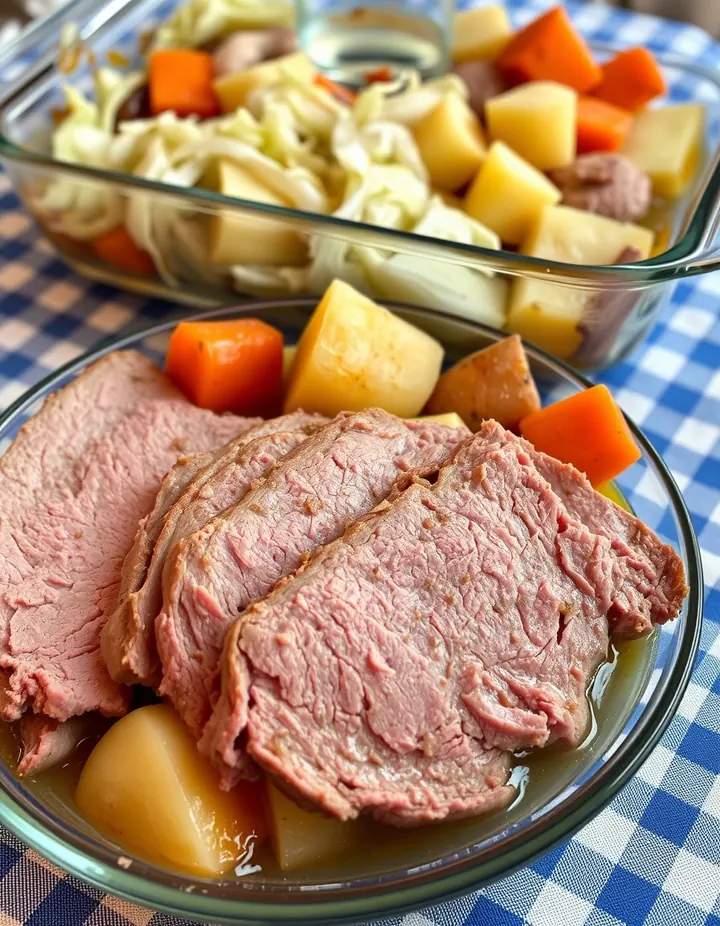 Corned Beef87 recipes
 Beef Broth67 recipes
The free Flavor Lab newsletter: one surprising pairing a week and the molecular reason it works, in 60 seconds. No spam, unsubscribe anytime.
Prefer an account? Create a free account to save pairings and unlock the full chemistry.