Why it works: Butter and cream are a kitchen classic. They rank in the top 8% of all ingredient pairs, and cooks put them together in 41,516 recipes. Both carry delta-dodecalactone, which smells sweet, creamy. The science ↓
Broiled Chicken
Ingredients
Directions
The book says “a hot oven”. The 400°F in the steps is the modern equivalent, not the book's own figure.
Prepare and broil
Split the chicken through the back and spread it flat.
If very tender, place it in a wire broiler with the inside facing the fire over moderate heat.
Broil for 20 minutes without turning.
Turn the chicken and sprinkle with ½ teaspoon of salt.
Broil until the skin is a delicate, even brown, then rub the skin with butter.
Serve the chicken.
Boil and brown
If the chicken seems tough, place it in a skillet with a small wire frame and fill the skillet about halfway with water.
Cover the skillet and boil until nearly done, about 30 minutes.
Remove the chicken and sprinkle the inside with salt.
Rub the skin with butter.
Place the chicken in the wire broiler, set it up on the grate in a hot oven (400°F / 200°C) over a tin plate, and brown quickly with the skin side up.
Make the sauce and serve
In the skillet, add ⅓ cup of cream or milk to the liquid and use butter to taste.
Add ½ teaspoon of salt and boil.
Stir in 1 teaspoon of flour and boil for 3 minutes.
Pour the sauce onto a hot platter, place the chicken on top, and serve.
Transcribed from a scanned cookbook and modernised for today's kitchens. Where the book gave no heat or time, or said "a moderate oven", the temperatures and times here may be modern equivalents rather than the book's own figures.
Explore the science
The flavor team
The pairs that carry this dish. Each one is judged two ways: how much their aromas overlap, and how often cooks already put them together.
-
Butter + creamtop 8% of all pairsSmell alikemoderateCooked together41,516 recipes
Shared aroma: delta-dodecalactone (sweet, creamy).
-
Cream + saucetop 9% of all pairsSmell alikemoderateCooked together4,787 recipes
Shared aroma: ethanol (alcoholic, ethereal).
-
Butter + flourtop 12% of all pairsSmell alikelowCooked together124,287 recipes
Shared aroma: isobutyraldehyde (malty, green).
-
Butter + saucetop 15% of all pairsSmell alikelowCooked together15,338 recipes
Shared aroma: ethanol (alcoholic, ethereal).
-
Chicken + buttertop 15% of all pairsSmell alikemoderateCooked together13,902 recipes
Shared aroma: 2-furfurylthiol (coffee, roasted).
Butter and flour barely smell alike, yet cooks put them together in 124,287 recipes: they work on texture and structure more than aroma.
Ranks compare each pair with 20,000 random ingredient pairs on CompKitchen. How we score pairs
What each ingredient does
- Chicken
- Provides the main protein; broiling and simmering set its texture and browned skin.
- Cream or milk
- Adds richness and body to the pan sauce as it simmers.
- Flour
- Thickens the sauce as it boils.
- Butter
- Adds fat and flavor and helps the skin brown.
The step that matters
Boiling the sauce after adding flour. Flour must be cooked while boiling to lose its raw starchy taste and to thicken smoothly; stirring it in evenly prevents lumps.
“What each ingredient does” and “The step that matters” were written by Claude from this recipe’s own method and reviewed in samples by CompKitchen.
More broiled chicken recipes
You might also like
 Chicken Broth257 recipes
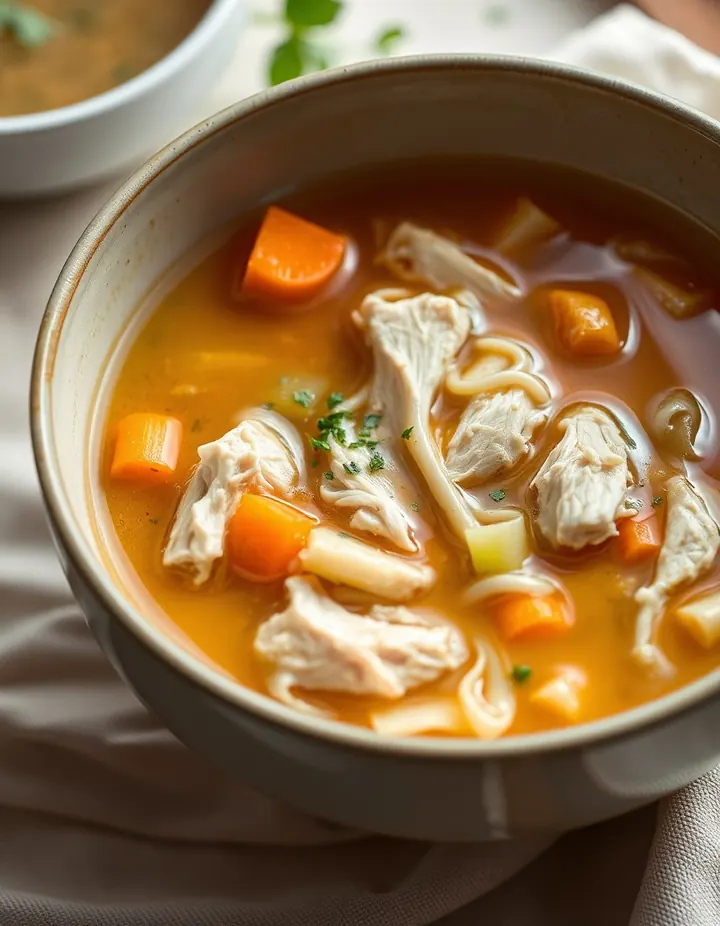 Chicken Soup156 recipes
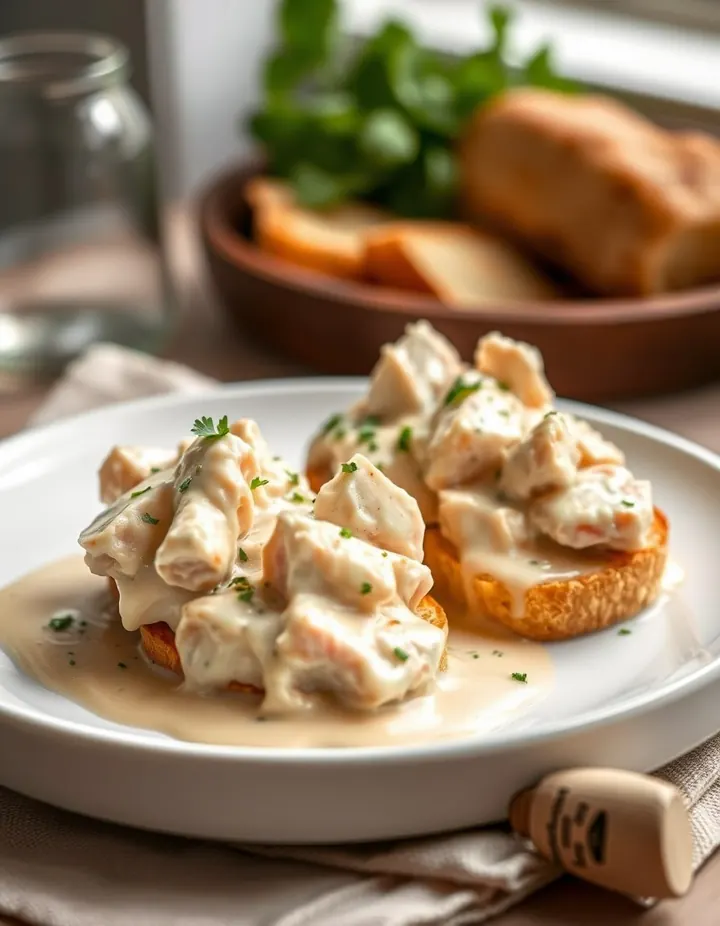 Creamed Chicken89 recipes
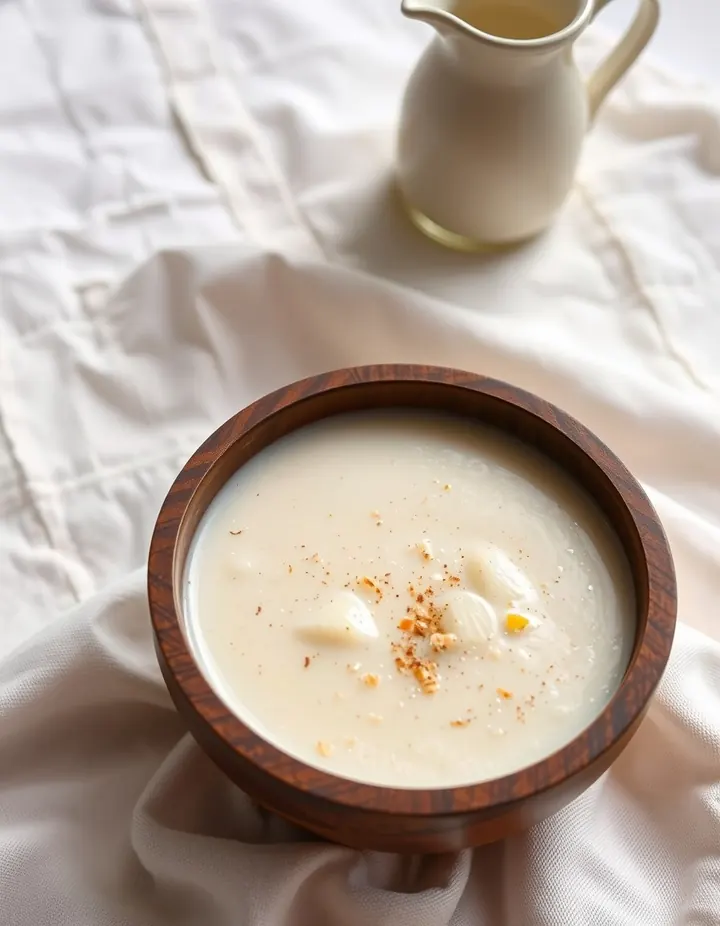 Chicken Panada75 recipes
The free Flavor Lab newsletter: one surprising pairing a week and the molecular reason it works, in 60 seconds. No spam, unsubscribe anytime.
Prefer an account? Create a free account to save pairings and unlock the full chemistry.