Why it works: Nutmeg and clove match in chemistry and in kitchens. They rank in the top 1% of all ingredient pairs, and cooks put them together in 8,686 recipes. Both carry estragole, which smells anise, licorice. The science ↓
Pickles
Ingredients
Directions
Salt and cure
Layer fresh cucumbers in a cask, covering each layer with coarse sea salt.
When nearly full, cover with salt, tuck a cloth around the edges, and place a board and weight on top.
Cover the cask closely; the pickles will be ready in 2-3 years.
Wash cucumbers immediately after picking to ensure preservation.
Remove the weight and board, lift the cloth, and wash off any scum.
Soak cucumbers in a vessel with cold water for 3 days, changing the water daily.
Scald and pickle
In a porcelain kettle, fill halfway with vinegar (dilute with water if strong) and add cucumbers, starting with the largest.
Add a lump of alum and bring to a boil, stirring gently to avoid cutting the cucumbers.
After boiling for 1 minute, transfer cucumbers to a stone jar and repeat until all are scalded.
Pour cold vinegar over the cucumbers.
If too salty after 2-3 days, drain the vinegar and replace it with fresh, adding 1 pint of brown sugar, red pepper pods, a few cloves, and pieces of horseradish.
Transcribed from a scanned cookbook and modernised for today's kitchens. Where the book gave no heat or time, or said "a moderate oven", the temperatures and times here may be modern equivalents rather than the book's own figures.
Explore the science
The flavor team
The pairs that carry this dish. Each one is judged two ways: how much their aromas overlap, and how often cooks already put them together.
-
Nutmeg + clovetop 1% of all pairsSmell alikestrongCooked together8,686 recipes
Shared aroma: estragole (anise, licorice).
-
Cucumber + horseradishtop 2% of all pairsSmell alikestrongCooked together640 recipes
Shared aroma: 2-isopropyl-3-methoxypyrazine (earthy, pea).
-
Pepper + clovetop 5% of all pairsSmell alikestrongCooked together17,451 recipes
Shared aroma: ethyl octanoate (fruity, wine).
-
Clove + horseradishtop 7% of all pairsSmell alikestrongCooked together1,245 recipes
Shared aroma: coumarin (sweet, hay).
-
Nutmeg + peppertop 7% of all pairsSmell alikestrongCooked together13,015 recipes
Shared aroma: 4'-methylacetophenone (bitter almond).
Ranks compare each pair with 20,000 random ingredient pairs on CompKitchen. How we score pairs
What each ingredient does
- Fresh cucumbers
- Form the pickle itself; salt curing and vinegar change their texture and flavor.
- Coarse sea salt
- Draws water out of the cucumbers and preserves them during the long curing period.
- Vinegar
- Acidity that preserves the cucumbers and gives the pickle its sharp, sour taste.
- Alum
- Helps cucumbers stay firm and crisp when they are scalded in hot liquid.
- Brown sugar
- Adds sweetness to balance the sharpness of the vinegar.
The step that matters
Stirring gently during the alum boil. Cucumbers are soft-walled and break apart easily under vigorous stirring, which releases pulp and makes the pickles mushy. Gentle movement keeps them whole and firm.
Swap the cucumber
How well each one fits the dish's main ingredients (vinegar, nutmeg, sugar, pepper, clove, horseradish):
- Mustardfits better
- Shallotfits better
- Beetrootfits better
- Cucumberthe original
Fit is the average pairing score against vinegar, nutmeg, sugar, pepper, clove, horseradish. Candidates are from the same food group and used in at least 100 recipes.
“What each ingredient does” and “The step that matters” were written by Claude from this recipe’s own method and reviewed in samples by CompKitchen.
More pickled cucumbers recipes
You might also like
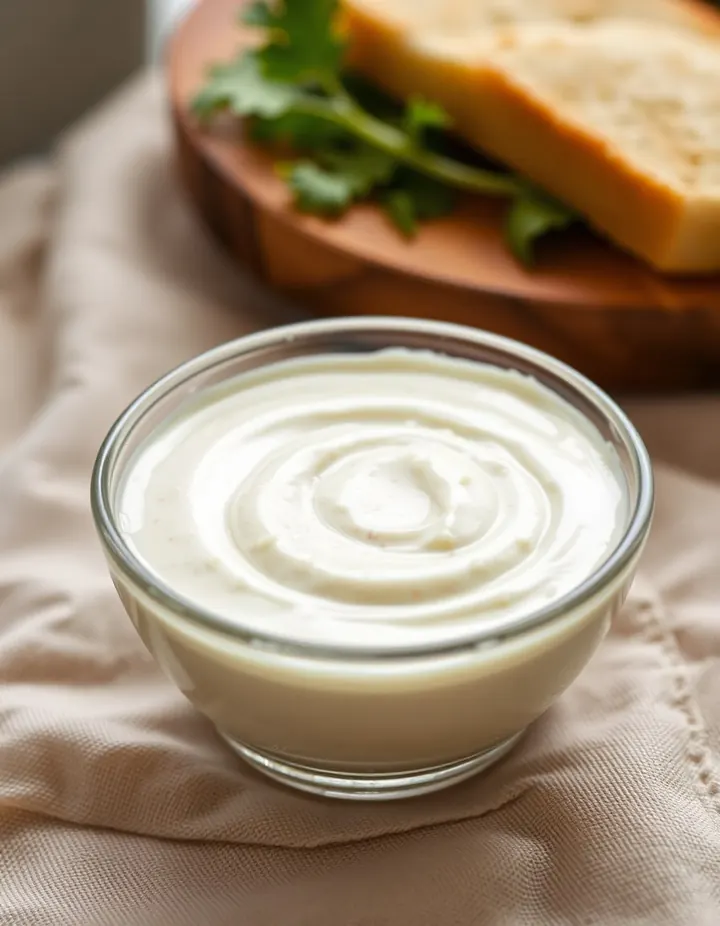 Horseradish Sauce17 recipes
 Tomato Soup526 recipes
 Brown Bread461 recipes
 Mutton Broth292 recipes
The free Flavor Lab newsletter: one surprising pairing a week and the molecular reason it works, in 60 seconds. No spam, unsubscribe anytime.
Prefer an account? Create a free account to save pairings and unlock the full chemistry.