Why it works: Beef and pepper are a kitchen classic. They rank in the top 10% of all ingredient pairs, and cooks put them together in 18,971 recipes. Both carry 2-isopropyl-3-methoxypyrazine, which smells earthy, pea. The science ↓
Roast Meat
Ingredients
Directions
The book says “a very hot oven”. The 400°F (200°C) in the steps is the modern equivalent, not the book's own figure.
Prepare
Preheat the oven to 400°F (200°C).
Place a meat rack in a baking pan.
Wipe the meat with a wet towel.
Lay the meat on the rack.
Sprinkle the meat on all sides with salt, pepper, and flour.
Ensure the bottom of the pan is well covered with flour.
Roast the meat in the hot oven for a few minutes until the flour turns dark brown.
Add enough hot water to cover the bottom of the pan.
Close the oven door.
Roast and brown
Brown the meat on one side.
Baste the meat with pan gravy.
Dredge the meat with flour.
Turn the meat over.
Baste the meat with gravy.
Dredge the meat with salt, pepper, and flour.
Brown the other side of the meat.
Cook the beef for 40 minutes for rare, 60 minutes for well done; adjust times for mutton, lamb, veal, and pork as needed.
Transfer the meat to a large hot dish.
Make the gravy and serve
Skim fat from the gravy.
Add ½ cup boiling water to the gravy if needed.
Mix 1 teaspoon flour with cold water to make a thin paste. Stir the paste into the boiling gravy.
Season the gravy to taste.
Strain the gravy.
Serve the roast meat with the gravy.
Transcribed from a scanned cookbook and modernised for today's kitchens. Where the book gave no heat or time, or said "a moderate oven", the temperatures and times here may be modern equivalents rather than the book's own figures.
Explore the science
The flavor team
The pairs that carry this dish. Each one is judged two ways: how much their aromas overlap, and how often cooks already put them together.
-
Beef + peppertop 10% of all pairsSmell alikemoderateCooked together18,971 recipes
Shared aroma: 2-isopropyl-3-methoxypyrazine (earthy, pea).
-
Meat + beeftop 12% of all pairsSmell alikemoderateCooked together2,533 recipes
Shared aroma: 1-octen-3-one (mushroom, metallic).
-
Pepper + flourtop 19% of all pairsSmell alikemoderateCooked together50,459 recipes
Shared aroma: isobutyraldehyde (malty, green).
-
Meat + peppertop 19% of all pairsSmell alikelowCooked together8,777 recipes
Shared aroma: 2,4-decadienal (seaweed).
-
Beef + flourtop 25% of all pairsSmell alikelowCooked together10,677 recipes
Shared aroma: isobutyraldehyde (malty, green).
Beef and flour barely smell alike, yet cooks put them together in 10,677 recipes: they work on texture and structure more than aroma.
Ranks compare each pair with 20,000 random ingredient pairs on CompKitchen. How we score pairs
What each ingredient does
- Meat
- Forms the main body of the dish; its fat and connective tissue add moisture and flavor as it cooks.
- Flour
- Dries and browns on the surface, building color and flavor, and later thickens the pan gravy.
The step that matters
Roasting the flour until dark brown. Flour that is browned in the hot fat develops deep color and roasted flavor for the gravy. Pulling it too early leaves the gravy pale and tasting raw, while burning it makes it bitter.
“What each ingredient does” and “The step that matters” were written by Claude from this recipe’s own method and reviewed in samples by CompKitchen.
More roast meat recipes
You might also like
 Roast Beef211 recipes
 Beef Loaf175 recipes
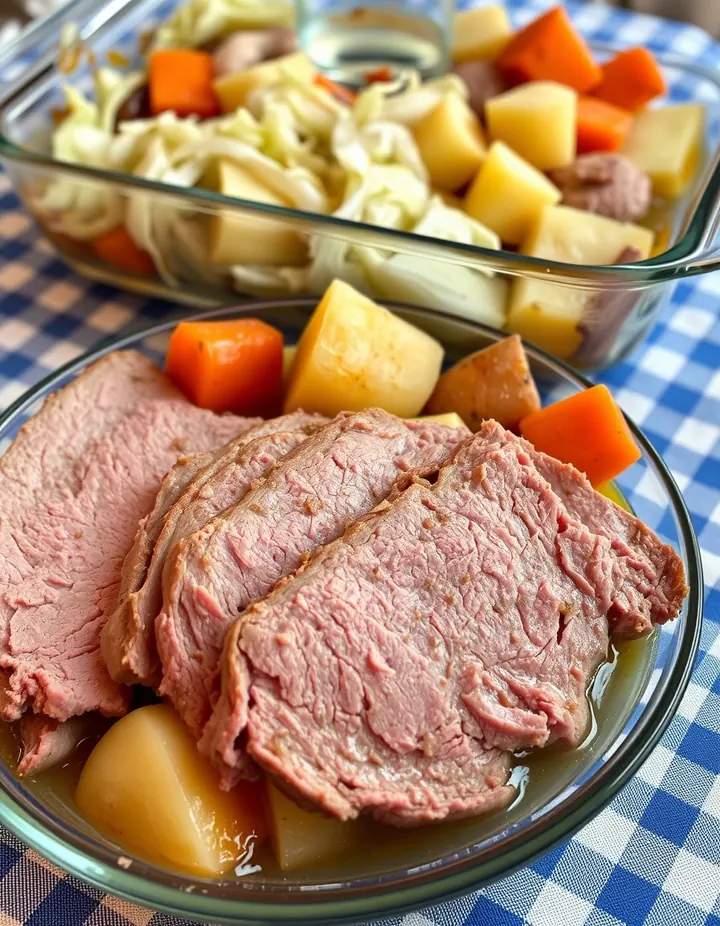 Corned Beef87 recipes
 Beef Broth67 recipes
The free Flavor Lab newsletter: one surprising pairing a week and the molecular reason it works, in 60 seconds. No spam, unsubscribe anytime.
Prefer an account? Create a free account to save pairings and unlock the full chemistry.