Why it works: Thyme and clove match in chemistry and in kitchens. They rank in the top 2% of all ingredient pairs, and cooks put them together in 4,108 recipes. Both carry cuminaldehyde, which smells Spicy, cumin. The science ↓
Fricandeau De Veau
Ingredients
Directions
The book gives no oven temperature. The 400°F (200°C) in the steps was added when the recipe was transcribed, as a starting point.
Prepare the veal
Remove all skin and sinew from the veal and pound it with a rolling pin until tender.
Shape the meat into a neat round loaf and lard the top side.
Place the larded meat on a perforated pie dish that fits into a braising pot.
Make the braise
In a pan, fry the onion and carrot in butter until softened.
Add the fried onion and carrot to the pot.
Add the bay leaf, thyme, and clove to the pot.
Make a roux from flour and butter, then blend with boiling water until smooth.
Add the roux to the pot.
Pour in the stock and sherry.
Cover the pot tightly.
Bring the liquid to a boil over high heat.
Reduce the heat to a gentle simmer.
Cook for about 20 minutes per pound.
Thirty minutes before serving, uncover the pot.
Place the pot in a 400°F (200°C) oven.
Baste the meat frequently until a rich glaze forms.
Finish and serve
Once cooked, transfer the meat to a hot dish.
Add a little broth to the pot.
Boil down the gravy for a few minutes.
Strain and skim the gravy.
Serve the gravy in a sauceboat.
Transcribed from a scanned cookbook and modernised for today's kitchens. Where the book gave no heat or time, or said "a moderate oven", the temperatures and times here may be modern equivalents rather than the book's own figures.
Explore the science
The flavor team
The pairs that carry this dish. Each one is judged two ways: how much their aromas overlap, and how often cooks already put them together.
-
Thyme + clovetop 2% of all pairsSmell alikestrongCooked together4,108 recipes
Shared aroma: cuminaldehyde (Spicy, cumin).
-
Carrot + thymetop 3% of all pairsSmell alikestrongCooked together4,563 recipes
Shared aroma: cuminaldehyde (Spicy, cumin).
-
Carrot + clovetop 5% of all pairsSmell alikestrongCooked together5,873 recipes
Shared aroma: cuminaldehyde (Spicy, cumin).
-
Onion + carrottop 6% of all pairsSmell alikemoderateCooked together21,601 recipes
Shared aroma: 2-isopropyl-3-methoxypyrazine (earthy, pea).
-
Onion + thymetop 7% of all pairsSmell alikemoderateCooked together11,171 recipes
Shared aroma: coumarin (sweet, hay).
Ranks compare each pair with 20,000 random ingredient pairs on CompKitchen. How we score pairs
What each ingredient does
- Veal
- Lean meat that becomes tender and sliceable after pounding and slow braising.
- Butter
- Adds richness and helps the onion and carrot soften and brown gently.
- Flour
- Thickens the braising liquid into a smooth, lightly bodied gravy.
- Strong stock
- Forms the braising liquid that gently cooks the meat and becomes the gravy.
- Sherry
- Adds acidity and aromatic depth to the braising liquid and gravy.
- Onion
- Builds savory sweetness and aroma as the base of the braising liquid.
The step that matters
Keeping the braise at a gentle simmer. A hard boil toughens the proteins in lean veal and can cloud the gravy. A gentle simmer lets collagen slowly soften, keeping the meat tender and the liquid clear.
Swap the onion
How well each one fits the dish's main ingredients (veal, carrot, butter, thyme, clove, flour, sherry):
- Leekfits better
- Parsnipfits better
- Shallotfits better
- Onionthe original
Fit is the average pairing score against veal, carrot, butter, thyme, clove, flour, sherry. Candidates are from the same food group and used in at least 100 recipes.
“What each ingredient does” and “The step that matters” were written by Claude from this recipe’s own method and reviewed in samples by CompKitchen.
You might also like
 Carrot Soup134 recipes
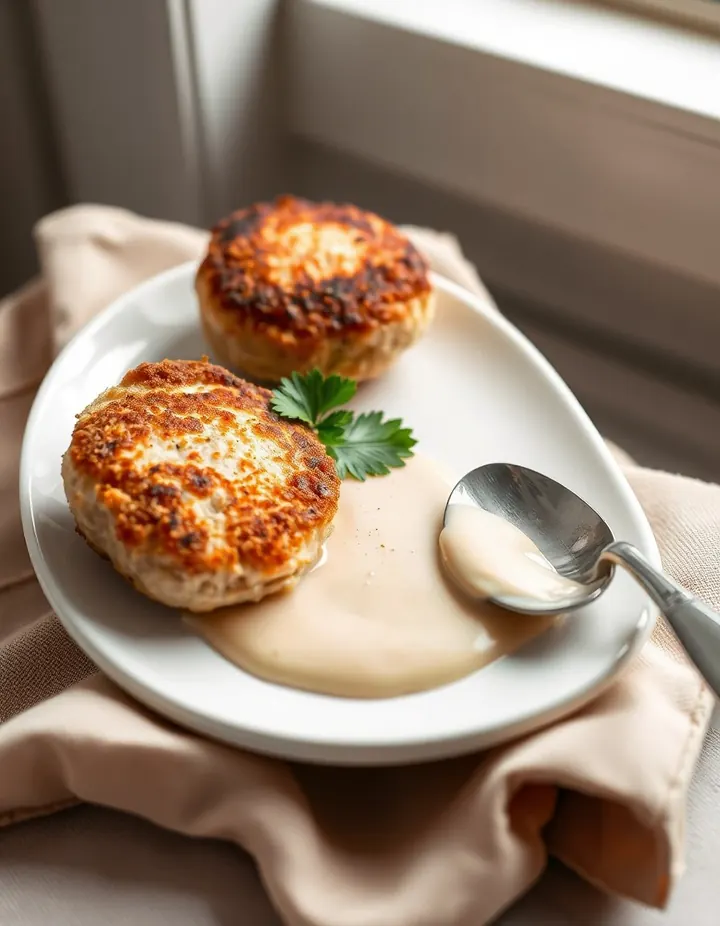 Veal Patties50 recipes
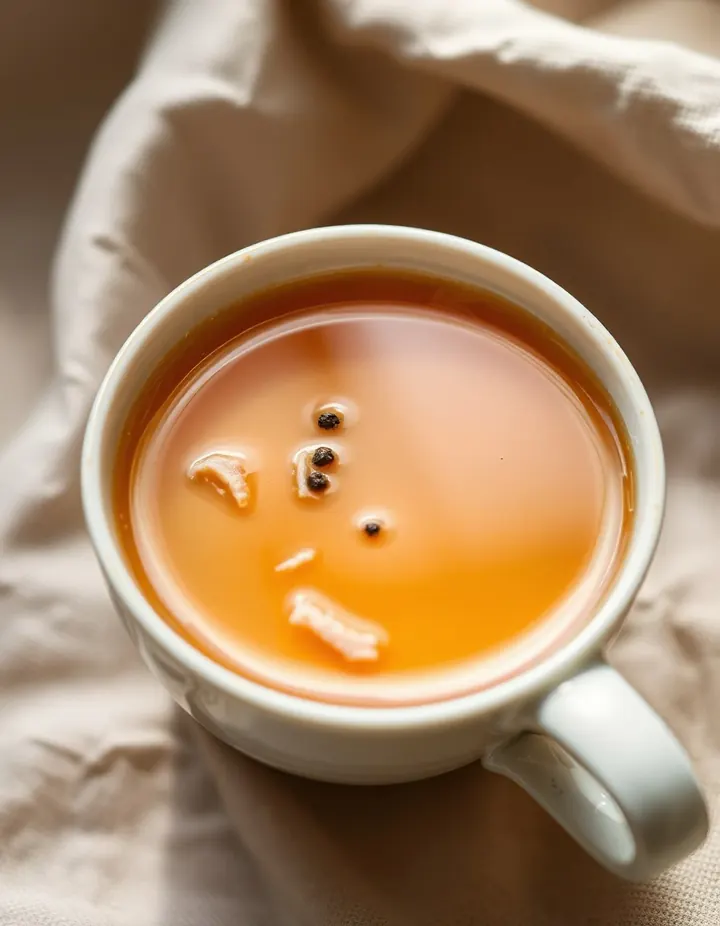 Beef, Mutton, or Veal Broth6 recipes
 Tomato Soup526 recipes
The free Flavor Lab newsletter: one surprising pairing a week and the molecular reason it works, in 60 seconds. No spam, unsubscribe anytime.
Prefer an account? Create a free account to save pairings and unlock the full chemistry.