Why it works: Pepper and nutmeg match in chemistry and in kitchens. They rank in the top 7% of all ingredient pairs, and cooks put them together in 13,015 recipes. Both carry 4'-methylacetophenone, which smells bitter almond. The science ↓
Soyers Receipt for Quenelles
Ingredients
Directions
Prepare the veal
Cut the veal into long, thin slices and scrape with a knife until only fiber remains.
Put the veal into a mortar and pound for 10 minutes until it becomes a puree.
Pass the mixture through a wire sieve.
Reserve any leftover pieces for soup.
Make the farce
Skin, shred, and chop the suet very fine.
Pound the suet in the mortar.
Add the panada to the suet and pound them together well.
Incorporate the veal and seasonings, mixing thoroughly.
Add the eggs one at a time, continuing to pound the mixture.
Take a small piece and poach it in salted boiling water; if it is delicate, firm, and flavorful, it is ready.
If the quenelle is too soft, add another egg yolk.
If the quenelle is too firm, add a little cream or stock.
For variation, you can substitute a small amount of ham or add 1 or 2 mushrooms.
Transcribed from a scanned cookbook and modernised for today's kitchens. Where the book gave no heat or time, or said "a moderate oven", the temperatures and times here may be modern equivalents rather than the book's own figures.
Explore the science
The flavor team
The pairs that carry this dish. Each one is judged two ways: how much their aromas overlap, and how often cooks already put them together.
-
Pepper + nutmegtop 7% of all pairsSmell alikestrongCooked together13,015 recipes
Shared aroma: 4'-methylacetophenone (bitter almond).
-
Beef + peppertop 10% of all pairsSmell alikemoderateCooked together18,971 recipes
Shared aroma: 2-isopropyl-3-methoxypyrazine (earthy, pea).
-
Bread + milktop 11% of all pairsSmell alikemoderateCooked together11,466 recipes
Shared aroma: 2-undecenal (sweet).
-
Veal + beeftop 11% of all pairsSmell alikemoderateCooked together3,784 recipes
Shared aroma: 2,6-nonadienal (cucumber, green).
-
Milk + beeftop 12% of all pairsSmell alikemoderateCooked together3,759 recipes
Shared aroma: 1-hexanal (fruit).
Ranks compare each pair with 20,000 random ingredient pairs on CompKitchen. How we score pairs
What each ingredient does
- Veal fillet
- Forms the main body of the quenelle, giving it a fine, tender texture once pureed.
- Eggs
- Bind the mixture and help it set firm when poached.
- Panada
- Adds moisture and softness, keeping the quenelles light and tender.
- Beef suet
- Adds fat that keeps the quenelles moist and rich in flavor.
The step that matters
Testing the quenelle by poaching. A small test poached in salted water shows whether the texture is right before the whole batch is shaped. Too soft means the mixture needs more binding from egg yolk; too firm means it needs more liquid from cream or stock, so the test prevents a failed batch.
Swap the nutmeg
How well each one fits the dish's main ingredients (veal, egg, bread, milk, beef, pepper):
- Nutmegthe original
- Parsleyfits about as well
- Marjoramfits about as well
- Celeryfits less well
Fit is the average pairing score against veal, egg, bread, milk, beef, pepper. Candidates are from the same food group and used in at least 100 recipes.
“What each ingredient does” and “The step that matters” were written by Claude from this recipe’s own method and reviewed in samples by CompKitchen.
More quenelles recipes
You might also like
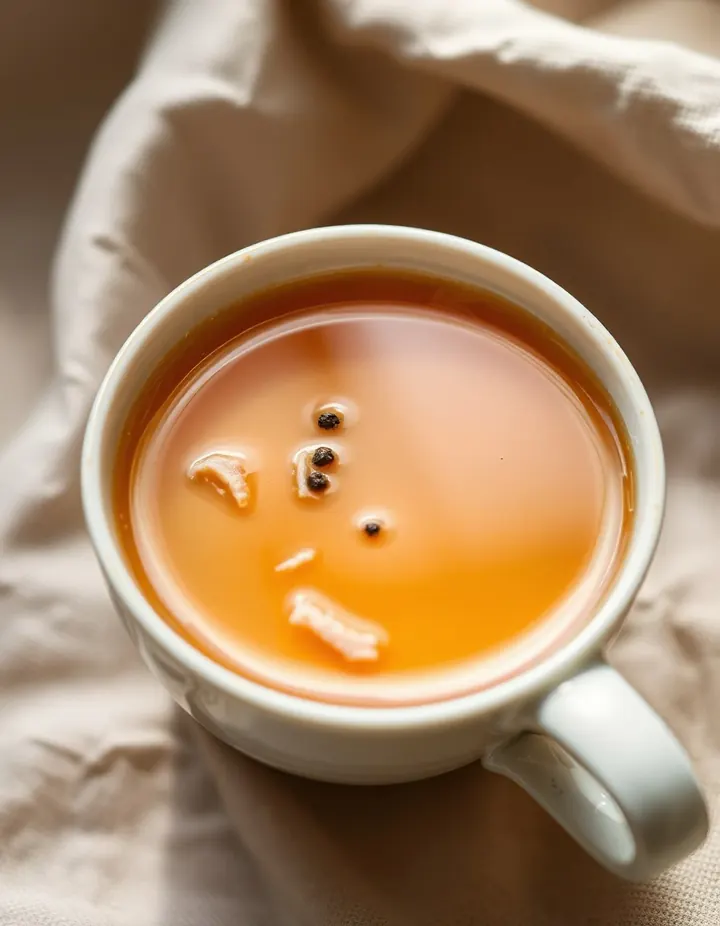 Beef, Mutton, or Veal Broth6 recipes
 Brown Bread461 recipes
 Roast Beef211 recipes
 Beef Loaf175 recipes
The free Flavor Lab newsletter: one surprising pairing a week and the molecular reason it works, in 60 seconds. No spam, unsubscribe anytime.
Prefer an account? Create a free account to save pairings and unlock the full chemistry.