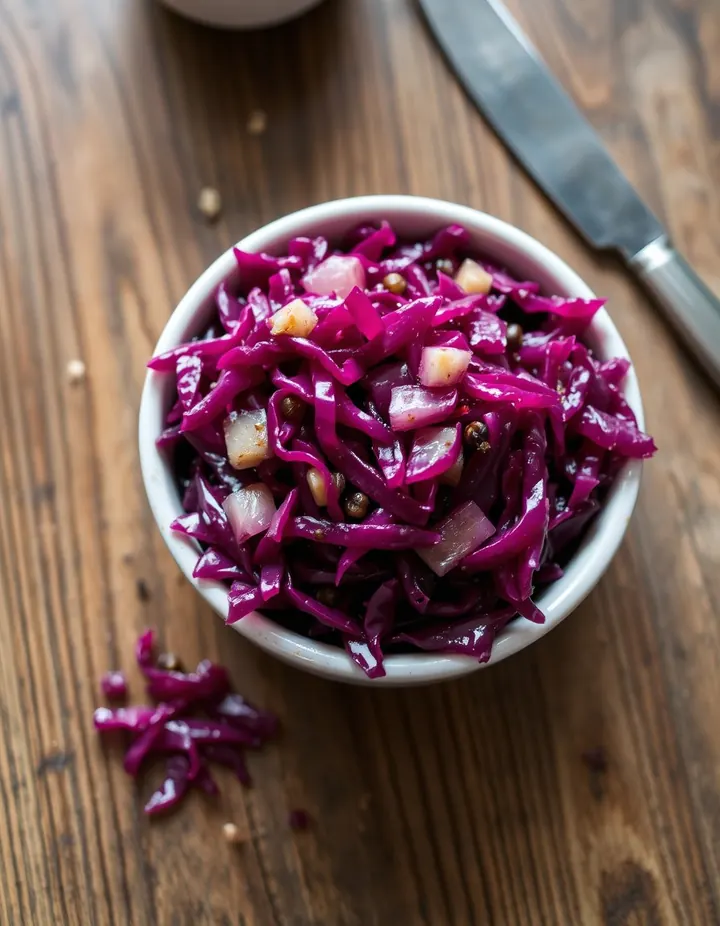
Why it works: Horseradish and beetroot match in chemistry and in kitchens. They rank in the top 1% of all ingredient pairs, and cooks put them together in 209 recipes. Both carry coumarin, which smells sweet, hay. The science ↓
Red Cabbage
Ingredients
Directions
Prepare the cabbage
Remove the outer leaves from the cabbage and shred it finely.
Place the shredded cabbage in a dish and sprinkle with coarse sea salt.
Let it sit for two days to draw out moisture.
Drain the cabbage in a colander and transfer it to a jar.
Make the pickling liquid
In a pot, combine enough white wine vinegar to cover the cabbage, cloves, mace, and scraped horseradish; bring to a boil.
Allow the mixture to cool, then pour it over the cabbage in the jar.
For added flavor, include a few slices of beetroot before sealing the jar.
Transcribed from a scanned cookbook and modernised for today's kitchens. Where the book gave no heat or time, or said "a moderate oven", the temperatures and times here may be modern equivalents rather than the book's own figures.
Photo for illustrative purposes only · Contact us to use it
Explore the science
The flavor team
The pairs that carry this dish. Each one is judged two ways: how much their aromas overlap, and how often cooks already put them together.
-
Horseradish + beetroottop 1% of all pairsSmell alikestrongCooked together209 recipes
Shared aroma: coumarin (sweet, hay).
-
Cabbage + horseradishtop 2% of all pairsSmell alikestrongCooked together481 recipes
Shared aroma: coumarin (sweet, hay).
-
Cabbage + beetroottop 4% of all pairsSmell alikestrongCooked together377 recipes
Shared aroma: 2-isopropyl-3-methoxypyrazine (earthy, pea).
-
Clove + macetop 6% of all pairsSmell alikelowCooked together8,400 recipes
Shared aroma: methyleugenol (clove, spice).
-
Clove + horseradishtop 7% of all pairsSmell alikestrongCooked together1,245 recipes
Shared aroma: coumarin (sweet, hay).
Ranks compare each pair with 20,000 random ingredient pairs on CompKitchen. How we score pairs
What each ingredient does
- Red cabbage
- Forms the bulk of the pickle and, once salted, becomes crisp and tender as it softens.
- Coarse sea salt
- Draws moisture out of the cabbage, concentrating its flavor and helping it stay crisp.
- White wine vinegar
- Provides the acidity that preserves the cabbage and gives the pickle its sharp taste.
- Scraped horseradish
- Adds a pungent, sharp aroma that flavors the pickling liquid.
The step that matters
Draining the salted cabbage. Salt draws out water over two days; if the cabbage is not drained well before jarring, excess moisture dilutes the vinegar and can leave the pickle soft and watery.
Swap the beetroot
The recipe marks beetroot as optional. How well each one fits the dish's main ingredients (cabbage, white wine, vinegar, clove, mace, horseradish):
- Mustardfits better
- Shallotfits better
- Radishfits about as well
- Beetrootthe original
Fit is the average pairing score against cabbage, white wine, vinegar, clove, mace, horseradish. Candidates are from the same food group and used in at least 100 recipes.
“What each ingredient does” and “The step that matters” were written by Claude from this recipe’s own method and reviewed in samples by CompKitchen.
You might also like
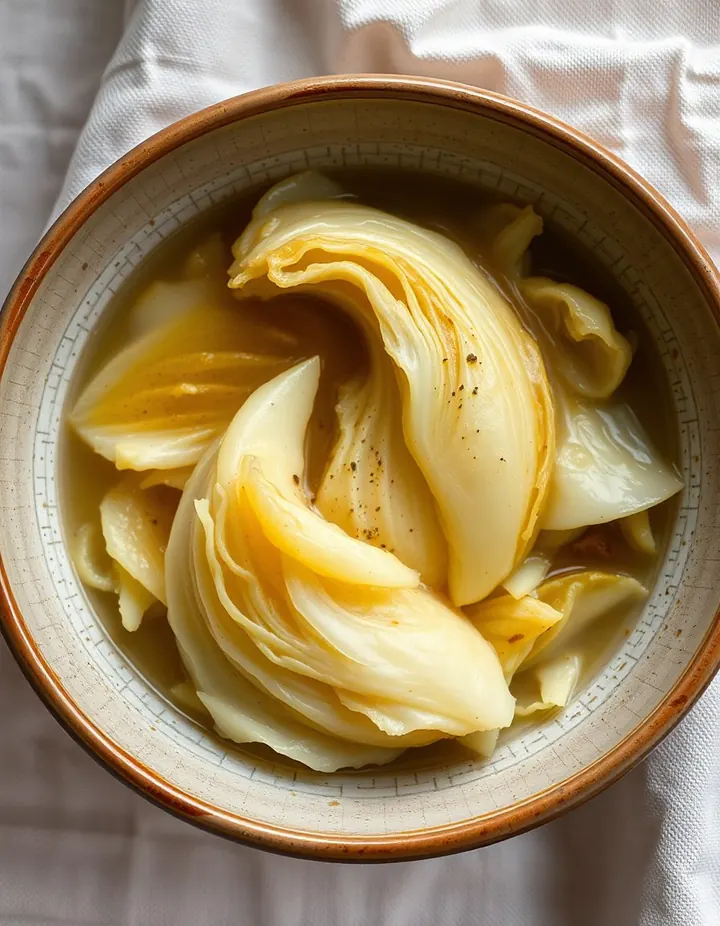 Stewed Cabbage58 recipes
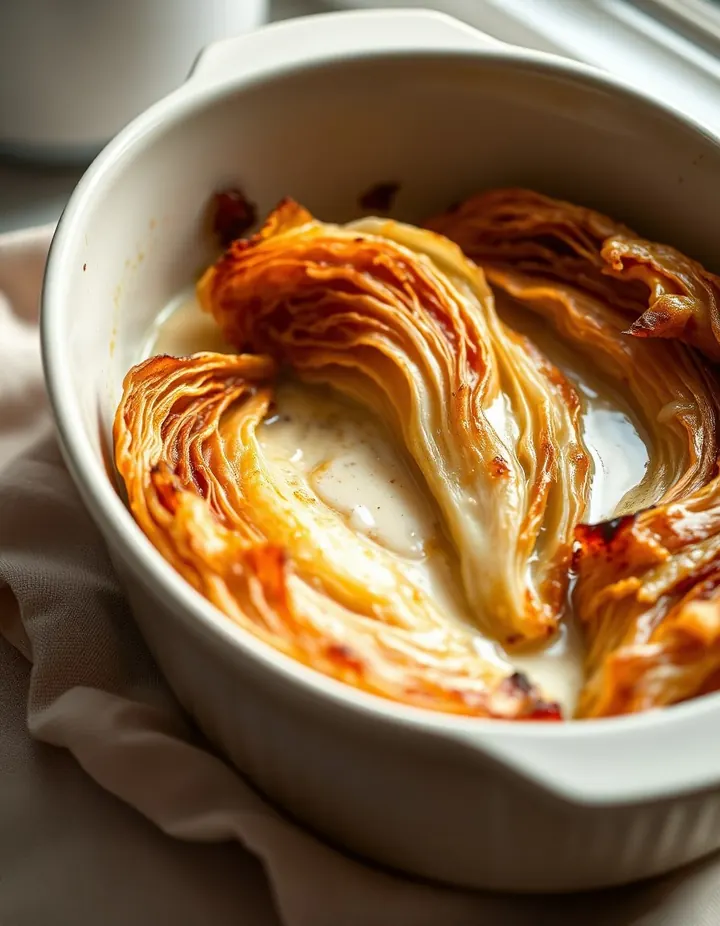 Baked Cabbage51 recipes
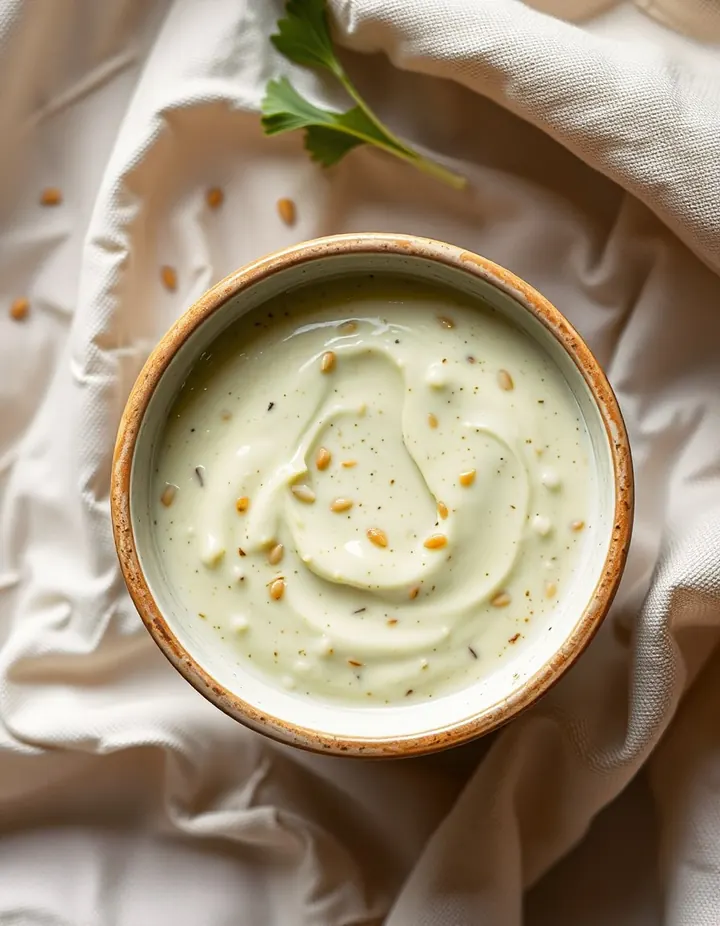 Cabbage Dressing19 recipes
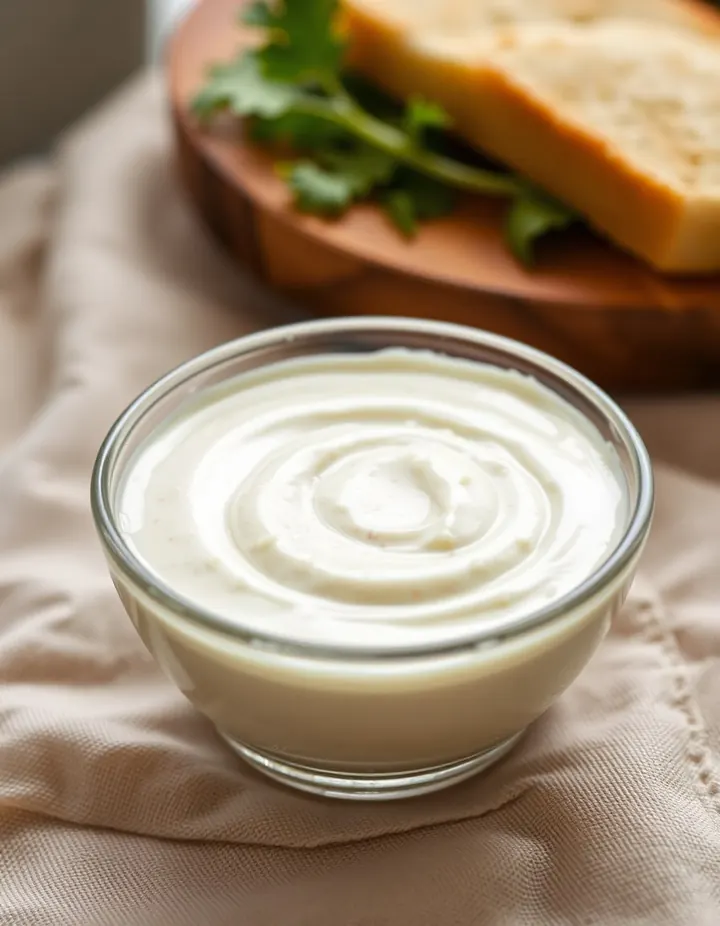 Horseradish Sauce17 recipes
The free Flavor Lab newsletter: one surprising pairing a week and the molecular reason it works, in 60 seconds. No spam, unsubscribe anytime.
Prefer an account? Create a free account to save pairings and unlock the full chemistry.