Why it works: Lemon and pepper match in chemistry and in kitchens. They rank in the top 3% of all ingredient pairs, and cooks put them together in 27,047 recipes. Both carry trans-2-nonenal, which smells cardboard, fatty. The science ↓
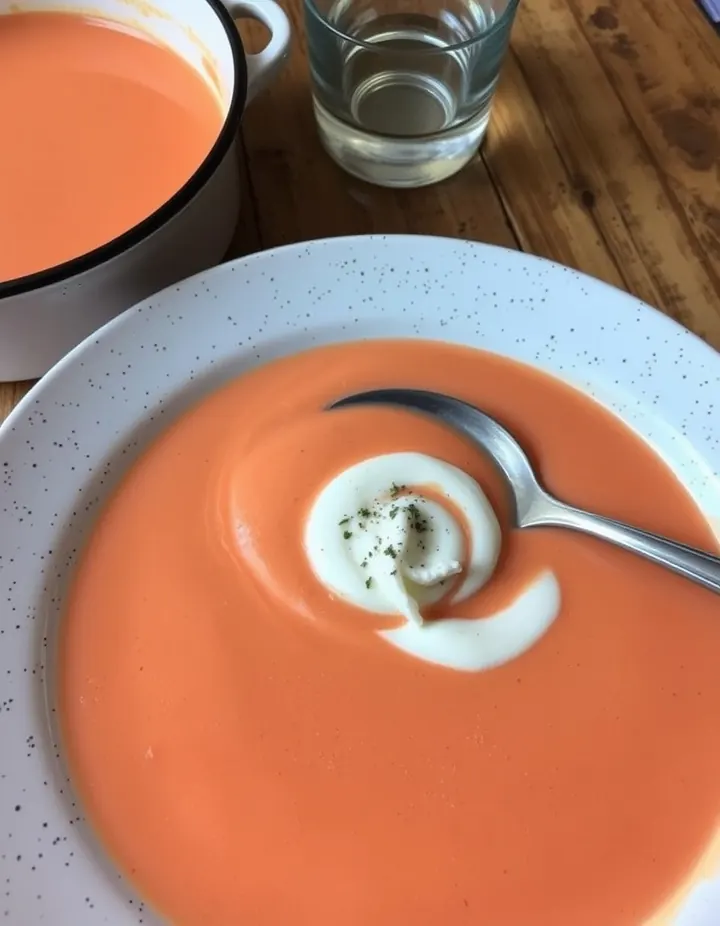
Mock Turtle Soup
Ingredients
Directions
The book says “a quick oven”. The 400°F (200°C) in the steps is the modern equivalent, not the book's own figure.
Cook the head
Boil the calf's head slowly in cold water for 4 hours.
Let it cool in the broth.
Remove the head.
Cut the flesh from the bones.
Set aside the cheek and tongue to dice.
Chop the remaining meat finely.
Divide the chopped meat into two parts.
Return one half to the skimmed broth with the bones and keep it warm.
Make forcemeat with the other half, the brain, and a beaten egg.
Season the forcemeat well.
Roll the forcemeat into balls with floured hands.
Bake the forcemeat balls in a 400°F (200°C) oven until firm.
Make the soup
Strain the tomatoes through a sieve.
After 1 hour of cooking, strain out the bones and meat from the soup.
Return the soup to the heat with the strained tomatoes.
Make a roux with the butter and flour.
Stir the roux until smooth and brown.
Thin the roux with a few spoonfuls of the soup.
Add the thinned roux back to the soup.
Season the soup with allspice, pepper, and salt.
Cook the soup at a boil for a few minutes.
Add the meat-dice to the soup.
Add the lemon slices before serving.
Transcribed from a scanned cookbook and modernised for today's kitchens. Where the book gave no heat or time, or said "a moderate oven", the temperatures and times here may be modern equivalents rather than the book's own figures.
Explore the science
The flavor team
The pairs that carry this dish. Each one is judged two ways: how much their aromas overlap, and how often cooks already put them together.
-
Lemon + peppertop 3% of all pairsSmell alikestrongCooked together27,047 recipes
Shared aroma: trans-2-nonenal (cardboard, fatty).
-
Pepper + allspicetop 5% of all pairsSmell alikestrongCooked together6,395 recipes
Shared aroma: estragole (anise, licorice).
-
Lemon + allspicetop 6% of all pairsSmell alikestrongCooked together2,083 recipes
Shared aroma: beta-phellandrene (minty, terpene).
-
Tomato + peppertop 7% of all pairsSmell alikemoderateCooked together17,923 recipes
Shared aroma: 2-isopropyl-3-methoxypyrazine (earthy, pea).
-
Tomato + lemontop 11% of all pairsSmell alikemoderateCooked together4,592 recipes
Shared aroma: 3-hexenal (apple, fruity).
Ranks compare each pair with 20,000 random ingredient pairs on CompKitchen. How we score pairs
What each ingredient does
- Calf's head
- Provides the gelatinous flesh and rich body that gives the soup its character.
- Butter
- Fat that combines with the flour to form a roux for thickening.
- Browned flour
- Thickens the soup and adds a toasted, nutty colour and flavour.
- Tomatoes
- Add acidity and colour to the broth.
- Raw egg
- Binds the forcemeat so the balls hold their shape while baking.
- Brown sherry
- Adds sweetness and depth of flavour to the finished soup.
The step that matters
Thinning the roux before adding it to the soup. Adding roux straight into hot soup can form lumps. Thinning it with a little soup first lets the flour disperse evenly, so the soup thickens smoothly.
Swap the tomato
How well each one fits the dish's main ingredients (butter, flour, lemon, sherry, pepper, allspice, egg):
- Shallotfits better
- Arrowrootfits better
- Capsicumfits better
- Tomatothe original
Fit is the average pairing score against butter, flour, lemon, sherry, pepper, allspice, egg. Candidates are from the same food group and used in at least 100 recipes.
“What each ingredient does” and “The step that matters” were written by Claude from this recipe’s own method and reviewed in samples by CompKitchen.
You might also like
 Tomato Soup526 recipes
 Lemon Sauce236 recipes
 Cream of Tomato Soup107 recipes
 Tomato Bisque61 recipes
The free Flavor Lab newsletter: one surprising pairing a week and the molecular reason it works, in 60 seconds. No spam, unsubscribe anytime.
Prefer an account? Create a free account to save pairings and unlock the full chemistry.