Why it works: Lemon and parsley match in chemistry and in kitchens. They rank in the top 1% of all ingredient pairs, and cooks put them together in 14,037 recipes. Both carry beta-phellandrene, which smells minty, terpene. The science ↓
Veal Olive Pie
Ingredients
Directions
The book says “a hot oven”. The 400°F (200°C) in the steps is the modern equivalent, not the book's own figure.
Prepare the filling
Cut veal into very thin oblong slices, about 3 inches by 1.5 inches.
In a bowl, mix ham, parsley, bread crumbs, melted butter, beaten eggs, half of the white pepper, salt, and paprika.
Spread the mixture over the veal slices and roll them up.
Assemble the pie
Place the rolls in a deep pie dish, higher in the middle than the sides.
Sprinkle the remaining seasoning over the rolls and add the cold water.
Roll out short crust pastry, 1 inch larger than the top of the pie dish.
Wet the edge of the dish and press the pastry onto it, sealing it neatly.
Trim the edges with a sharp knife, scallop them, and make a steam hole in the top.
Brush the pastry with beaten egg and decorate with pastry cut into leaves.
Bake and serve
Bake in a preheated oven at 400°F (200°C) for 10 minutes, then reduce to 350°F (175°C) and bake for about 1 hour and 15 minutes.
Before serving, fill the pie with boiling water or stock.
Transcribed from a scanned cookbook and modernised for today's kitchens. Where the book gave no heat or time, or said "a moderate oven", the temperatures and times here may be modern equivalents rather than the book's own figures.
Explore the science
The flavor team
The pairs that carry this dish. Each one is judged two ways: how much their aromas overlap, and how often cooks already put them together.
-
Lemon + parsleytop 1% of all pairsSmell alikestrongCooked together14,037 recipes
Shared aroma: beta-phellandrene (minty, terpene).
-
Bread + buttertop 7% of all pairsSmell alikemoderateCooked together27,232 recipes
Shared aroma: delta-decalactone (sweet, creamy).
-
Ham + breadtop 7% of all pairsSmell alikemoderateCooked together2,536 recipes
Shared aroma: 2-acetyl-1-pyrroline (popcorn, roasted).
-
Bread + eggtop 13% of all pairsSmell alikemoderateCooked together22,662 recipes
Shared aroma: (e)-2-octenal (fatty, green).
-
Parsley + white peppertop 14% of all pairsSmell alikelowCooked together1,451 recipes
Shared aroma: myrcene (balsamic, herbaceous).
Ranks compare each pair with 20,000 random ingredient pairs on CompKitchen. How we score pairs
What each ingredient does
- Veal
- Forms the main body of the pie and cooks tender when rolled thin and baked in liquid.
- Eggs
- Bind the bread crumb and ham filling and set during baking to hold the rolls together.
- Bread crumbs
- Absorb moisture and add body to the filling, helping it hold together around the ham.
- Ham
- Adds savoury, salty flavour to the stuffing inside each veal roll.
- Butter
- Adds richness and fat to the filling, improving flavour and texture.
The step that matters
Sealing the pastry edge. A poorly wetted and pressed seal can let steam and juices escape during the long bake, so the crust may separate or leak. Wetting the rim helps the pastry stick firmly.
Swap the white pepper
How well each one fits the dish's main ingredients (veal, lemon, ham, parsley, bread, butter, egg):
- Marjoramfits better
- Thymefits better
- Capersfits better
- White pepperthe original
Fit is the average pairing score against veal, lemon, ham, parsley, bread, butter, egg. Candidates are from the same food group and used in at least 100 recipes.
“What each ingredient does” and “The step that matters” were written by Claude from this recipe’s own method and reviewed in samples by CompKitchen.
You might also like
 Brown Bread461 recipes
 Lemon Sauce236 recipes
 White Bread80 recipes
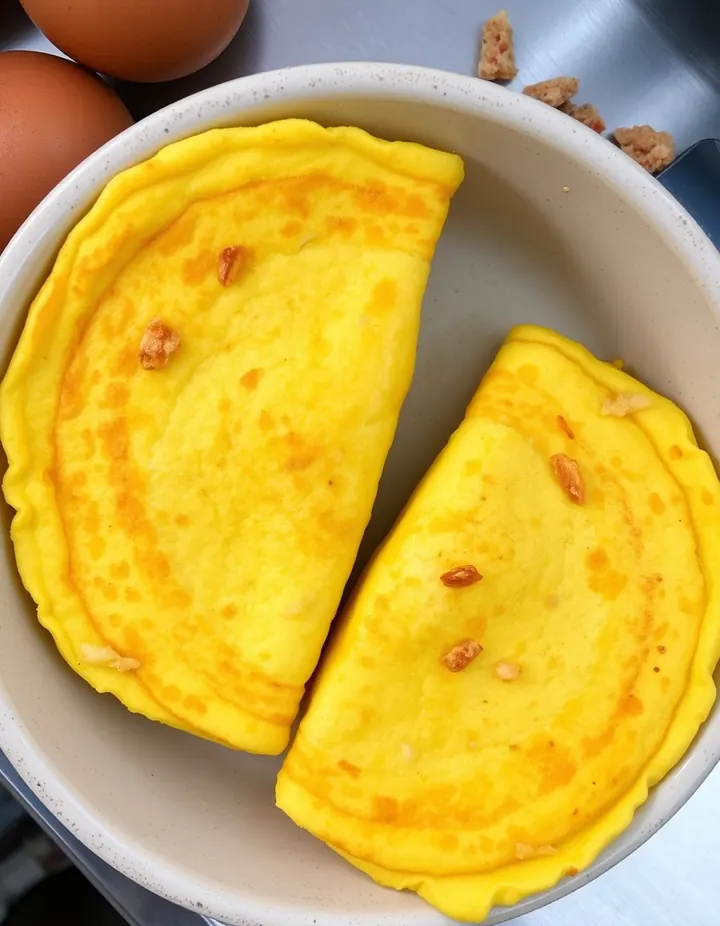 Bread Omelette60 recipes
The free Flavor Lab newsletter: one surprising pairing a week and the molecular reason it works, in 60 seconds. No spam, unsubscribe anytime.
Prefer an account? Create a free account to save pairings and unlock the full chemistry.