Why it works: Egg and lettuce are a kitchen classic. They rank in the top 30% of all ingredient pairs, and cooks put them together in 3,301 recipes. Both carry nonanal, which smells fat, citrus. The science ↓
Tongue Moulded in Aspic Jelly
Ingredients
Directions
Prepare the mould
Chill a charlotte mould in ice water and moisten it.
Pour in a little jelly.
Turn the mould until the surface is lightly coated.
Decorate and layer
Decorate the bottom and sides of the mould with the cut egg shapes.
Pour a little jelly over each egg piece to hold them in place.
When the decoration is set, pour in jelly to a depth of ½ inch.
Arrange slices of cold boiled tongue in a circle, overlapping each piece.
Add a few tablespoons of jelly to set the tongue.
When set, pour in more jelly.
Arrange another circle of tongue slices when nearly firm.
Continue layering until the mould is filled.
Set and serve
Chill.
Unmould on a bed of lettuce leaves.
Garnish with cubes of Aspic Jelly and stars of Mayonnaise Dressing.
Transcribed from a scanned cookbook and modernised for today's kitchens. Where the book gave no heat or time, or said "a moderate oven", the temperatures and times here may be modern equivalents rather than the book's own figures.
Explore the science
The flavor team
The pairs that carry this dish. Each one is judged two ways: how much their aromas overlap, and how often cooks already put them together.
-
Egg + lettucetop 30% of all pairsSmell alikelowCooked together3,301 recipes
Shared aroma: nonanal (fat, citrus).
Ranks compare each pair with 20,000 random ingredient pairs on CompKitchen. How we score pairs
What each ingredient does
- Aspic jelly
- Sets into a firm, clear body that holds the tongue and eggs in shape.
- Boiled tongue
- Forms the sliced meat layers that give the molded dish its substance and flavour.
- Hard cooked eggs
- Provide the decorative pattern and contrast in colour when the mould is turned out.
- Mayonnaise dressing
- Adds richness and creamy flavour as a garnish piped into stars.
The step that matters
Let each layer set before adding the next. Jelly is a gel that firms as it cools. If you pour new jelly onto a layer that is not yet set, the pieces shift and the layers mix, so the pattern is lost. Wait until each layer is nearly firm before pouring the next.
“What each ingredient does” and “The step that matters” were written by Claude from this recipe’s own method and reviewed in samples by CompKitchen.
You might also like
 Creamy Lettuce Soup8 recipes
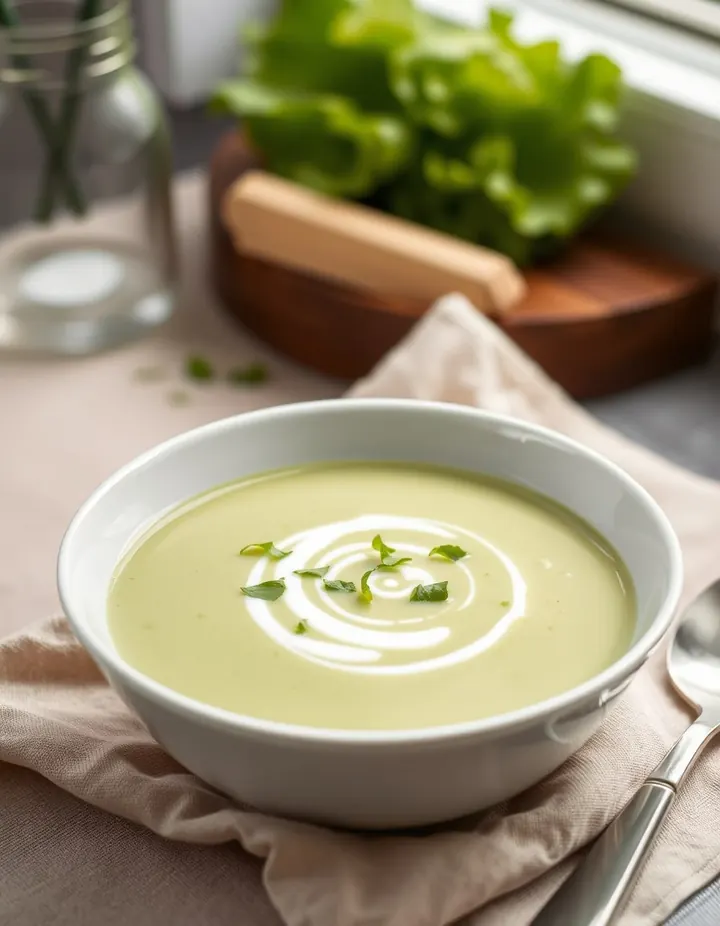 Lettuce Soup8 recipes
 Tomato Soup526 recipes
 Brown Bread461 recipes
The free Flavor Lab newsletter: one surprising pairing a week and the molecular reason it works, in 60 seconds. No spam, unsubscribe anytime.
Prefer an account? Create a free account to save pairings and unlock the full chemistry.