Why it works: Beef and mushroom are a kitchen classic. They rank in the top 4% of all ingredient pairs, and cooks put them together in 3,232 recipes. Both carry 2,4-nonadienal, which smells fatty, green. The science ↓
Beef Palates
Ingredients
Directions
Prepare the palates
Simmer the palates in water for several hours until they can be peeled.
Transfer the palates to cold water to thicken.
Leave them whole or slice.
Make the sauce and stew
Stew the palates in a rich gravy until tender, seasoning with cayenne, salt, and ketchup.
Melt butter with flour in a pan. Add salt, pepper, shallots, clove, parsley, thyme, fennel, and enough milk or veal broth.
Simmer the palates until tender.
Boil the palates in milk and stew in fricassee sauce with cream, butter, flour, mushroom powder, and pounded mace.
Melt butter with flour in a pan. Add salt, pepper, shallots, clove, parsley, thyme, fennel, and enough milk or veal broth.
Simmer the palates until tender.
Finish and serve
Remove the palates, dip them in egg yolk and breadcrumbs, and broil slowly.
Serve with acid sauce or a white sauce seasoned with mace and nutmeg.
For rolled palates, boil gently until they peel.
Trim the palates and cut the trimmings into shreds.
Combine the trimmings, some boiling water, butter, seasoning, and white wine in a small pan.
Stew gently until the gravy is good.
Brush the palates with egg yolk, cover with seasoned forcemeat, roll tightly, and tie with string.
Combine the palates with butter and a cup of milk or cream in a stewpan.
Braise gently for 2 hours.
Serve with ragout of trimmings, lemon juice, and garnish with pickles, egg, and forcemeat balls.
Transcribed from a scanned cookbook and modernised for today's kitchens. Where the book gave no heat or time, or said "a moderate oven", the temperatures and times here may be modern equivalents rather than the book's own figures.
Explore the science
The flavor team
The pairs that carry this dish. Each one is judged two ways: how much their aromas overlap, and how often cooks already put them together.
-
Beef + mushroomtop 4% of all pairsSmell alikemoderateCooked together3,232 recipes
Shared aroma: 2,4-nonadienal (fatty, green).
-
Butter + milktop 7% of all pairsSmell alikemoderateCooked together81,283 recipes
Shared aroma: (z)-4-heptenal (biscuit, cream).
-
Butter + mushroomtop 7% of all pairsSmell alikemoderateCooked together12,525 recipes
Shared aroma: trans-2-decenal (waxy, orange).
-
Butter + creamtop 8% of all pairsSmell alikemoderateCooked together41,516 recipes
Shared aroma: delta-dodecalactone (sweet, creamy).
-
Beef + peppertop 10% of all pairsSmell alikemoderateCooked together18,971 recipes
Shared aroma: 2-isopropyl-3-methoxypyrazine (earthy, pea).
Ranks compare each pair with 20,000 random ingredient pairs on CompKitchen. How we score pairs
What each ingredient does
- Beef palates
- Main protein that becomes tender and gelatinous during long simmering and stewing.
- Butter
- Enriches the sauces with fat, adding richness and smooth mouthfeel.
- Flour
- Melted with butter to form a roux that thickens the sauces.
- Milk
- Forms the creamy base of the sauces, adding body and mild sweetness.
- Cream
- Adds fat and richness, giving the fricassee sauce a smooth, velvety texture.
- White wine
- Adds acidity and aroma to the trimmings gravy.
The step that matters
Simmer the palates until tender. Palates need long, gentle simmering so connective tissue softens; boiling hard can toughen the meat and break the skin unevenly.
“What each ingredient does” and “The step that matters” were written by Claude from this recipe’s own method and reviewed in samples by CompKitchen.
More beef palates recipes
You might also like
 Lemon Sauce236 recipes
 Roast Beef211 recipes
 Beef Loaf175 recipes
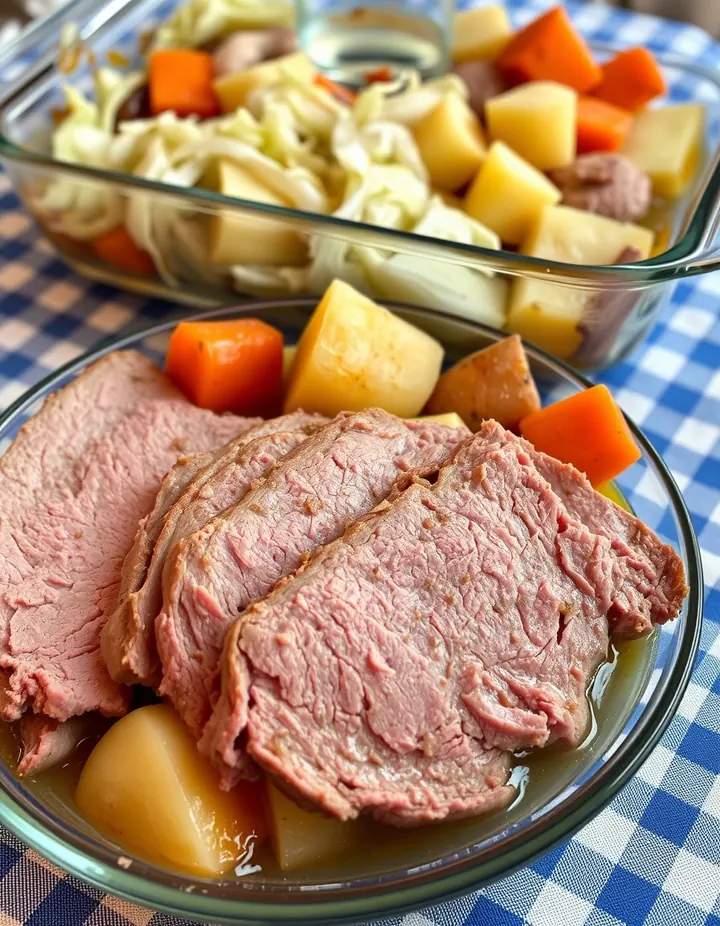 Corned Beef87 recipes
The free Flavor Lab newsletter: one surprising pairing a week and the molecular reason it works, in 60 seconds. No spam, unsubscribe anytime.
Prefer an account? Create a free account to save pairings and unlock the full chemistry.