Why it works: Quail and pork work together. They rank in the top 7% of all ingredient pairs, and cooks put them together in 308 recipes. Both carry decanal, which smells soap, orange peel. The science ↓
Roast Quail, Oyster Dressing
Ingredients
Directions
The book says “a hot oven”. The 400°F (200°C) in the steps is the modern equivalent, not the book's own figure.
Prepare the quails
Rub the quails with coarse sea salt and black pepper.
Fill the quails with oysters dipped in fresh bread crumbs.
Dip the oysters in melted butter.
Coat the oysters again in seasoned crumbs.
Truss the legs of the quails.
Brush the quails with melted butter.
Roll the quails in flour.
Place the quails in a buttered pan.
Roast and baste
Bake the quails in a hot oven at 400°F (200°C).
When the quails begin to brown, reduce the temperature to 350°F (175°C).
Add boiling water and 2 tablespoons of butter to the pan.
Baste the quails every ten minutes.
Bake for 45 minutes to 1 hour, adding more water as needed.
Thicken the gravy in the pan with water if necessary.
Add salt and pepper to taste.
Bacon and serve
For the stuffing, cover the breasts with thin slices of salt pork or bacon.
Place the stuffed breasts in the pan with 2 tablespoons of hot water.
After 15 minutes, remove the bacon.
Season the bacon with salt and pepper.
Dust the bacon with flour.
Serve the quails on squares of toast moistened with the gravy.
Transcribed from a scanned cookbook and modernised for today's kitchens. Where the book gave no heat or time, or said "a moderate oven", the temperatures and times here may be modern equivalents rather than the book's own figures.
Explore the science
The flavor team
The pairs that carry this dish. Each one is judged two ways: how much their aromas overlap, and how often cooks already put them together.
-
Quail + porktop 7% of all pairsSmell alikemoderateCooked together308 recipes
Shared aroma: decanal (soap, orange peel).
-
Butter + breadtop 7% of all pairsSmell alikemoderateCooked together27,232 recipes
Shared aroma: delta-decalactone (sweet, creamy).
-
Butter + flourtop 12% of all pairsSmell alikelowCooked together124,287 recipes
Shared aroma: isobutyraldehyde (malty, green).
-
Butter + oystertop 12% of all pairsSmell alikemoderateCooked together8,184 recipes
Shared aroma: 2,6-nonadienal (cucumber, green).
-
Oyster + porktop 13% of all pairsSmell alikemoderateCooked together1,255 recipes
Shared aroma: 2,6-nonadienal (cucumber, green).
Butter and flour barely smell alike, yet cooks put them together in 124,287 recipes: they work on texture and structure more than aroma.
Ranks compare each pair with 20,000 random ingredient pairs on CompKitchen. How we score pairs
What each ingredient does
- Quails
- The main protein; roasting cooks the meat while the skin browns and renders fat.
- Oysters
- Flavour and moisture for the stuffing, adding a briny, savoury note to the dressing.
- Fresh bread crumbs
- Absorb juices and butter, giving the stuffing body and a soft, moist texture.
- Melted butter
- Carries fat over the birds, promoting even browning and a rich, golden surface.
- Flour
- Coats the quails so the surface browns and the pan gravy can thicken.
- Salt pork or bacon
- Lays fat over the breasts, keeping the lean meat moist and adding savoury flavour.
The step that matters
Reduce the oven temperature once the quails begin to brown. A hot start sets colour and crisp skin quickly; lowering the heat then lets the thick meat cook through without the surface scorching before the centre is done.
“What each ingredient does” and “The step that matters” were written by Claude from this recipe’s own method and reviewed in samples by CompKitchen.
You might also like
 Brown Bread461 recipes
 Pork Cake107 recipes
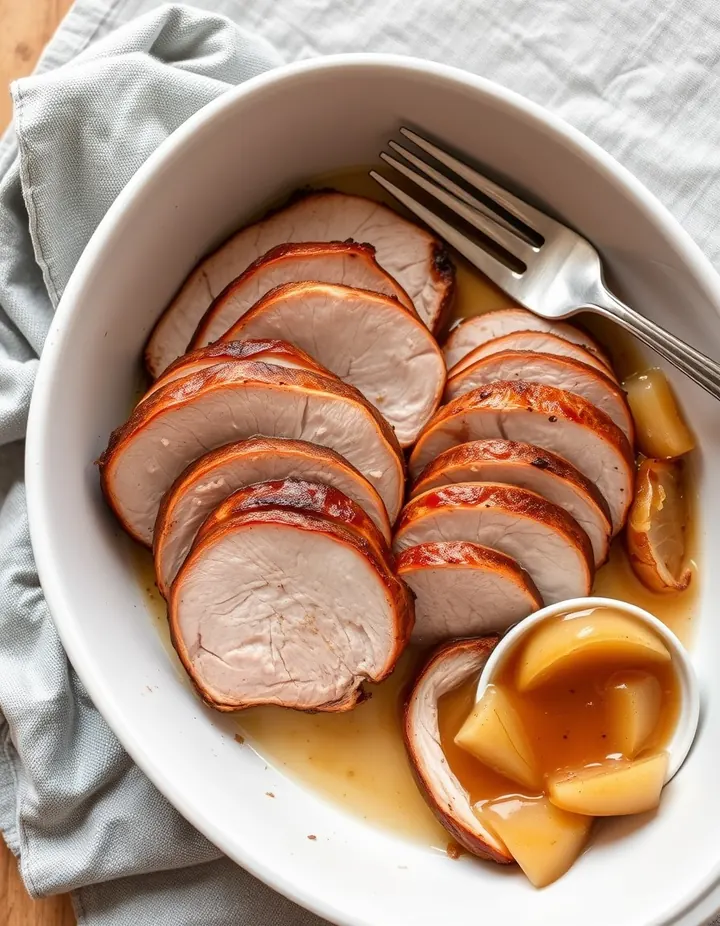 Roast Pork82 recipes
 White Bread80 recipes
The free Flavor Lab newsletter: one surprising pairing a week and the molecular reason it works, in 60 seconds. No spam, unsubscribe anytime.
Prefer an account? Create a free account to save pairings and unlock the full chemistry.