Why it works: Sage and pepper match in chemistry and in kitchens. They rank in the top 3% of all ingredient pairs, and cooks put them together in 5,388 recipes. Both carry beta-phellandrene, which smells minty, terpene. The science ↓
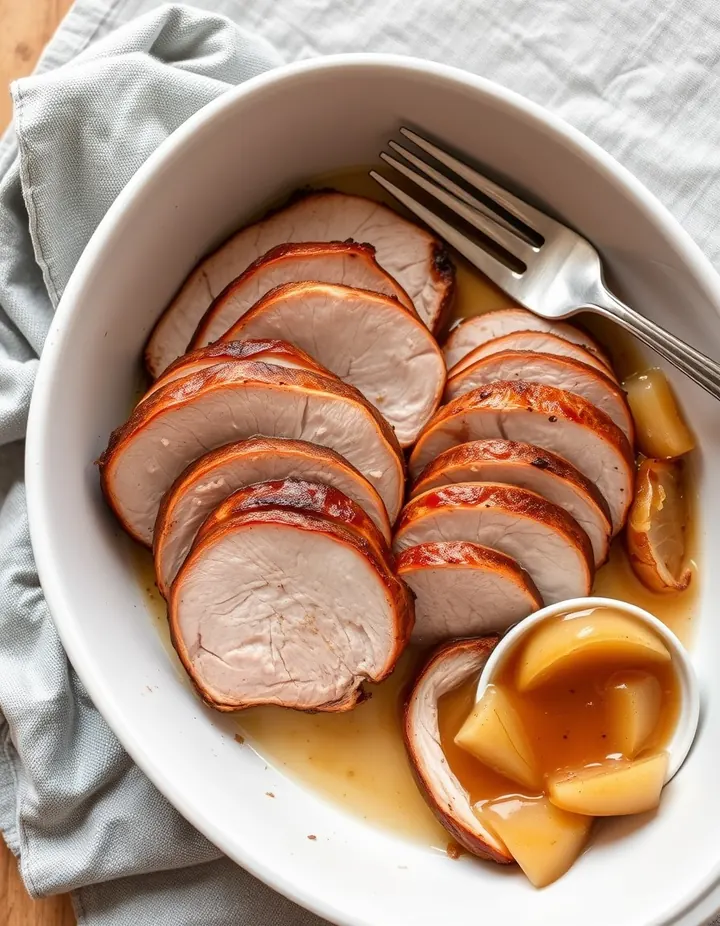
To Roast a Leg of Pork
Ingredients
Directions
The book gives no oven temperature. The 400°F (200°C) in the steps was added when the recipe was transcribed, as a starting point. The book gives no cooking times either; the times in the steps were added in transcription, so check for doneness rather than trusting the clock.
Prepare the pork
Score the skin of the leg of pork in narrow strips, forming diamonds if desired.
Rub powdered sage into the scored skin.
Lift the skin at the knuckle and stuff it with minced onion, sage, breadcrumbs, pepper, salt, and beaten egg yolk.
Secure the skin with a buttered string or skewers.
Make deep incisions in the large end of the leg and stuff them with the filling, pressing it in firmly.
Roast and finish
Brush the skin with sweet oil to achieve a crisp, brown finish.
Roast the leg of pork at 400°F (200°C) for 3 to 4 hours, basting regularly with sweet oil or melted butter.
Avoid basting with its own drippings to keep the skin from becoming tough.
Skim the fat from the gravy and thicken it with a little flour.
Transcribed from a scanned cookbook and modernised for today's kitchens. Where the book gave no heat or time, or said "a moderate oven", the temperatures and times here may be modern equivalents rather than the book's own figures.
Explore the science
The flavor team
The pairs that carry this dish. Each one is judged two ways: how much their aromas overlap, and how often cooks already put them together.
-
Sage + peppertop 3% of all pairsSmell alikestrongCooked together5,388 recipes
Shared aroma: beta-phellandrene (minty, terpene).
-
Pork + oniontop 10% of all pairsSmell alikemoderateCooked together18,214 recipes
Shared aroma: 2-isopropyl-3-methoxypyrazine (earthy, pea).
-
Onion + peppertop 11% of all pairsSmell alikemoderateCooked together68,474 recipes
Shared aroma: 2-isopropyl-3-methoxypyrazine (earthy, pea).
-
Pork + sagetop 12% of all pairsSmell alikemoderateCooked together2,527 recipes
Shared aroma: 2-hexenal (green, leafy).
-
Butter + flourtop 12% of all pairsSmell alikelowCooked together124,287 recipes
Shared aroma: isobutyraldehyde (malty, green).
Butter and flour barely smell alike, yet cooks put them together in 124,287 recipes: they work on texture and structure more than aroma.
Ranks compare each pair with 20,000 random ingredient pairs on CompKitchen. How we score pairs
What each ingredient does
- Pork leg
- Provides the main meat, which becomes tender through long, slow roasting.
- Breadcrumbs
- Absorb juices and moisture in the stuffing, keeping it soft rather than dense.
- Beaten egg yolk
- Binds the stuffing together so it holds its shape while roasting.
- Sweet oil
- Coats the skin to promote browning and a crisp finish.
- Flour
- Thickens the defatted gravy to give it body.
The step that matters
Avoid basting with the drippings. The record warns that basting with its own drippings makes the skin tough. Using fat such as oil or melted butter instead keeps the skin crisp and brown during the long roast.
Swap the onion
How well each one fits the dish's main ingredients (pork, sage, pepper, egg, butter, flour):
- Capsicumfits better
- Chivefits better
- Potatofits better
- Onionthe original
Fit is the average pairing score against pork, sage, pepper, egg, butter, flour. Candidates are from the same food group and used in at least 100 recipes.
“What each ingredient does” and “The step that matters” were written by Claude from this recipe’s own method and reviewed in samples by CompKitchen.
You might also like
 Pork Cake107 recipes
 Roast Pork82 recipes
 Tomato Soup526 recipes
 Brown Bread461 recipes
The free Flavor Lab newsletter: one surprising pairing a week and the molecular reason it works, in 60 seconds. No spam, unsubscribe anytime.
Prefer an account? Create a free account to save pairings and unlock the full chemistry.