Why it works: Clove and nutmeg match in chemistry and in kitchens. They rank in the top 1% of all ingredient pairs, and cooks put them together in 8,686 recipes. Both carry estragole, which smells anise, licorice. The science ↓
Walnut Catchup
Ingredients
Directions
Prepare the walnuts
Gather one peck of walnuts and break them into small pieces with a mallet.
Place the walnut pieces in a jar with 1 pound of coarse sea salt and 2 quarts of cider vinegar.
Let the mixture sit for three weeks.
Extract the liquid
Strain the mixture through a colander and set the liquid aside.
Soak the walnut pieces in 1 quart of vinegar for 24 hours.
Mash the walnuts in the vinegar.
Strain the liquid through a cloth, pressing it carefully.
Cook and bottle
Combine all the liquid in a kettle with 1 ounce of black pepper, ¼ ounce of cloves, ½ ounce of ginger, ½ ounce of nutmeg, and 1 teacup of sugar.
Boil the mixture for half an hour.
Strain it again.
When cool, bottle and seal the catchup.
Transcribed from a scanned cookbook and modernised for today's kitchens. Where the book gave no heat or time, or said "a moderate oven", the temperatures and times here may be modern equivalents rather than the book's own figures.
Explore the science
The flavor team
The pairs that carry this dish. Each one is judged two ways: how much their aromas overlap, and how often cooks already put them together.
-
Clove + nutmegtop 1% of all pairsSmell alikestrongCooked together8,686 recipes
Shared aroma: estragole (anise, licorice).
-
Clove + gingertop 1% of all pairsSmell alikestrongCooked together6,038 recipes
Shared aroma: estragole (anise, licorice).
-
Walnut + nutmegtop 5% of all pairsSmell alikestrongCooked together1,230 recipes
Shared aroma: eucalyptol (eucalyptus, herbal).
-
Pepper + clovetop 5% of all pairsSmell alikestrongCooked together17,451 recipes
Shared aroma: ethyl octanoate (fruity, wine).
-
Ginger + nutmegtop 5% of all pairsSmell alikestrongCooked together3,324 recipes
Shared aroma: estragole (anise, licorice).
Ranks compare each pair with 20,000 random ingredient pairs on CompKitchen. How we score pairs
What each ingredient does
- Walnuts
- Provide the main flavour and body of the ketchup as they steep and break down in vinegar.
- Cider vinegar
- Acts as the solvent and preservative, extracting walnut flavour and keeping the ketchup stable.
- Coarse sea salt
- Draws moisture out of the walnuts and helps preserve the mixture during its long soak.
- Sugar
- Adds sweetness that balances the sharp acidity of the vinegar.
- Black pepper
- Contributes pungent, warm spice to the finished sauce.
The step that matters
Straining after the boil. Solids left in the liquid can keep fermenting or spoiling, so the second straining produces a clear, stable sauce before bottling. Cooking it first also helps the flavours blend and the vinegar stay preserved.
Swap the walnut
How well each one fits the dish's main ingredients (cider, vinegar, pepper, clove, ginger, nutmeg, sugar):
- Chestnutfits about as well
- Chickpeafits about as well
- Beansfits about as well
- Walnutthe original
Fit is the average pairing score against cider, vinegar, pepper, clove, ginger, nutmeg, sugar. Candidates are from the same food group and used in at least 100 recipes.
“What each ingredient does” and “The step that matters” were written by Claude from this recipe’s own method and reviewed in samples by CompKitchen.
You might also like
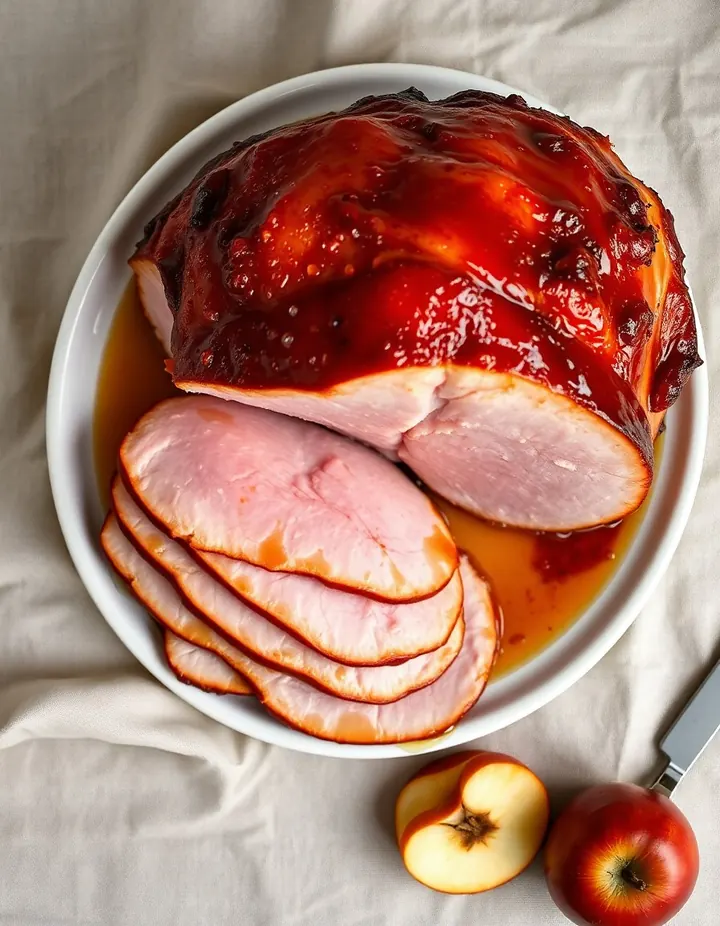 Ham in Cider10 recipes
 Tomato Soup526 recipes
 Brown Bread461 recipes
 Mutton Broth292 recipes
The free Flavor Lab newsletter: one surprising pairing a week and the molecular reason it works, in 60 seconds. No spam, unsubscribe anytime.
Prefer an account? Create a free account to save pairings and unlock the full chemistry.