Why it works: Currant and sugar are a kitchen classic. They rank in the top 26% of all ingredient pairs, and cooks put them together in 12,256 recipes. The science ↓
Fincastle Currant Wine
Ingredients
Directions
Prepare
Gather full ripe currants on a dry day and remove them from the stalks.
Crush the currants well with your hands, leaving none whole.
Add 1 quart of water for every 2 pounds of currants and stir well.
Let the mixture stand for 3 hours.
Strain the mixture through a sieve.
Make the wine
Add 1 pound of sugar for every 3 pounds of currants and stir well.
Boil the mixture, skimming off any scum that rises.
Pour the liquid into a clean cask after it has cooled for 16 hours.
Age and bottle
If making 10 gallons, let it stand for 3 weeks; for 20 or 30 gallons, let it stand for 1 month.
Once clear, add a lump of loaf sugar to each bottle, cork tightly, and store in a cool place.
Transcribed from a scanned cookbook and modernised for today's kitchens. Where the book gave no heat or time, or said "a moderate oven", the temperatures and times here may be modern equivalents rather than the book's own figures.
Explore the science
The flavor team
The pairs that carry this dish. Each one is judged two ways: how much their aromas overlap, and how often cooks already put them together.
-
Currant + sugartop 26% of all pairsSmell alikelowCooked together12,256 recipes
Currant and sugar barely smell alike, yet cooks put them together in 12,256 recipes: they work on texture and structure more than aroma.
Ranks compare each pair with 20,000 random ingredient pairs on CompKitchen. How we score pairs
What each ingredient does
- Currants
- Provide the main fruit flavour and acidity that give the wine its character.
- Sugar
- Adds sweetness and provides the sugar that yeast ferments into alcohol.
The step that matters
Pour into a clean cask after cooling. Cooling lets the liquid settle before transfer, and a clean cask keeps unwanted microbes from spoiling the wine during the long standing period.
“What each ingredient does” and “The step that matters” were written by Claude from this recipe’s own method and reviewed in samples by CompKitchen.
More currant wine recipes
You might also like
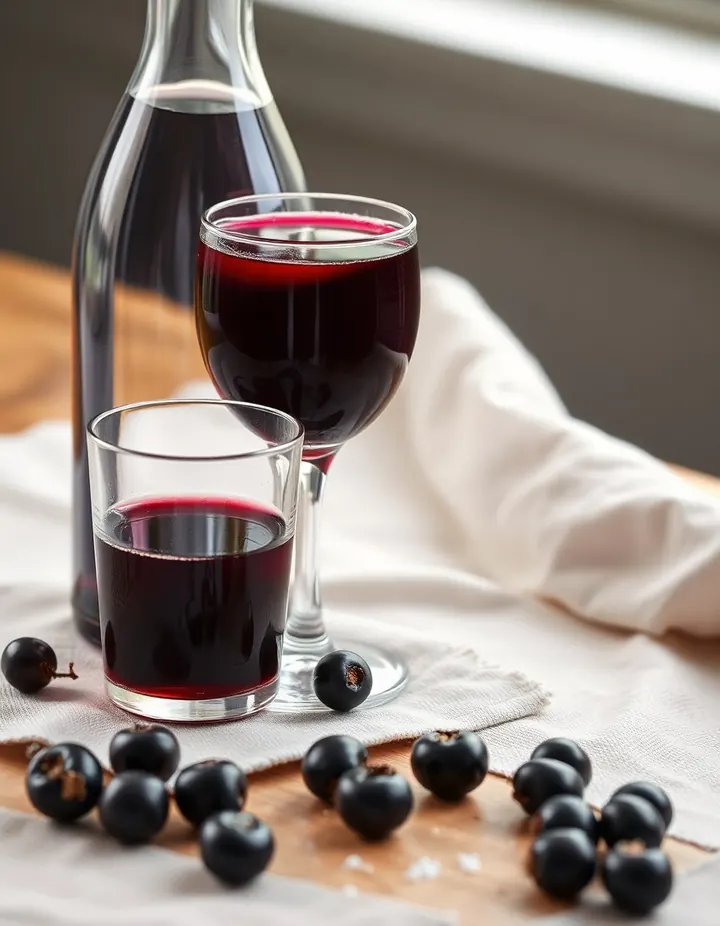 Black Currant Cordial11 recipes
 Vegetable Soup350 recipes
 Raspberry Vinegar214 recipes
 Brown Coffee with Egg175 recipes
The free Flavor Lab newsletter: one surprising pairing a week and the molecular reason it works, in 60 seconds. No spam, unsubscribe anytime.
Prefer an account? Create a free account to save pairings and unlock the full chemistry.