Why it works: Beans and cherry match in chemistry and in kitchens. They rank in the top 8% of all ingredient pairs, and cooks put them together in 192 recipes. Both carry trans-2-nonenal, which smells cardboard, fatty. The science ↓
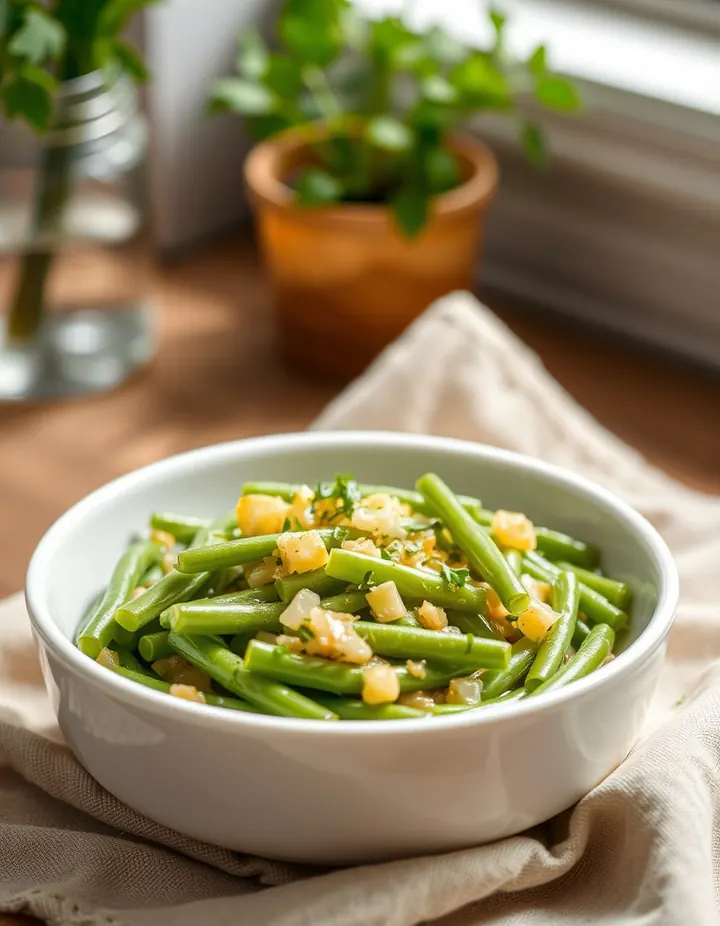
Pickled String Beans
Ingredients
Directions
Brine
Soak the string beans in a strong saltwater brine for 24 hours.
Pour off the brine and rinse the beans in cold water for 5 minutes, then drain.
Pickle and seal
Scald the beans in vinegar for a few minutes with a little alum and spices.
Seal the beans in jars or crocks using the same vinegar.
Transcribed from a scanned cookbook and modernised for today's kitchens. Where the book gave no heat or time, or said "a moderate oven", the temperatures and times here may be modern equivalents rather than the book's own figures.
Explore the science
The flavor team
The pairs that carry this dish. Each one is judged two ways: how much their aromas overlap, and how often cooks already put them together.
-
Beans + cherrytop 8% of all pairsSmell alikestrongCooked together192 recipes
Shared aroma: trans-2-nonenal (cardboard, fatty).
-
Vinegar + cherrytop 13% of all pairsSmell alikemoderateCooked together767 recipes
Shared aroma: 2-methylbutyl acetate (fruit).
-
Beans + vinegartop 19% of all pairsSmell alikemoderateCooked together1,347 recipes
Shared aroma: isoamyl acetate (banana, pear).
Ranks compare each pair with 20,000 random ingredient pairs on CompKitchen. How we score pairs
What each ingredient does
- String beans
- The main vegetable that is softened by brining and then flavoured by the vinegar.
- Coarse sea salt
- Draws water out of the beans during the long brine and seasons them.
- Vinegar
- Provides acidity that preserves the beans and gives the pickle its sharp flavour.
- Alum
- Helps the beans stay firm and crisp during scalding.
The step that matters
Rinsing after the brine. The beans must be rinsed well after the 24-hour brine so excess salt is removed; otherwise the pickle will taste overly salty. Draining afterward also keeps extra water from diluting the vinegar.
Swap the beans
How well each one fits the dish's main ingredients (vinegar, cherry):
- Chickpeafits better
- Pistachiofits about as well
- Sesamefits about as well
- Beansthe original
Fit is the average pairing score against vinegar, cherry. Candidates are from the same food group and used in at least 100 recipes.
“What each ingredient does” and “The step that matters” were written by Claude from this recipe’s own method and reviewed in samples by CompKitchen.
You might also like
 German Style String Beans7 recipes
 Tomato Soup526 recipes
 Brown Bread461 recipes
 Mutton Broth292 recipes
The free Flavor Lab newsletter: one surprising pairing a week and the molecular reason it works, in 60 seconds. No spam, unsubscribe anytime.
Prefer an account? Create a free account to save pairings and unlock the full chemistry.