Why it works: Pepper and parsley match in chemistry and in kitchens. They rank in the top 2% of all ingredient pairs, and cooks put them together in 34,122 recipes. Both carry 4'-methylacetophenone, which smells bitter almond. The science ↓
Stupfed Chicken or Turkey Legs
Ingredients
Directions
Prepare the legs
Remove the tendons and bone from the chicken or turkey legs, leaving about 1.5 inches at the small end.
Stuff the legs with a mixture of chopped chicken or veal, liver, larding pork, salt, pepper, and parsley.
Moisten the mixture with the egg.
Sew the skin over the end to keep the shape natural.
Simmer and shape
Place the stuffed legs in a baking pan.
Cover the pan with boiling water.
Simmer for 1 hour or until tender.
Remove the legs from the water.
Press the legs into shape.
Let the legs cool.
Remove the stitches from the legs.
Coat and cook
Dredge the legs with salt and pepper.
Roll the legs in beaten egg.
Roll the legs in bread crumbs.
Fry the legs in hot fat until browned.
Broil the legs for 4 minutes for chicken legs or 6 minutes for turkey legs.
Serve
Optionally, rub the legs with mustard and red pepper before coating with egg and crumbs.
Serve the legs arranged like chops.
Mask the bones with paper frills.
Flatten the leg to look like a cutlet.
Transcribed from a scanned cookbook and modernised for today's kitchens. Where the book gave no heat or time, or said "a moderate oven", the temperatures and times here may be modern equivalents rather than the book's own figures.
Explore the science
The flavor team
The pairs that carry this dish. Each one is judged two ways: how much their aromas overlap, and how often cooks already put them together.
-
Pepper + parsleytop 2% of all pairsSmell alikestrongCooked together34,122 recipes
Shared aroma: 4'-methylacetophenone (bitter almond).
-
Chicken + porktop 2% of all pairsSmell alikestrongCooked together5,417 recipes
Shared aroma: 2-furfurylthiol (coffee, roasted).
-
Parsley + mustardtop 8% of all pairsSmell alikestrongCooked together2,588 recipes
Shared aroma: trans-2-hexenal (green, leafy).
-
Pepper + mustardtop 9% of all pairsSmell alikemoderateCooked together15,430 recipes
Shared aroma: 2-isopropyl-3-methoxypyrazine (earthy, pea).
-
Liver + porktop 9% of all pairsSmell alikemoderateCooked together1,606 recipes
Shared aroma: 1-nonanal (fatty, waxy).
Ranks compare each pair with 20,000 random ingredient pairs on CompKitchen. How we score pairs
What each ingredient does
- Chicken or veal
- Forms the main stuffing, giving the legs their body and bulk when cooked.
- Liver
- Adds richness and moisture to the stuffing, giving it a deeper flavour.
- Egg
- Binds the stuffing mixture and forms a coating that helps crumbs adhere and brown.
- Bread crumbs
- Form a crisp, golden outer crust when fried and broiled.
The step that matters
Simmer until tender before coating. Simmering cooks the stuffed meat through while keeping it moist. Frying is for browning the outside, so the interior must already be cooked to avoid dry or undercooked results.
Swap the mustard
The recipe marks mustard as optional. How well each one fits the dish's main ingredients (chicken, liver, pork, pepper, parsley, egg, bread):
- Capsicumfits better
- Potatofits better
- Tomatofits about as well
- Mustardthe original
Fit is the average pairing score against chicken, liver, pork, pepper, parsley, egg, bread. Candidates are from the same food group and used in at least 100 recipes.
“What each ingredient does” and “The step that matters” were written by Claude from this recipe’s own method and reviewed in samples by CompKitchen.
You might also like
 Brown Bread461 recipes
 Chicken Broth257 recipes
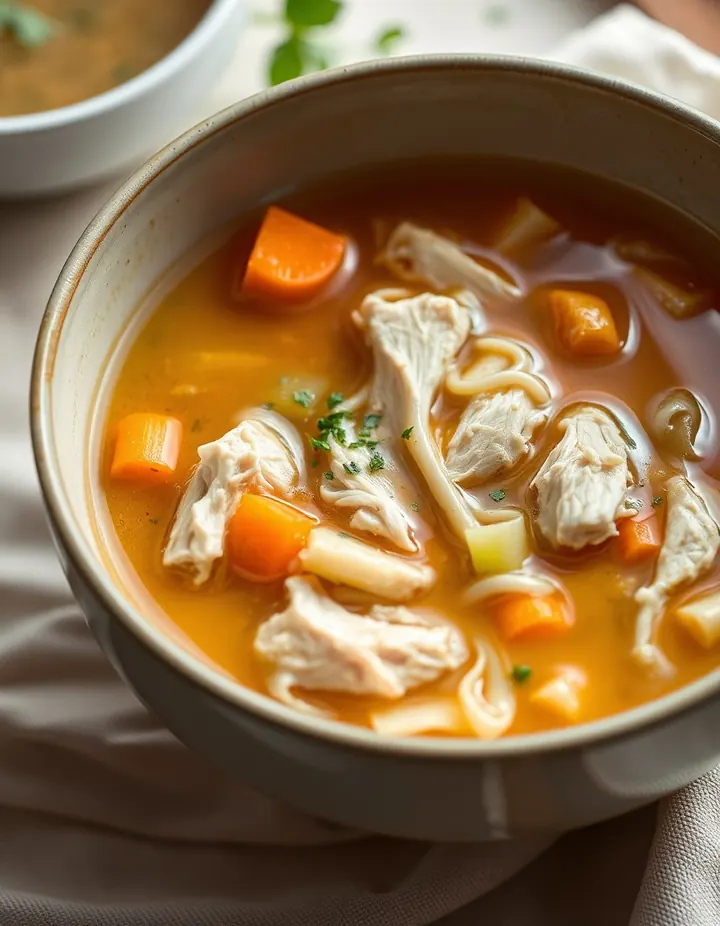 Chicken Soup156 recipes
 Pork Cake107 recipes
The free Flavor Lab newsletter: one surprising pairing a week and the molecular reason it works, in 60 seconds. No spam, unsubscribe anytime.
Prefer an account? Create a free account to save pairings and unlock the full chemistry.