Why it works: Carrot and turnip match in chemistry and in kitchens. They rank in the top 1% of all ingredient pairs, and cooks put them together in 8,002 recipes. Both carry coumarin, which smells sweet, hay. The science ↓
Beef Stew with Dumplings
Ingredients
Directions
Prepare the beef and vegetables
Trim all fat from the beef.
Place the beef in a stewpan.
Fry gently for 10-15 minutes.
Chop the onion, carrot, turnips, and potatoes into small pieces.
Fry the chopped vegetables in the hot fat for 10 minutes.
Cut the beef into 1-inch squares.
Season the beef with salt and pepper.
Rub the beef with 2 tablespoons of flour.
Add the beef to the stewpan and stir until it begins to brown.
Simmer the stew
Add the water and bring the stew to a boil.
Skim off any foam.
Reduce heat to simmer for 2 hours.
Add the sliced potatoes to the stew.
Mix 1 tablespoon of flour with 1 cup of water, then add the flour-water mixture to the stew.
Boil the stew for 10 minutes.
Make the dumplings and finish
For the dumplings, mix 1 pint of flour, baking powder, salt, and sugar in a sieve, then sift the mixture together.
Wet the mixture with 1 small cup of milk and mix into a smooth dough.
Roll out the dough to ½ inch thick and cut it with a biscuit cutter.
Add the dumplings to the stew.
Boil for 15 minutes, ensuring it does not burn.
Transcribed from a scanned cookbook and modernised for today's kitchens. Where the book gave no heat or time, or said "a moderate oven", the temperatures and times here may be modern equivalents rather than the book's own figures.
Explore the science
The flavor team
The pairs that carry this dish. Each one is judged two ways: how much their aromas overlap, and how often cooks already put them together.
-
Carrot + turniptop 1% of all pairsSmell alikestrongCooked together8,002 recipes
Shared aroma: coumarin (sweet, hay).
-
Onion + potatotop 3% of all pairsSmell alikemoderateCooked together9,023 recipes
Shared aroma: 2-isopropyl-3-methoxypyrazine (earthy, pea).
-
Carrot + potatotop 4% of all pairsSmell alikestrongCooked together3,107 recipes
Shared aroma: 2-isobutyl-3-methoxypyrazine (green bell pepper, earthy).
-
Onion + turniptop 5% of all pairsSmell alikestrongCooked together7,585 recipes
Shared aroma: coumarin (sweet, hay).
-
Carrot + peppertop 6% of all pairsSmell alikestrongCooked together14,555 recipes
Shared aroma: 2-isopropyl-3-methoxypyrazine (earthy, pea).
Ranks compare each pair with 20,000 random ingredient pairs on CompKitchen. How we score pairs
What each ingredient does
- Beef
- Provides the main meat; long simmering breaks down tough connective tissue for tenderness.
- Flour
- Starch that thickens the stew's cooking liquid and helps the beef brown.
- Potatoes
- Starchy vegetable that softens and adds body to the stew.
- Baking powder
- Releases gas in the dumpling dough, making the dumplings rise and turn light.
- Milk
- Moistens the dry flour mixture so it forms a dough for the dumplings.
The step that matters
Boil the dumplings without letting the stew burn. Thickened stew contains starch that sticks and scorches on the base of the pan. Keeping the heat controlled and stirring gently prevents burning while the dumplings cook through in the liquid.
Swap the onion
How well each one fits the dish's main ingredients (beef, carrot, turnip, potato, flour, pepper, sugar):
- Parsnipfits better
- Leekfits better
- Beetrootfits better
- Onionthe original
Fit is the average pairing score against beef, carrot, turnip, potato, flour, pepper, sugar. Candidates are from the same food group and used in at least 100 recipes.
“What each ingredient does” and “The step that matters” were written by Claude from this recipe’s own method and reviewed in samples by CompKitchen.
You might also like
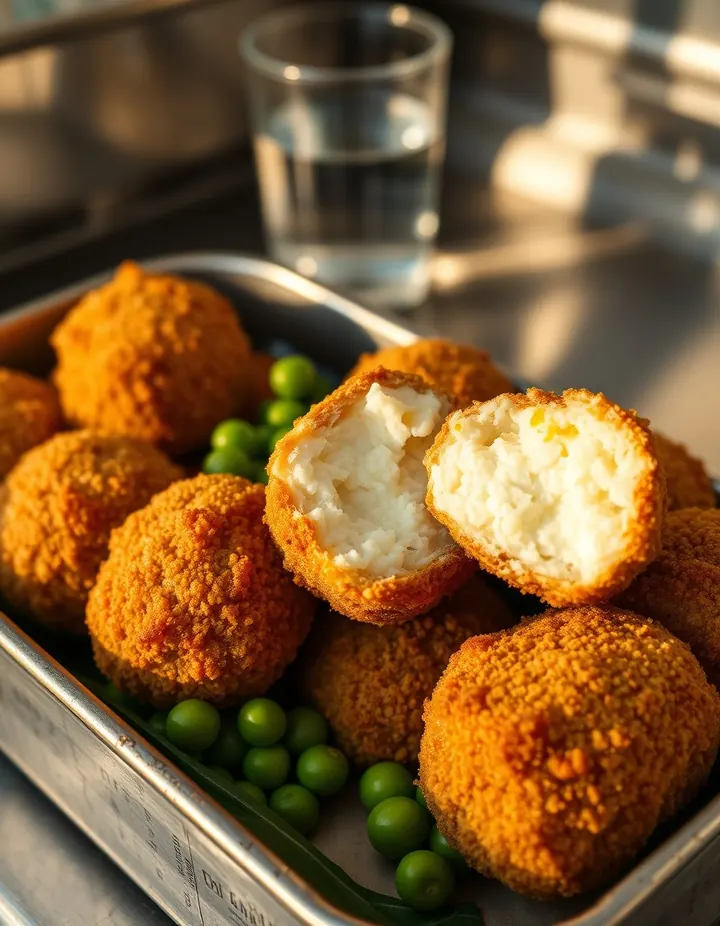 Potato Croquettes255 recipes
 Roast Beef211 recipes
 Beef Loaf175 recipes
 Carrot Soup134 recipes
The free Flavor Lab newsletter: one surprising pairing a week and the molecular reason it works, in 60 seconds. No spam, unsubscribe anytime.
Prefer an account? Create a free account to save pairings and unlock the full chemistry.