Gooseberry
Flower notes from methyl isobutyrate; fruity and apple from methyl isovalerate. Cooks pair it most with sugar 130 recipes, butter 69 and egg 56.
39 partners. Closer to the middle = more aroma overlap. Bigger dot = mentioned together in more recipes.
Gooseberry is a berry whose aroma is led by methyl isobutyrate (flower) and methyl isovalerate (fruity, apple). Cooks pair it most with sugar, butter and egg. By shared aroma its closest partners are pistachio, black currant and fig.
What goes with gooseberry
The classics
- Sugar: mentioned together in 130 recipes, though they share little aroma: this one is a cooking habit more than a chemical match.
- Butter: mentioned together in 69 recipes, with strong shared aroma, including ethyl octanoate (fruity, wine).
- Egg: mentioned together in 56 recipes, though they share little aroma: this one is a cooking habit more than a chemical match.
- Apple: mentioned together in 43 recipes, with strong shared aroma, including methyl isobutyrate (flower).
- Lemon: mentioned together in 40 recipes, with moderate shared aroma, including eucalyptol (eucalyptus, herbal).
Savory and unexpected
- Rhubarb: Strong shared aroma, including acetic acid (sour, vinegar); 6 recipes combine them.
- Ginger: Strong shared aroma, including eucalyptol (eucalyptus, herbal); 13 recipes combine them.
- Parsley: Strong shared aroma, including beta-pinene (pine, resin); 17 recipes combine them.
- Clove: Strong shared aroma, including ethyl octanoate (fruity, wine); 12 recipes combine them.
- Broccoli: Strong shared aroma, including 1-hexanol (resin, flower); 7 recipes combine them.
Worth trying
- Fig Hidden gem: shares 256 flavor molecules with gooseberry, more than sugar's 47, yet only 2 recipes in our collection combine them.
- Pomegranate Hidden gem: shares 241 flavor molecules with gooseberry, more than sugar's 47, yet no recipe in our collection combines them.
- Red currant: a top 4% pair that only 7 recipes in our collection use.
- Black currant: a top 4% pair that only 4 recipes in our collection use.
A hidden gem is a lead to test, not a proven pairing: strong shared chemistry, but cooks have barely tried it.
Gooseberry pairing chart
Scroll sideways to see every column →
| Partner | Shared aroma | Shared molecules | Recipes together | Rank among all pairs |
|---|---|---|---|---|
| fennel | strong | 230 | 17 | top 3% |
| raspberry | strong | 134 | 19 | top 3% |
| plum | strong | 257 | 12 | top 4% |
| red currant | strong | 116 | 7 | top 4% |
| black currant | strong | 255 | 4 | top 4% |
| apple | strong | 271 | 43 | top 4% |
| apricot | strong | 258 | 13 | top 5% |
| rhubarb | strong | 234 | 6 | top 5% |
| spinach | strong | 231 | 18 | top 5% |
| sorrel | strong | 223 | 6 | top 5% |
| vanilla | strong | 220 | 11 | top 5% |
| cherry | strong | 240 | 10 | top 5% |
| sage | strong | 221 | 18 | top 6% |
| blackberry | strong | 221 | 7 | top 6% |
| almond | strong | 235 | 8 | top 6% |
| ginger | strong | 240 | 13 | top 6% |
| quince | strong | 238 | 3 | top 7% |
| strawberry | strong | 253 | 13 | top 7% |
| orange | strong | 256 | 11 | top 7% |
| peach | strong | 254 | 5 | top 7% |
Ordered by pairing score. Shared aroma: how much of their aroma chemistry overlaps (strong, moderate or low against all ingredient pairs). Rank: where the pair sits among random ingredient pairs on CompKitchen. Shared molecules counts every molecule the two have in common, not only aroma ones. Each partner links to a side-by-side comparison.
Gooseberry flavor profile
Gooseberry carries 286 flavor molecules in our data, 151 of them volatile enough to smell and 50 of them key food odorants, the molecules shown to drive food aroma. The aromas that lead its profile, strongest measured first: methyl isobutyrate (flower), methyl isovalerate (fruity, apple), methyl 2-methylbutyrate (apple, fatty) and beta-cyclocitral (clean, damascone).
Why gooseberry pairs the way it does
Gooseberry's pairing hooks are beta-pinene (pine, resin), which 7 of its 10 best partners also carry but only 17% of all ingredients do; and alpha-terpineol (lilac, floral), which 6 of its 10 best partners also carry but only 17% of all ingredients do. Partners that share them, like fennel, raspberry and plum, share more with gooseberry than the background chemistry most foods carry. Partners that share little aroma, like sugar and egg, pair through cooking habit instead: 130 and 56 recipes respectively.
How cooks use gooseberry
- Desserts70%
- Drinks10%
- Mains10%
- Salads10%
Mostly in desserts: 70% of the gooseberry recipes in our collection with a course label, then drinks at 10%. Courses come from 10 recipes with a course label.
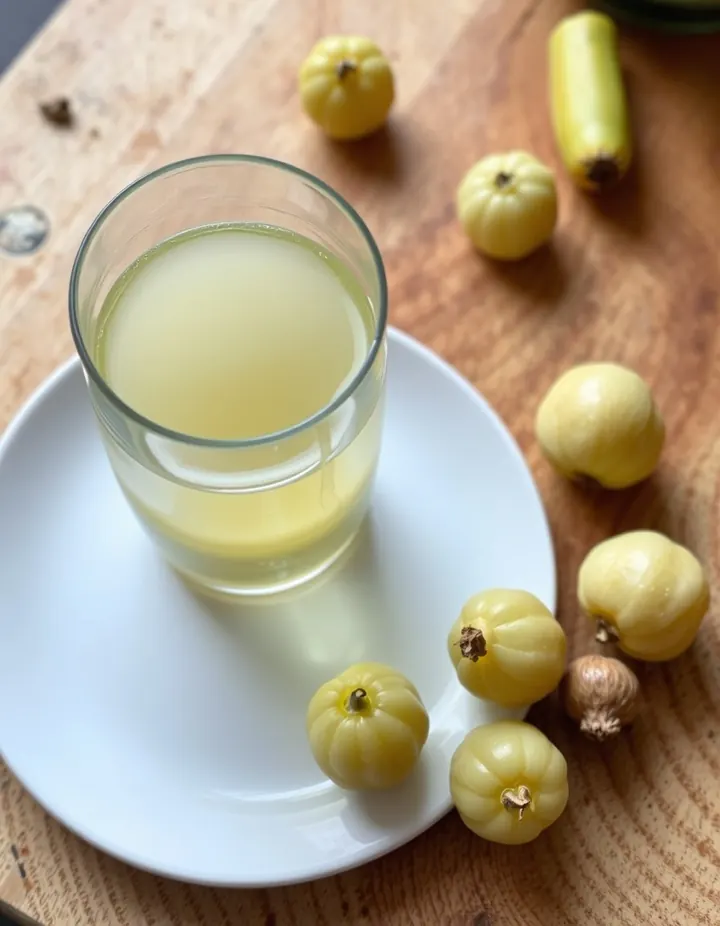
Key aroma molecules in gooseberry
Scroll sideways to see every column →
| Molecule | Smells like | Why it matters |
|---|---|---|
| methyl isobutyrate | flower | In 24 of 861 ingredients; a key food odorant. Shared with apple. |
| methyl isovalerate | fruity, apple, pineapple | In 28 of 861 ingredients. Shared with apple. |
| methyl 2-methylbutyrate | apple, fatty, fruity | In 59 of 861 ingredients; a key food odorant. Shared with apple and apricot. |
| beta-cyclocitral | clean, damascone, fruity | In 37 of 861 ingredients. Shared with apricot and spinach. |
| ethyl salicylate | wintergreen, mint | In 27 of 861 ingredients. Shared with raspberry, red currant and black currant. |
| damascenone | apple, rose, honey | In 72 of 861 ingredients; a key food odorant. Shared with raspberry, plum and black currant. |
| ethyl octanoate | fruity, wine, waxy | In 107 of 861 ingredients; a key food odorant. Shared with plum, apple and apricot. |
| ethyl butyrate | apple, fruity, sweet | In 134 of 861 ingredients; a key food odorant. Shared with plum, black currant and apple. |
Ordered by measured strength in gooseberry (concentration against odour threshold) where studies report it, then by how rare the molecule is across foods. Smell words are each molecule's own published description. Key food odorants are the molecules shown to drive food aroma (Dunkel et al. 2014).
Does it go with what you have?
ButterClassic
Mentioned together in 69 recipes, strong shared aroma, top 11% of pairs. They share ethyl octanoate (fruity, wine). Compare →
LemonClassic
Mentioned together in 40 recipes, moderate shared aroma, top 8% of pairs. They share eucalyptol (eucalyptus, herbal). Compare →
GarlicClassic
Mentioned together in 10 recipes, moderate shared aroma, top 16% of pairs. They share acetic acid (sour, vinegar). Compare →
SugarHabit
Mentioned together in 130 recipes, low shared aroma, top 16% of pairs. Compare →
ChiliSometimes
Mentioned together in 5 recipes, strong shared aroma, top 11% of pairs. They share ethyl octanoate (fruity, wine). Compare →
GingerClassic
Mentioned together in 13 recipes, strong shared aroma, top 6% of pairs. They share eucalyptol (eucalyptus, herbal). Compare →
Gooseberry pairing questions
What makes gooseberry smell like gooseberry?
Its leading aroma molecules are methyl isobutyrate (flower), methyl isovalerate (fruity, apple) and methyl 2-methylbutyrate (apple, fatty), out of the 151 aroma molecules on record for it.
How is gooseberry usually used?
Mostly in desserts: 70% of the gooseberry recipes in our collection with a course label, then drinks at 10%.
What's a good substitute for gooseberry?
The closest molecular substitutes for gooseberry are groundcherry, black currant, naranjilla — ingredients that share the highest fraction of gooseberry's flavor compounds.
Is gooseberry vegan, gluten-free, or kosher?
Gooseberry is vegan and is gluten-free, dairy-free, nut-free, kosher, halal.
The science in full
Scientific name: Ribes uva-crispa. Wikidata Q41503 (CC0)
All 286 molecules on record
47 of 286 are distinctive to gooseberry (in under 10% of foods). Ordered by measured impact in gooseberry, then by how distinctive the molecule is.
1,429 research papers on gooseberry
- Transcriptomic and biochemical insights into LOX pathway aroma biosynthesis during ripening of Ziziphus jujuba Mill. cv. Li. · 2026
- The impact of S. cerevisiae strains on the aroma profile and physicochemical properties of Phyllanthus emblica L. fruit wine. · 2026
- Biologically active withanolides from Physalis peruviana. Pharmaceutical biology · 2025
- Physalis peruwiana Fruits and Their Food Products as New Important Components of Functional Foods. International journal of molecular sciences · 2025
- Functional kombucha production from fusions of black tea and Indian gooseberry (Phyllanthus emblica L.). · 2024
Explore more: pair it · find substitutes · discover novel pairings · get this data via the API · how we score pairs