Why it works: Orange and lemon match in chemistry and in kitchens. They rank in the top 1% of all ingredient pairs, and cooks put them together in 10,634 recipes. Both carry 3-hexenal, which smells apple, fruity. The science ↓
Beignets D'oranges
Ingredients
Directions
Prepare the orange
Peel the oranges and cut them into quarters, removing the seeds.
Blanch the orange quarters with a little sugar.
Dip them in a light batter and fry until golden brown.
Serve dusted with powdered sugar.
Make the cream
In a pot, mix 1 liter of milk with 2 to 5 tablespoons of sugar and flour.
Bring to a boil and reduce to a thin porridge consistency.
Remove from heat and let cool slightly.
Stir in the egg yolks, crushed macarons, and orange blossom water.
Pour the mixture onto a plate and let it cool completely.
Once set, cut the cream into diamond shapes.
Coat and fry
Beat the egg whites with powdered sugar and lemon zest.
Dip the cream pieces in the egg whites, coat them, and fry until golden.
Serve hot with powdered sugar on the side.
Transcribed from a scanned cookbook and modernised for today's kitchens. Where the book gave no heat or time, or said "a moderate oven", the temperatures and times here may be modern equivalents rather than the book's own figures.
Explore the science
The flavor team
The pairs that carry this dish. Each one is judged two ways: how much their aromas overlap, and how often cooks already put them together.
-
Orange + lemontop 1% of all pairsSmell alikestrongCooked together10,634 recipes
Shared aroma: 3-hexenal (apple, fruity).
-
Sugar + creamtop 9% of all pairsSmell alikemoderateCooked together43,450 recipes
Shared aroma: 2,3-butanedione (butter, sweet).
-
Flour + milktop 14% of all pairsSmell alikelowCooked together78,219 recipes
Shared aroma: isobutyraldehyde (malty, green).
-
Sugar + flourtop 15% of all pairsSmell alikemoderateCooked together92,116 recipes
Shared aroma: phenylacetaldehyde (hawthorne, honey).
-
Milk + lemontop 15% of all pairsSmell alikemoderateCooked together19,053 recipes
Shared aroma: 2-nonenal (fatty, green).
Flour and milk barely smell alike, yet cooks put them together in 78,219 recipes: they work on texture and structure more than aroma.
Ranks compare each pair with 20,000 random ingredient pairs on CompKitchen. How we score pairs
What each ingredient does
- Milk
- Forms the base of the cream that sets into a thick, sliceable custard.
- Flour
- Thickens the milk into a porridge that holds its shape once cooled.
- Egg yolks
- Enrich the cream and help it set firm and smooth when cooled.
- Egg whites
- Whipped with sugar, they form a light coating that fries to a crisp golden crust.
- Crushed macarons
- Add almond flavor and a slightly sweet, nutty taste to the cream.
- Oranges
- Provide the bright citrus flavor and juicy fruit at the centre of the beignet.
The step that matters
Cooling the cream completely before cutting. The cream must set fully on the plate; cutting it while warm makes it soft and it will fall apart in the hot oil.
Swap the orange
How well each one fits the dish's main ingredients (sugar, flour, milk, cream, egg, lemon):
- Vanillafits better
- Raisinfits better
- Figfits about as well
- Orangethe original
Fit is the average pairing score against sugar, flour, milk, cream, egg, lemon. Candidates are from the same food group and used in at least 100 recipes.
“What each ingredient does” and “The step that matters” were written by Claude from this recipe’s own method and reviewed in samples by CompKitchen.
You might also like
 Orange Bundt Cake349 recipes
 Lemon Cake228 recipes
 Lemon Ice147 recipes
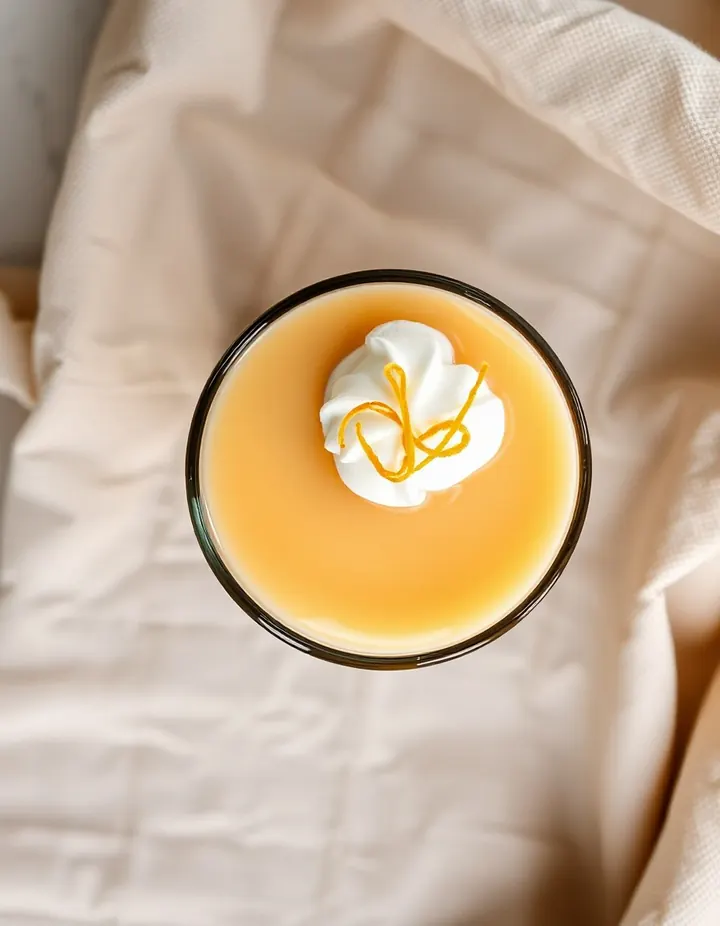 Orange Cream Rice Pudding121 recipes
The free Flavor Lab newsletter: one surprising pairing a week and the molecular reason it works, in 60 seconds. No spam, unsubscribe anytime.
Prefer an account? Create a free account to save pairings and unlock the full chemistry.