Why it works: Milk and vanilla are a kitchen classic. They rank in the top 5% of all ingredient pairs, and cooks put them together in 19,187 recipes. Both carry ethyl caproate, which smells fruity, apple peel. The science ↓
Variegated Jelly
Ingredients
Directions
Prepare the gelatine
Divide the box of gelatine into halves.
Place each half in a bowl with ½ cup cold water.
In a third bowl, add ¾ ounce of pink gelatine to ¾ cup cold water.
Cover and let sit for 2 hours.
Add 1 pint boiling water, 1 cup sugar, ½ pint wine, and lemon juice to the pink gelatine.
Stir until dissolved and strain through a napkin.
Repeat the same process for one of the other portions of gelatine.
Make the custard
Beat together 4 egg yolks and ½ cup sugar.
Add this to the third portion of gelatine.
Stir the mixture into 1 pint + ⅓ cup boiling milk in a double boiler, then stir for 3 minutes.
Strain through a fine sieve.
Add 1 teaspoon vanilla extract.
Set and serve
Place two molds (each holding about 3 pints) in a deep pan surrounded by ice and water.
Pour equal parts of the wine jelly into the molds and let it harden.
Once set, pour in the pink gelatine, ensuring it is not too cold to harden.
After the pink gelatine has set, pour in the egg mixture while it is still liquid.
Set the molds in an ice chest for 3 to 4 hours.
Dip the molds in tepid water to loosen the jelly.
Gently turn it out onto flat dishes.
Transcribed from a scanned cookbook and modernised for today's kitchens. Where the book gave no heat or time, or said "a moderate oven", the temperatures and times here may be modern equivalents rather than the book's own figures.
Explore the science
The flavor team
The pairs that carry this dish. Each one is judged two ways: how much their aromas overlap, and how often cooks already put them together.
-
Milk + vanillatop 5% of all pairsSmell alikemoderateCooked together19,187 recipes
Shared aroma: ethyl caproate (fruity, apple peel).
-
Sugar + vanillatop 8% of all pairsSmell alikelowCooked together35,032 recipes
Shared aroma: beta-damascenone (apple, rose).
-
Wine + lemontop 13% of all pairsSmell alikelowCooked together6,157 recipes
Shared aroma: decanal (soap, orange peel).
-
Lemon + vanillatop 15% of all pairsSmell alikemoderateCooked together5,961 recipes
Shared aroma: eucalyptol (eucalyptus, herbal).
-
Lemon + milktop 15% of all pairsSmell alikemoderateCooked together19,053 recipes
Shared aroma: 2-nonenal (fatty, green).
Sugar and vanilla barely smell alike, yet cooks put them together in 35,032 recipes: they work on texture and structure more than aroma.
Ranks compare each pair with 20,000 random ingredient pairs on CompKitchen. How we score pairs
What each ingredient does
- Gelatine
- Forms the firm, sliceable set that holds each jelly layer together.
- Egg yolks
- Enrich the custard layer and give it a smooth, thick texture.
- Milk
- Adds creaminess and softness to the custard layer.
- Sugar
- Provides sweetness in both the wine jelly and the custard.
- Lemon juice
- Adds acidity that brightens the sweet wine jelly.
- Wine
- Gives the clear jelly its main flavour and aroma.
The step that matters
Pour each layer at the right stage of setting. Each layer must be firm enough to hold its shape but still liquid enough to bond with the next. Pouring too early lets layers mix; pouring too late leaves them unable to join, so the layers separate when turned out.
Swap the lemon
How well each one fits the dish's main ingredients (sugar, wine, egg, milk, vanilla):
- Figfits better
- Peachfits better
- Strawberryfits better
- Lemonthe original
Fit is the average pairing score against sugar, wine, egg, milk, vanilla. Candidates are from the same food group and used in at least 100 recipes.
“What each ingredient does” and “The step that matters” were written by Claude from this recipe’s own method and reviewed in samples by CompKitchen.
You might also like
 Lemon Cake228 recipes
 Lemon Ice147 recipes
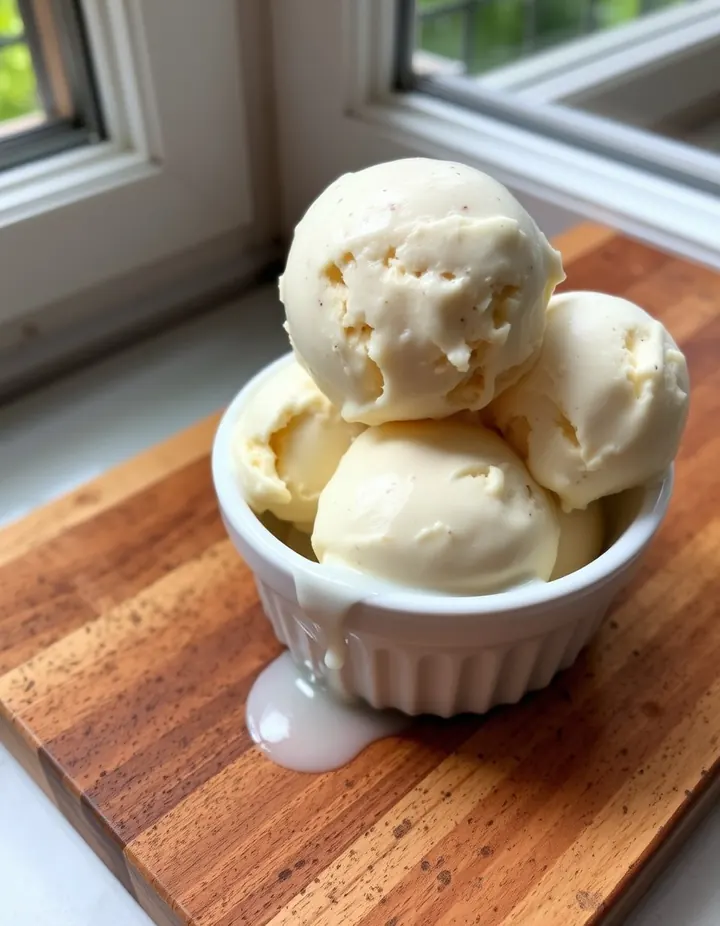 Vanilla Ice Cream108 recipes
 Lemon Sherbet103 recipes
The free Flavor Lab newsletter: one surprising pairing a week and the molecular reason it works, in 60 seconds. No spam, unsubscribe anytime.
Prefer an account? Create a free account to save pairings and unlock the full chemistry.