Why it works: Cream and butter are a kitchen classic. They rank in the top 8% of all ingredient pairs, and cooks put them together in 41,516 recipes. Both carry delta-dodecalactone, which smells sweet, creamy. The science ↓
Yorkshire Toffee
Ingredients
Directions
Cook the toffee
In a kettle, combine glucose, white sugar, yellow sugar, and cream.
Cook the mixture until it reaches 250°F (120°C).
Add butter and lemon extract, then continue cooking until it reaches 260°F (130°C).
Set and cut
Pour the mixture onto a greased slab to a thickness of caramels.
Once set, cut into pieces measuring 2x4 inches.
Transcribed from a scanned cookbook and modernised for today's kitchens. Where the book gave no heat or time, or said "a moderate oven", the temperatures and times here may be modern equivalents rather than the book's own figures.
Explore the science
The flavor team
The pairs that carry this dish. Each one is judged two ways: how much their aromas overlap, and how often cooks already put them together.
-
Cream + buttertop 8% of all pairsSmell alikemoderateCooked together41,516 recipes
Shared aroma: delta-dodecalactone (sweet, creamy).
-
Sugar + creamtop 9% of all pairsSmell alikemoderateCooked together43,450 recipes
Shared aroma: 2,3-butanedione (butter, sweet).
-
Butter + lemontop 16% of all pairsSmell alikemoderateCooked together41,227 recipes
Shared aroma: 3-hexenal (apple, fruity).
-
Sugar + buttertop 17% of all pairsSmell alikemoderateCooked together98,233 recipes
Shared aroma: guaiacol (smoky, sweet).
-
Sugar + lemontop 18% of all pairsSmell alikelowCooked together53,532 recipes
Shared aroma: 2-nonenal (fatty, green).
Sugar and lemon barely smell alike, yet cooks put them together in 53,532 recipes: they work on texture and structure more than aroma.
Ranks compare each pair with 20,000 random ingredient pairs on CompKitchen. How we score pairs
What each ingredient does
- Glucose
- Inhibits sugar crystallization, keeping the toffee smooth and preventing grainy texture.
- White sugar
- Provides sweetness and forms the structure that sets as the mixture cools.
- Yellow sugar
- Adds sweetness and a deeper caramel flavor as the sugars cook.
- Cream
- Adds fat and moisture, giving the toffee a rich, softer bite.
- Butter
- Adds fat for richness and a tender, melt-in-the-mouth texture.
The step that matters
Cooking to 260°F (130°C) after adding butter. The final temperature determines how firm the toffee sets. Undercooking leaves it soft and sticky, while overcooking makes it hard and brittle. Stirring and watching the thermometer keeps the sugar from scorching.
Swap the lemon
How well each one fits the dish's main ingredients (sugar, cream, butter):
- Vanillafits better
- Strawberryfits better
- Coconutfits better
- Lemonthe original
Fit is the average pairing score against sugar, cream, butter. Candidates are from the same food group and used in at least 100 recipes.
“What each ingredient does” and “The step that matters” were written by Claude from this recipe’s own method and reviewed in samples by CompKitchen.
You might also like
 Lemon Cake228 recipes
 Lemon Ice147 recipes
 Lemon Sherbet103 recipes
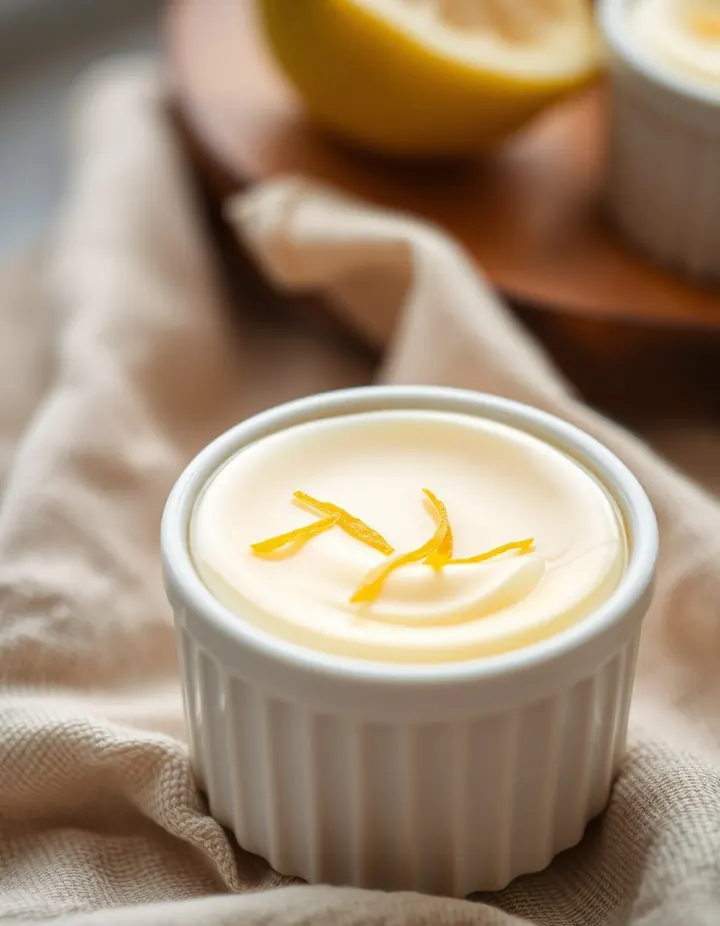 Lemon Custard64 recipes
The free Flavor Lab newsletter: one surprising pairing a week and the molecular reason it works, in 60 seconds. No spam, unsubscribe anytime.
Prefer an account? Create a free account to save pairings and unlock the full chemistry.