Why it works: Vanilla and brioche work together. They rank in the top 6% of all ingredient pairs, and 70 recipes mention both. Both carry 1-octen-3-ol, which smells mushroom, earthy. The science ↓
The recipe
Ingredients
Contains: egg, milk, wheat (auto-detected from the ingredients and method; we can miss things, so check labels)
- BERRY FILLING
Directions
Make the ice cream
Combine the milk, cream, sugar, and salt in a saucepan.
Split the vanilla beans and scrape the seeds into the milk mixture, then drop in the pods.
Bring to a boil, then immediately remove from heat and set aside for 2 minutes to steep.
Lightly whisk the egg yolks to break them up, then whisk in a spoonful of the hot milk mixture.
Pour the yolks into the hot milk mixture, whisking gently to combine.
Cook over medium heat, stirring gently but constantly, until the mixture thickens and coats the back of a spoon.
Remove from heat and strain through a fine-meshed sieve into a bowl set in a larger bowl of ice.
Let chill, stirring occasionally as the mixture cools.
When it is cold, stir in the half-and-half.
Freeze in an ice cream maker according to manufacturer's directions.
Pack into airtight freezer containers and freeze until ready to use.
Make the brioche dough
Oil a large mixing bowl and set aside.
Whisk the water, yeast, and eggs together.
In the bowl of an electric mixer, combine the flour, sugar, and salt with the paddle attachment on low speed.
Slowly add the egg mixture.
Mix until the dough forms a ball.
Add the butter, a few small pieces at a time, until the butter is incorporated.
Mix on medium speed for 4 minutes.
Put the dough in the oiled bowl; the mixture will be soft.
Cover with plastic wrap and place a towel on top.
Refrigerate overnight.
Shape and bake the tarts
Line 2 sheet pans with parchment paper.
Divide the cold dough into 10 portions, roll into balls, and refrigerate for 30 minutes.
Flour a work surface and roll out each ball of dough into a 6-inch circle.
Brush off any excess flour.
Refrigerate again.
Place the circles on a work surface.
Pinch the edge with your thumb and forefinger and twist slightly, turning up a collar all around each circle.
Prick the bottoms with a fork and place on the prepared sheet pans.
Brush the edges of the brioche with cool water and sprinkle with turbinado sugar.
Preheat the oven to 350°F (175°C).
Gently toss the filling ingredients together.
Mound into the prepared brioche tart shells; the filling will cook down.
Bake 12 to 15 minutes, until the filling bubbles and the edges are golden brown.
Remove and keep warm.
Plate and serve
Puree the coulis ingredients in a food processor or blender and strain through a fine-meshed sieve.
Put the coulis in a squeeze bottle.
Place a brioche tart on each dessert plate.
Dust with confectioner's sugar.
Spoon berry coulis over the plates.
Place drops of creme anglaise in the coulis and pull through with a toothpick or the tip of a sharp knife to form a design.
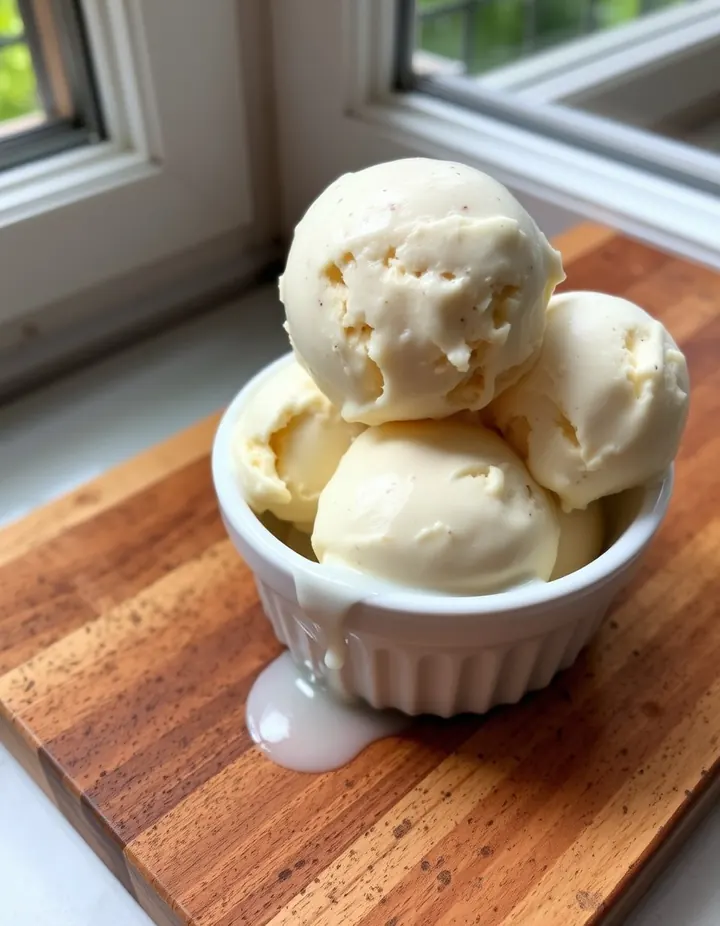
Top each with a scoop of Tahitian vanilla ice cream and garnish with a sprig of mint and an optional sugar spiral.
This recipe comes from the Recipes Wiki on Fandom and is licensed CC BY-SA 4.0. Our formatting and summaries are shared under the same licence.
Steps grouped into stages for easier reading; the method is the source's own.
Explore the science
The flavor team
The pairs that carry this dish. Each one is judged two ways: how much aroma chemistry they share, and how many recipes mention both.
-
Vanilla + briochetop 6% of all pairsAroma overlaplowMentioned together70 recipes
Shared aroma: 1-octen-3-ol (mushroom, earthy).
-
Vanilla + milktop 2% of all pairsAroma overlapmoderateMentioned together19,175 recipes
Shared aroma: ethyl caproate (fruity, apple peel).
-
Vanilla + berrytop 3% of all pairsAroma overlapstrongMentioned together50 recipes
Shared aroma: ethyl caproate (fruity, apple peel).
-
Vanilla + sugartop 3% of all pairsAroma overlaplowMentioned together35,031 recipes
Shared aroma: beta-damascenone (apple, rose).
-
Cream + sugartop 5% of all pairsAroma overlapmoderateMentioned together43,437 recipes
Shared aroma: 2,3-butanedione (butter, sweet).
Vanilla and sugar share little aroma chemistry, yet 35,031 recipes mention both: they likely work on texture and structure more than aroma.
Ranks compare each pair with 20,000 random ingredient pairs on CompKitchen. How we score pairs
What each ingredient does
- Eggs
- Egg yolks thicken the custard and set the ice cream base, giving it richness and body.
- Yeast
- Produces gas as it ferments, leavening the dough so it rises and becomes airy.
- All-purpose flour
- Forms the gluten network that gives the brioche dough its structure.
- Butter
- Adds fat that tenderizes the brioche crumb and gives it richness.
- Cornstarch
- Thickens the berry filling as it cooks, so it holds its shape in the shells.
- Cream
- Adds fat that makes the ice cream smooth and creamy rather than icy.
The step that matters
Cook the custard until it coats a spoon. Egg yolks thicken as they heat, but overheating can scramble them. Stir gently and constantly, and stop once the mixture coats the back of a spoon so the custard stays smooth.
Flavor stand-ins for the beans
How well each one fits the dish's main ingredients (vanilla, cream, milk, sugar, egg, brioche, flour):
- Almondbetter flavor fit
- Pecansbetter flavor fit
- Chestnutbetter flavor fit
- Beansthe original
Fit is the average pairing score against vanilla, cream, milk, sugar, egg, brioche, flour. Candidates are from the same food group and used in at least 100 recipes. This compares flavor only: it does not check the job the ingredient does in the dish (bulk, moisture, acidity, structure).
“What each ingredient does” and “The step that matters” were written by Claude from this recipe’s own method and reviewed in samples by CompKitchen.
You might also like
 Illustration
 Illustration
 Illustration
 Illustration
The Sunday pairing: one pairing, the chemistry behind it, and how to cook it. No spam, unsubscribe anytime.
Prefer an account? Create a free account for sign-in; Pro adds the full results and chemistry.