Why it works: Milk and vanilla are a kitchen classic. They rank in the top 5% of all ingredient pairs, and cooks put them together in 19,187 recipes. Both carry ethyl caproate, which smells fruity, apple peel. The science ↓
Cajun Lemon Sweet Dough Pies
Ingredients
Directions
Make the dough
Sift flour, baking powder, and salt into a bowl.
In a standing electric mixer, beat butter, shortening, and sugar until light and fluffy.
Beat in eggs, one at a time, beating well after each addition.
Beat in milk and vanilla extract (the batter will appear curdled).
With mixer on low speed, beat in the flour mixture a little at a time until it forms a dough.
Halve the dough and form each piece into a disk.
Chill the dough, wrapped in plastic wrap, until firm, about 3 hours.
Cut and chill the rounds
Cut twenty‑four 6‑inch squares of wax paper.
Roll out one piece of dough between two sheets of plastic wrap into a 12‑inch round, about 1/8 inch thick.
Cut out six rounds with a 5‑inch round cutter, sandwich each round between two squares of wax paper, and stack on a baking sheet. If the dough becomes too soft to work with, transfer it to a baking sheet and chill until firm.
Roll out and cut the remaining piece of dough in the same manner, sandwiching rounds between the remaining squares of wax paper, and stack on a baking sheet.
Chill the rounds until firm and wrap each stack carefully with plastic wrap to prevent drying.
Make the filling
Make the filling: whisk together sugar, cornstarch, and salt in a heavy saucepan, then gradually whisk in water and milk until the cornstarch is dissolved.
In a bowl, whisk together the yolks.
Cook the milk mixture over moderate heat, whisking, until it comes to a boil.
Gradually whisk about 1/2 cup of the hot milk mixture into the yolks, then whisk the yolk mixture into the remaining hot milk mixture.
Bring the custard to a slow boil, whisking, for 1 minute.
Remove the pan from heat and whisk in butter, lemon juice, and zest until the butter is melted.
Cover the surface of the filling with plastic wrap.
Fill, bake and serve
Preheat the oven to 375°F and lightly butter two baking sheets.
Discard the top square of wax paper from one dough round and spoon 1 tablespoon of filling onto the center of the round.
Using wax paper, fold the dough over to form a half circle, enclosing the filling, and press the edges together lightly.
Transfer the pie to a baking sheet, discarding the paper, and crimp the edge with a fork. Prick the pie with a fork once.
Repeat with the remaining dough rounds and filling to make 11 more pies.
Bake the pies in two batches in the middle of the oven for 15 minutes, or until golden brown around the edges (the dough will crack open slightly).
Transfer the pies to racks to cool.
Serve the pies chilled or at room temperature (do not let them stand more than 30 minutes at room temperature).
Nutrition, whole recipe (rough)
Counts 9 of 10 ingredients. The other 1 aren't in our nutrition table and add nothing above, so the real totals are higher.
What these numbers assume: 9 portions
| Ingredient | Portion assumed | kcal |
|---|---|---|
| Flour | 1 cup (125g) all-purpose | 455 |
| Milk | 1 cup (244ml) whole | 149 |
| Vegetable | 1 tbsp (14g) | 120 |
| Butter | 1 tbsp (14g) | 102 |
| Egg | 1 large egg (50g) | 78 |
| Sugar | 1 tbsp (12.5g) granulated | 49 |
| Vanilla | 1 tsp extract (4ml) | 12 |
| Lemon | juice of 1 lemon (48ml) | 12 |
| Salt | 1 tsp (6g) | 0 |
| Water | not in our table | 0 |
One typical portion per ingredient; the recipe's quantities are not counted. A rough guide only, not for medical or dietary planning.
Steps grouped into stages for easier reading; the method is the source's own.
Explore the science
The flavor team
The pairs that carry this dish. Each one is judged two ways: how much their aromas overlap, and how often cooks already put them together.
-
Milk + vanillatop 5% of all pairsSmell alikemoderateCooked together19,187 recipes
Shared aroma: ethyl caproate (fruity, apple peel).
-
Butter + milktop 7% of all pairsSmell alikemoderateCooked together81,283 recipes
Shared aroma: (z)-4-heptenal (biscuit, cream).
-
Sugar + vanillatop 8% of all pairsSmell alikelowCooked together35,032 recipes
Shared aroma: beta-damascenone (apple, rose).
-
Flour + buttertop 12% of all pairsSmell alikelowCooked together124,287 recipes
Shared aroma: isobutyraldehyde (malty, green).
-
Flour + vanillatop 12% of all pairsSmell alikemoderateCooked together19,241 recipes
Shared aroma: isobutyraldehyde (malty, green).
Sugar and vanilla barely smell alike, yet cooks put them together in 35,032 recipes: they work on texture and structure more than aroma.
Ranks compare each pair with 20,000 random ingredient pairs on CompKitchen. How we score pairs
What each ingredient does
- All-purpose flour
- Forms the structure of the dough that encloses the filling.
- Unsalted butter
- Adds richness and tenderness to the dough and gives the filling body and flavor.
- Eggs
- Add structure and richness to the dough and thicken the custard filling.
- Granulated sugar
- Sweetens the dough and filling and helps the dough brown in the oven.
- Cornstarch
- Thickens the lemon custard filling as it cooks.
- Lemon juice
- Adds acidity and bright lemon flavor to the filling.
The step that matters
Bring the custard to a slow boil. Cornstarch needs to reach a boil to fully thicken, and the egg yolks must be whisked constantly so they thicken smoothly without scrambling.
Swap the lemon
How well each one fits the dish's main ingredients (flour, butter, sugar, egg, milk, vanilla):
- Figfits better
- Raisinfits better
- Coconutfits better
- Lemonthe original
Fit is the average pairing score against flour, butter, sugar, egg, milk, vanilla. Candidates are from the same food group and used in at least 100 recipes.
“What each ingredient does” and “The step that matters” were written by Claude from this recipe’s own method and reviewed in samples by CompKitchen.
You might also like
 Lemon Cake228 recipes
 Lemon Ice147 recipes
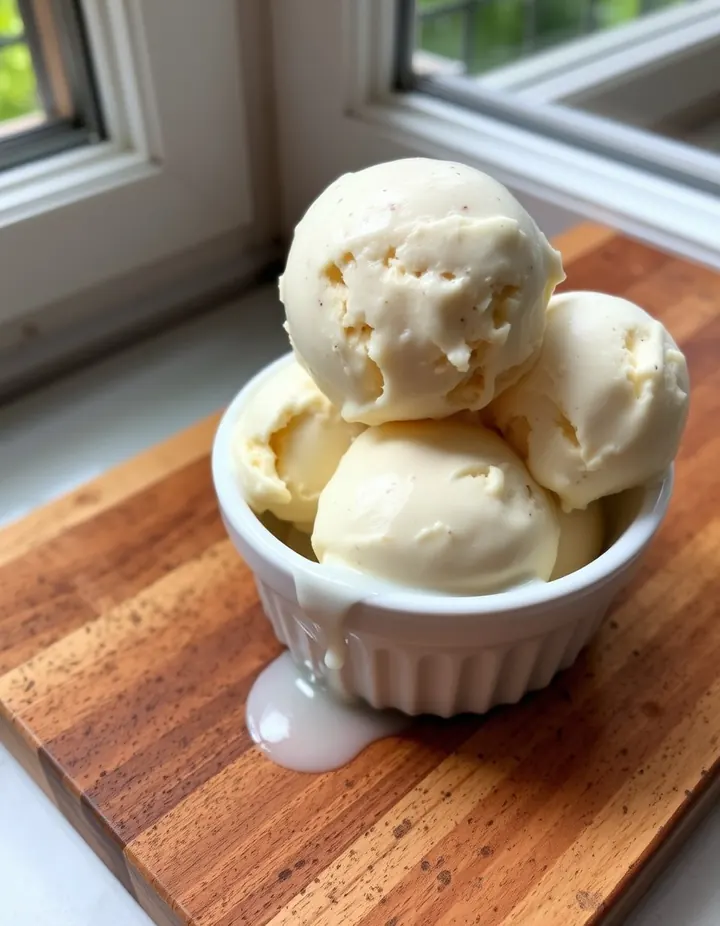 Vanilla Ice Cream108 recipes
 Lemon Sherbet103 recipes
The free Flavor Lab newsletter: one surprising pairing a week and the molecular reason it works, in 60 seconds. No spam, unsubscribe anytime.
Prefer an account? Create a free account to save pairings and unlock the full chemistry.