Why it works: Lemon and ginger match in chemistry and in kitchens. They rank in the top 5% of all ingredient pairs, and cooks put them together in 5,154 recipes. Both carry beta-phellandrene, which smells minty, terpene. The science ↓
Brandy Snaps
Ingredients
Directions
Make the batter
Place butter or margarine, castor sugar, treacle, and lemon juice in a saucepan and simmer over moderate heat until the butter has melted, stirring occasionally.
Remove from the stove.
Add the flour, salt, and ginger and mix well.
Bake and shape
Drop 2-3 teaspoonfuls of batter, 12 cm apart, on well-greased baking sheets.
Bake at 190°C for about 5 minutes, or until rich brown and well spread out.
Remove the baking sheet from the oven and allow the brandy snaps to cool for no more than 1 minute.
While still warm, wrap each biscuit around the handle of a wooden spoon to make a roll.
Allow them to firm before removing the handle and lifting them onto a wire rack to cool completely.
Repeat with the remaining batter.
Store and serve
Store in an airtight container until needed.
Serve filled with whipped cream laced with brandy.
Nutrition, whole recipe (rough)
What these numbers assume: 6 portions
| Ingredient | Portion assumed | kcal |
|---|---|---|
| Flour | 1 cup (125g) all-purpose | 455 |
| Butter | 1 tbsp (14g) | 102 |
| Sugar | 1 tbsp (12.5g) granulated | 49 |
| Lemon | juice of 1 lemon (48ml) | 12 |
| Ginger | 1 tsp grated fresh (2g) | 2 |
| Salt | 1 tsp (6g) | 0 |
One typical portion per ingredient; the recipe's quantities are not counted. A rough guide only, not for medical or dietary planning.
Steps grouped into stages for easier reading; the method is the source's own.
Explore the science
The flavor team
The pairs that carry this dish. Each one is judged two ways: how much their aromas overlap, and how often cooks already put them together.
-
Lemon + gingertop 5% of all pairsSmell alikestrongCooked together5,154 recipes
Shared aroma: beta-phellandrene (minty, terpene).
-
Butter + flourtop 12% of all pairsSmell alikelowCooked together124,287 recipes
Shared aroma: isobutyraldehyde (malty, green).
-
Sugar + flourtop 15% of all pairsSmell alikemoderateCooked together92,116 recipes
Shared aroma: phenylacetaldehyde (hawthorne, honey).
-
Flour + gingertop 15% of all pairsSmell alikemoderateCooked together8,564 recipes
Shared aroma: isobutyraldehyde (malty, green).
-
Butter + lemontop 16% of all pairsSmell alikemoderateCooked together41,227 recipes
Shared aroma: 3-hexenal (apple, fruity).
Butter and flour barely smell alike, yet cooks put them together in 124,287 recipes: they work on texture and structure more than aroma.
Ranks compare each pair with 20,000 random ingredient pairs on CompKitchen. How we score pairs
What each ingredient does
- Butter or margarine
- Melts to provide fat that keeps the batter smooth and helps the snaps crisp.
- Castor sugar
- Dissolves into the melted fat and caramelises during baking, giving sweetness and browning.
- Black treacle
- Adds deep colour, rich flavour and extra moisture to the batter.
- Cake flour
- Provides the structure that holds the thin biscuits together as they spread.
The step that matters
Shaping while warm. The biscuits harden quickly as they cool. They must be rolled within about a minute of leaving the oven, because once firm they crack instead of bending around the spoon handle.
Swap the ginger
How well each one fits the dish's main ingredients (butter, sugar, lemon, flour):
- Cinnamonfits better
- Nutmegfits better
- Parsleyfits better
- Gingerthe original
Fit is the average pairing score against butter, sugar, lemon, flour. Candidates are from the same food group and used in at least 100 recipes.
“What each ingredient does” and “The step that matters” were written by Claude from this recipe’s own method and reviewed in samples by CompKitchen.
You might also like
 Lemon Cake228 recipes
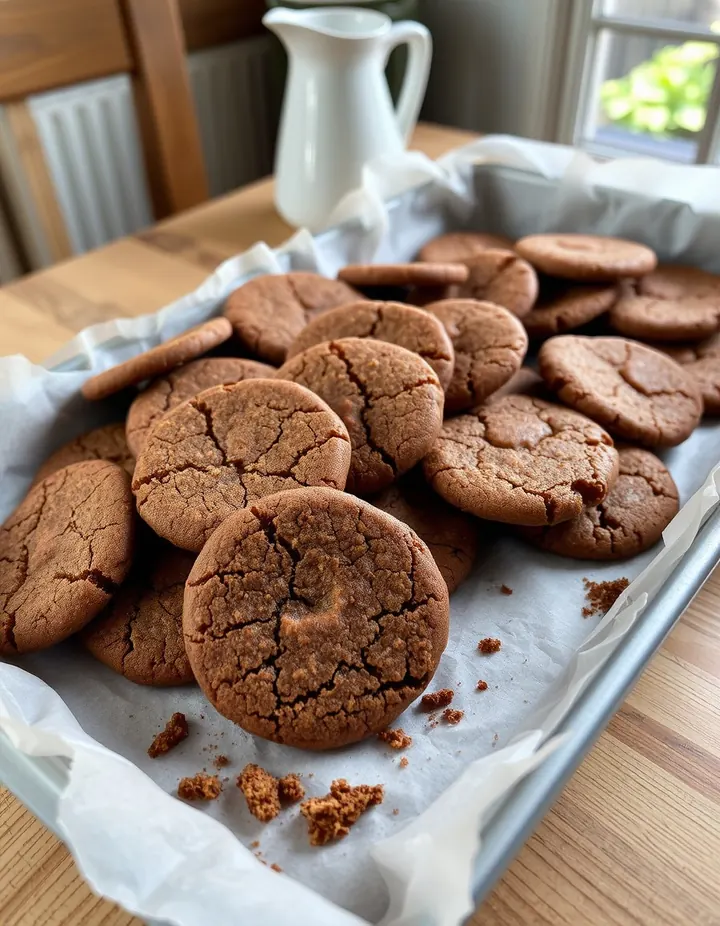 Ginger Cookies213 recipes
 Lemon Ice147 recipes
 Lemon Sherbet103 recipes
The free Flavor Lab newsletter: one surprising pairing a week and the molecular reason it works, in 60 seconds. No spam, unsubscribe anytime.
Prefer an account? Create a free account to save pairings and unlock the full chemistry.