Why it works: Mace and nutmeg are a kitchen classic. They rank in the top 4% of all ingredient pairs, and cooks put them together in 6,557 recipes. Both carry myristicin, which smells spice, warm. The science ↓
Sri Lankan Love Cake
Ingredients
Directions
Prepare
Grease and line a 20 cm square tin with two layers of grease-proof paper.
Make the batter
Beat the yolks and sugar until light and creamy.
Stir in the semolina, cashews, rose water, honey, lemon rind, mace, cardamom, and almond essence (if using).
Beat the egg whites until they form firm peaks.
Fold the beaten egg whites into the mixture and pour the batter into the prepared tin.
Bake and serve
Bake at 150 °C for one hour.
If the top browns too quickly, cover it with greased paper or foil.
Do not use the skewer test; the center will finish moist.
Remove from the oven and leave the cake in the tin until it is quite cold.
Cut the cake into pieces while still in the tin, then lift the pieces out.
Nutrition, whole recipe (rough)
Counts 8 of 12 ingredients. The other 4 aren't in our nutrition table and add nothing above, so the real totals are higher.
What these numbers assume: 8 portions
| Ingredient | Portion assumed | kcal |
|---|---|---|
| Cashew | 1 oz (28g / ~18 nuts) | 157 |
| Egg | 1 large egg (50g) | 78 |
| Honey | 1 tbsp (21g) | 64 |
| Sugar | 1 tbsp (12.5g) granulated | 49 |
| Lemon | juice of 1 lemon (48ml) | 12 |
| Nutmeg | 1 tsp ground (2.2g) | 12 |
| Almond | 1 almond (1.2g) | 7 |
| Cardamom | 1 tsp ground (2g) | 6 |
| Semolina | not in our table | 0 |
| Rose | not in our table | 0 |
| Water | not in our table | 0 |
| Mace | not in our table | 0 |
One typical portion per ingredient; the recipe's quantities are not counted. A rough guide only, not for medical or dietary planning.
Steps grouped into stages for easier reading; the method is the source's own.
Explore the science
The flavor team
The pairs that carry this dish. Each one is judged two ways: how much their aromas overlap, and how often cooks already put them together.
-
Mace + nutmegtop 4% of all pairsSmell alikemoderateCooked together6,557 recipes
Shared aroma: myristicin (spice, warm).
-
Lemon + nutmegtop 5% of all pairsSmell alikestrongCooked together11,318 recipes
Shared aroma: beta-phellandrene (minty, terpene).
-
Semolina + nutmegtop 11% of all pairsSmell alikemoderateCooked together53 recipes
Shared aroma: eucalyptol (eucalyptus, herbal).
-
Semolina + lemontop 13% of all pairsSmell alikemoderateCooked together124 recipes
Shared aroma: eucalyptol (eucalyptus, herbal).
-
Rose + honeytop 13% of all pairsSmell alikemoderateCooked together94 recipes
Shared aroma: beta-damascenone (apple, rose).
Ranks compare each pair with 20,000 random ingredient pairs on CompKitchen. How we score pairs
What each ingredient does
- Eggs
- Whipped whites give the cake its light, airy structure, while the yolks add richness.
- Caster sugar
- Sweetens the batter and, creamed with the yolks, helps trap air for a lighter crumb.
- Semolina
- Provides the body of the cake, setting into a tender, slightly grainy crumb as it bakes.
- Raw cashews
- Add fat and a rich, nutty texture that keeps the cake moist.
- Honey
- Adds sweetness and moisture, and helps the top brown as it bakes.
The step that matters
Folding in the egg whites. Whites hold air only if beaten to firm peaks and folded in gently. Stirring or deflating them makes the cake dense, so the batter must be folded and poured straight into the tin.
Swap the mace
How well each one fits the dish's main ingredients (egg, sugar, semolina, rose, honey, lemon, nutmeg):
- Cardamomfits better
- Cinnamonfits better
- Gingerfits better
- Macethe original
Fit is the average pairing score against egg, sugar, semolina, rose, honey, lemon, nutmeg. Candidates are from the same food group and used in at least 100 recipes.
“What each ingredient does” and “The step that matters” were written by Claude from this recipe’s own method and reviewed in samples by CompKitchen.
You might also like
 Lemon Cake228 recipes
 Lemon Ice147 recipes
 Lemon Sherbet103 recipes
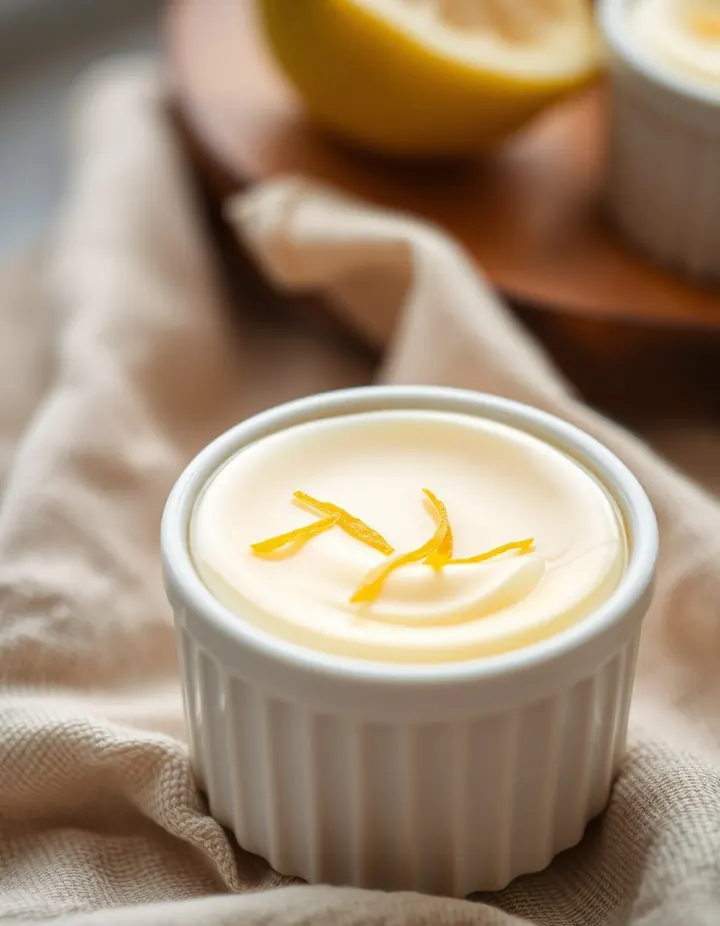 Lemon Custard64 recipes
The free Flavor Lab newsletter: one surprising pairing a week and the molecular reason it works, in 60 seconds. No spam, unsubscribe anytime.
Prefer an account? Create a free account to save pairings and unlock the full chemistry.