Why it works: Kidney beans and beans match in chemistry and in kitchens. They rank in the top 1% of all ingredient pairs, and 364 recipes mention both. Both carry 2-isobutyl-3-methoxypyrazine, which smells green bell pepper, earthy. The science ↓
The recipe
Ingredients
Directions
Prepare the peas
Clean the black‑eyed peas in water in a large pot.
Cover the peas with boiling water and soak for at least an hour or overnight.
After soaking, rub the peas between your hands to remove the skins, if needed.
Rinse the peas to wash away skins and debris.
Drain the peas in a colander. If the beans have soaked only a short time, cook them in water over low heat until partially tender.
Make the paste
Crush, grind, or mash the black‑eyed peas into a thick paste.
Put the crushed beans in a large bowl.
Slowly stir in enough water to make the paste smooth.
Beat the paste with a wire whisk or wooden spoon for a few minutes or more, incorporating small air bubbles.
Heat the palm oil in a skillet for a few minutes until warmed.
Add half the oil to the bean paste.
Fry the chopped pepper in the remaining oil for a few minutes.
Add the pepper and remaining oil to the bean paste, add salt to taste, and mix well.
Wrap and cook
Warm the banana leaves for about a half‑minute in a hot oven, on a grill, or in a pot of boiling water to make them easier to fold.
Remove the center rib of each leaf by cutting across it with a knife and pulling it off.
Cut the ends off each leaf to form a large rectangle.
Fold the banana leaves to completely enclose the ingredients in a packet two or three layers thick.
Place sticks or a wire basket on the bottom of a large pot.
Carefully stack the packets on the sticks, add enough water to steam‑cook them.
Cover tightly and boil for one to three hours, depending on packet size.
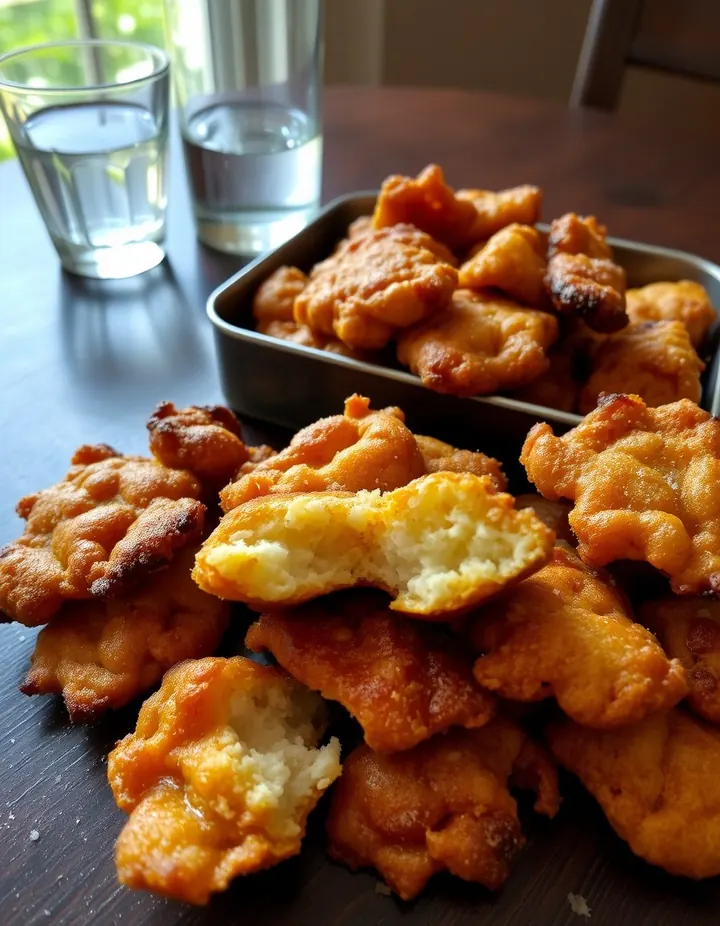
The finished Koki should be cooked to the center, like a cake.
Serve hot or cold, often with boiled yam or sweet potato.
This recipe comes from the Recipes Wiki on Fandom and is licensed CC BY-SA 4.0. Our formatting and summaries are shared under the same licence.
Steps grouped into stages for easier reading; the method is the source's own.
Explore the science
The flavor team
The pairs that carry this dish. Each one is judged two ways: how much aroma chemistry they share, and how many recipes mention both.
-
Kidney beans + beanstop 1% of all pairsAroma overlapstrongMentioned together364 recipes
Shared aroma: 2-isobutyl-3-methoxypyrazine (green bell pepper, earthy).
-
Beans + peppertop 7% of all pairsAroma overlapstrongMentioned together4,733 recipes
Shared aroma: 2-isopropyl-3-methoxypyrazine (earthy, pea).
-
Beans + bananatop 8% of all pairsAroma overlapstrongMentioned together95 recipes
Shared aroma: 3-methyl-1-butanol acetate (fruity).
-
Pepper + bananatop 10% of all pairsAroma overlapmoderateMentioned together483 recipes
Shared aroma: ethyl caproate (fruity, apple peel).
-
Kidney beans + peppertop 12% of all pairsAroma overlapmoderateMentioned together718 recipes
Shared aroma: 2-isopropyl-3-methoxypyrazine (earthy, pea).
Ranks compare each pair with 20,000 random ingredient pairs on CompKitchen. How we score pairs
What each ingredient does
- Black-eyed peas
- Form the bulk of the paste, which sets into a firm, cake-like body when cooked.
- Palm oil
- Adds richness and moisture, carrying flavour through the paste.
- Sweet peppers and/or chile pepper
- Adds aroma and savoury flavour when fried in oil before mixing.
The step that matters
Cooking through to the center. Packets boil for one to three hours, and heat must penetrate the dense bean paste fully so it sets like a cake rather than staying wet inside. Packet size and cooking time must match, so the centre is cooked without overcooking the outside.
Flavor stand-ins for the banana
How well each one fits the dish's main ingredients (kidney beans, beans, pepper):
- Limebetter flavor fit
- Avocadobetter flavor fit
- Cherrybetter flavor fit
- Bananathe original
Fit is the average pairing score against kidney beans, beans, pepper. Candidates are from the same food group and used in at least 100 recipes. This compares flavor only: it does not check the job the ingredient does in the dish (bulk, moisture, acidity, structure).
“What each ingredient does” and “The step that matters” were written by Claude from this recipe’s own method and reviewed in samples by CompKitchen.
You might also like
 Illustration
 Illustration
The Sunday pairing: one pairing, the chemistry behind it, and how to cook it. No spam, unsubscribe anytime.
Prefer an account? Create a free account for sign-in; Pro adds the full results and chemistry.