Why it works: Clove and nutmeg match in chemistry and in kitchens. They rank in the top 1% of all ingredient pairs, and cooks put them together in 8,686 recipes. Both carry estragole, which smells anise, licorice. The science ↓
Lobster Soup I
Ingredients
Directions
Prepare the lobster
Simmer the lobster tails in 1 1/2 quarts water with 1 tsp salt until tender, then reserve the water.
Make the soup base
Saute the onions, thinly sliced, in 4 oz butter until soft but not brown.
Add the tomatoes, garlic, salad herbs, nutmeg, salt, pepper, and lemon peel to the onions and cook until fragrant.
Simmer for 15 minutes.
Add the dry white wine and heat until it bubbles.
Add 1 quart of the reserved lobster water and cook for 5 minutes longer.
Pass the mixture through a food mill or sieve.
Finish and serve
Add the chopped lobster meat and 1/2 cup light cream, then correct the seasoning.
Serve in soup cups.
Nutrition, whole recipe (rough)
Counts 10 of 12 ingredients. The other 2 aren't in our nutrition table and add nothing above, so the real totals are higher.
What these numbers assume: 10 portions
| Ingredient | Portion assumed | kcal |
|---|---|---|
| Butter | 1 tbsp (14g) | 102 |
| Shrimp | 100g cooked | 99 |
| Onion | 1 medium (110g) | 44 |
| Wine | 2 tbsp cooking wine (30ml) | 25 |
| Tomato | 1 medium (123g) | 22 |
| Nutmeg | 1 tsp ground (2.2g) | 12 |
| Lemon | juice of 1 lemon (48ml) | 12 |
| Black Pepper | 1 tsp ground (2.3g) | 6 |
| Garlic | 1 clove (3g) | 4 |
| Salt | 1 tsp (6g) | 0 |
| Water | not in our table | 0 |
| Salad | not in our table | 0 |
One typical portion per ingredient; the recipe's quantities are not counted. A rough guide only, not for medical or dietary planning.
Steps grouped into stages for easier reading; the method is the source's own.
Explore the science
The flavor team
The pairs that carry this dish. Each one is judged two ways: how much their aromas overlap, and how often cooks already put them together.
-
Clove + nutmegtop 1% of all pairsSmell alikestrongCooked together8,686 recipes
Shared aroma: estragole (anise, licorice).
-
Onion + garlictop 1% of all pairsSmell alikestrongCooked together29,058 recipes
Shared aroma: furaneol (caramel, strawberry).
-
Tomato + garlictop 3% of all pairsSmell alikemoderateCooked together14,076 recipes
Shared aroma: furaneol (caramel, strawberry).
-
Clove + peppertop 5% of all pairsSmell alikestrongCooked together17,451 recipes
Shared aroma: ethyl octanoate (fruity, wine).
-
Nutmeg + peppertop 7% of all pairsSmell alikestrongCooked together13,015 recipes
Shared aroma: 4'-methylacetophenone (bitter almond).
Ranks compare each pair with 20,000 random ingredient pairs on CompKitchen. How we score pairs
What each ingredient does
- Rock lobster tails
- Provide the main seafood flavour and tender meat that is added back at the end.
- Butter
- Carries the onions and adds richness and a rounded, savoury flavour to the base.
- Onions
- Build the savoury sweetness of the base as they soften slowly without browning.
- Tomatoes
- Add acidity and body, thickening the base once it is passed through a sieve.
- Dry white wine
- Adds acidity and aromatic depth to the broth as it heats.
The step that matters
Sauté the onions until soft but not brown. Browning the onions in butter gives a darker, more bitter, caramelised taste that would dominate the delicate lobster flavour of the soup.
Swap the tomato
How well each one fits the dish's main ingredients (lobster, onion, butter, clove, garlic, nutmeg, pepper):
- Chivefits better
- Spinachfits better
- Shallotfits better
- Tomatothe original
Fit is the average pairing score against lobster, onion, butter, clove, garlic, nutmeg, pepper. Candidates are from the same food group and used in at least 100 recipes.
“What each ingredient does” and “The step that matters” were written by Claude from this recipe’s own method and reviewed in samples by CompKitchen.
You might also like
 Tomato Soup526 recipes
 Lemon Sauce236 recipes
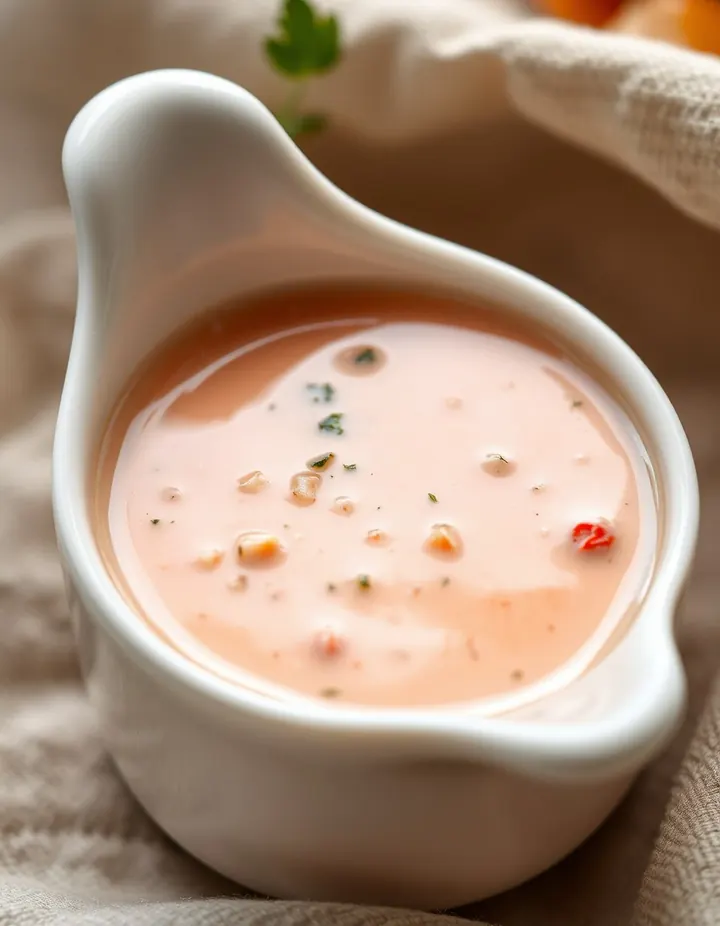 Lobster Sauce174 recipes
 Cream of Tomato Soup107 recipes
The free Flavor Lab newsletter: one surprising pairing a week and the molecular reason it works, in 60 seconds. No spam, unsubscribe anytime.
Prefer an account? Create a free account to save pairings and unlock the full chemistry.