Why it works: Rice and potato match in chemistry and in kitchens. They rank in the top 7% of all ingredient pairs, and cooks put them together in 851 recipes. Both carry 2-acetyl-1-pyrroline, which smells popcorn, roasted. The science ↓
Simple Mochi
Ingredients
Directions
Make the batter
Mix mochiko flour and sugar in a bowl.
Add water and mix thoroughly. The batter will be watery.
Transfer the mixture to a microwaveable dish and cover with plastic wrap.
Microwave on high for 4 minutes.
Remove the plastic wrap.
Cool the mochi for a few minutes if desired.
Shape and serve
Cut the mochi into pieces.
Optionally dust the mochi with katakuriko or kinako to prevent sticking. If you don't have these, place the mochi on cellophane.
For fillings, add red bean paste, ice cream, chocolate, etc. in the middle before dusting, add a teaspoon of filling and pinch edges closed.
Serve the mochi.
Optional variations
For dough variations, add a few drops of food coloring for color variation.
Add a few drops of flavoring (strawberry, grape, orange, blueberry, etc.) if desired.
For chocolate flavor, stir about 1/4 cup melted chocolate chips into the batter before cooking.
Nutrition, whole recipe (rough)
Counts 4 of 5 ingredients. The other 1 aren't in our nutrition table and add nothing above, so the real totals are higher.
What these numbers assume: 4 portions
| Ingredient | Portion assumed | kcal |
|---|---|---|
| Flour | 1 cup (125g) all-purpose | 455 |
| Rice | 1 cup cooked (158g) white | 206 |
| Potato | 1 medium (173g) baked | 161 |
| Sugar | 1 tbsp (12.5g) granulated | 49 |
| Water | not in our table | 0 |
One typical portion per ingredient; the recipe's quantities are not counted. A rough guide only, not for medical or dietary planning.
Steps grouped into stages for easier reading; the method is the source's own.
Explore the science
The flavor team
The pairs that carry this dish. Each one is judged two ways: how much their aromas overlap, and how often cooks already put them together.
-
Rice + potatotop 7% of all pairsSmell alikestrongCooked together851 recipes
Shared aroma: 2-acetyl-1-pyrroline (popcorn, roasted).
-
Flour + sugartop 15% of all pairsSmell alikemoderateCooked together92,116 recipes
Shared aroma: phenylacetaldehyde (hawthorne, honey).
-
Flour + potatotop 15% of all pairsSmell alikemoderateCooked together5,355 recipes
Shared aroma: isobutyraldehyde (malty, green).
-
Rice + flourtop 16% of all pairsSmell alikemoderateCooked together6,611 recipes
Shared aroma: isobutyraldehyde (malty, green).
-
Rice + sugartop 26% of all pairsSmell alikelowCooked together8,744 recipes
Shared aroma: 2-nonenal (fatty, green).
Ranks compare each pair with 20,000 random ingredient pairs on CompKitchen. How we score pairs
What each ingredient does
- Mochiko sweet rice flour
- Glutinous rice starch that becomes chewy and elastic when heated, giving mochi its stretchy texture.
- Water
- Hydrates the flour so the starch can gelatinize into a soft, cohesive dough when microwaved.
- Sugar
- Adds sweetness and softens the texture slightly, keeping the mochi tender.
- Katakuriko
- Potato starch dusting that keeps the sticky mochi from adhering to surfaces and to itself.
The step that matters
Mixing the batter thoroughly before microwaving. The batter looks watery, but the flour must be fully hydrated and evenly mixed so the starch cooks uniformly. Unmixed dry pockets can stay chalky while other areas overcook and turn rubbery.
Swap the potato
How well each one fits the dish's main ingredients (rice, flour, sugar):
- Arrowrootfits better
- Sweet potatofits better
- Okrafits better
- Potatothe original
Fit is the average pairing score against rice, flour, sugar. Candidates are from the same food group and used in at least 100 recipes.
“What each ingredient does” and “The step that matters” were written by Claude from this recipe’s own method and reviewed in samples by CompKitchen.
You might also like
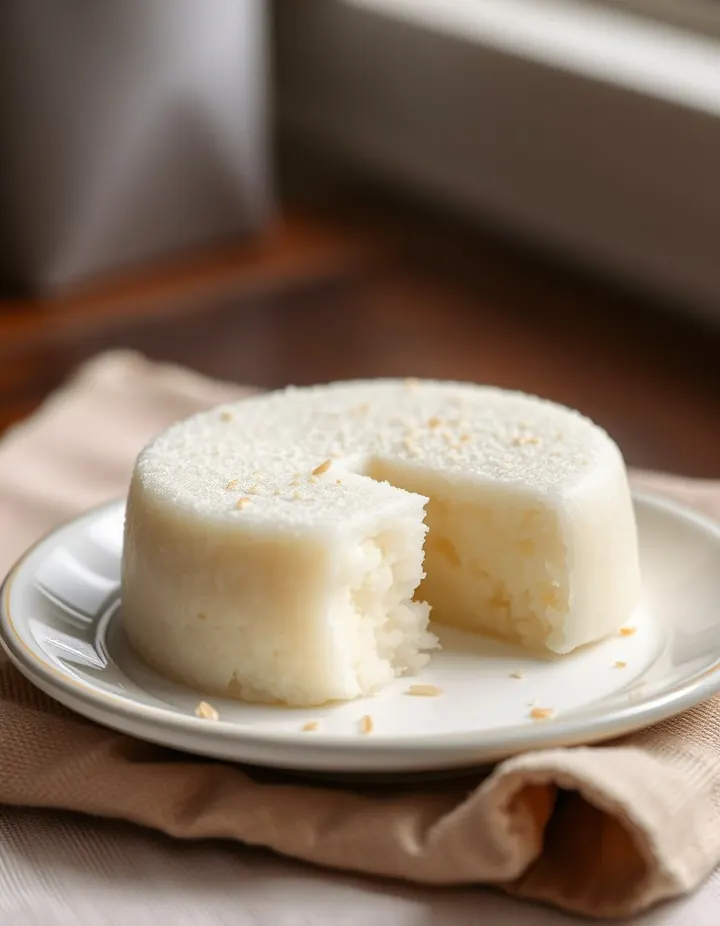 Rice Cake120 recipes
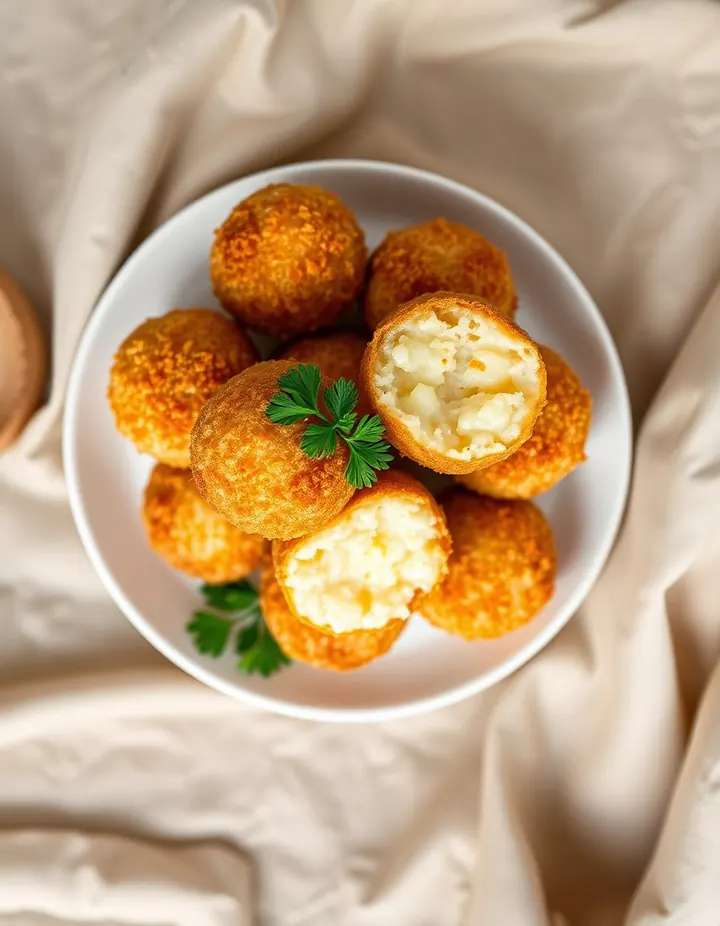 Deep-Fried Potato Balls119 recipes
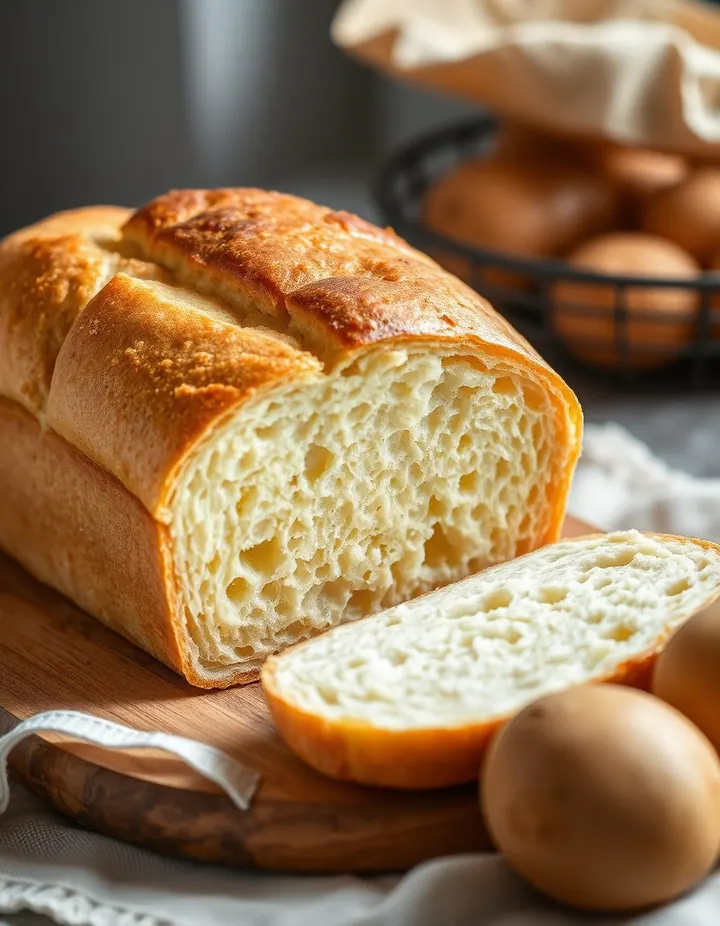 Orange Potato Bread80 recipes
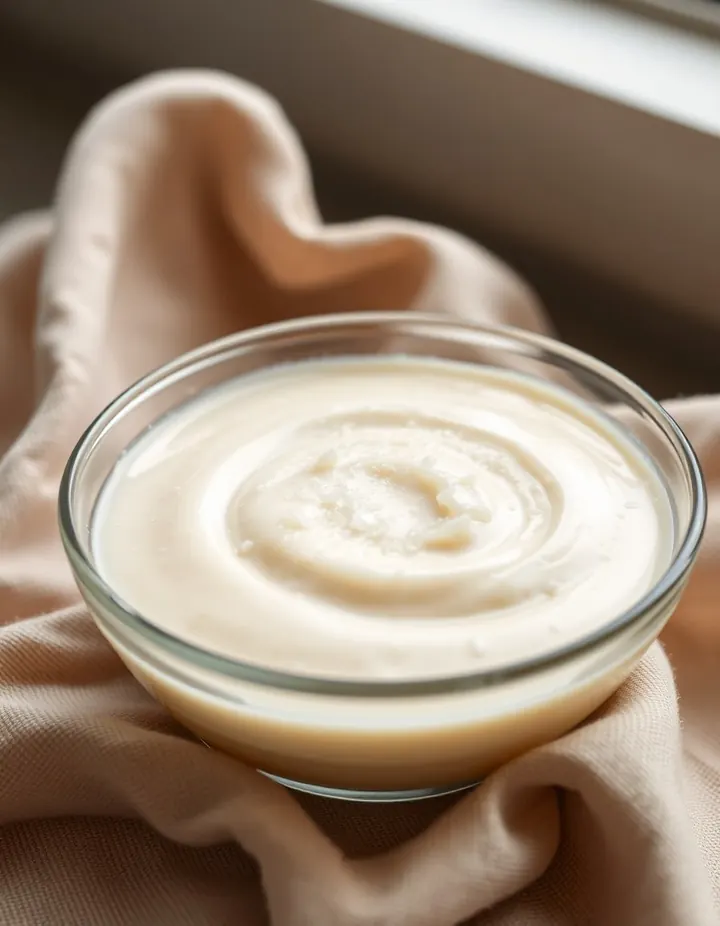 Rice Cream43 recipes
The free Flavor Lab newsletter: one surprising pairing a week and the molecular reason it works, in 60 seconds. No spam, unsubscribe anytime.
Prefer an account? Create a free account to save pairings and unlock the full chemistry.