Why it works: Parsley and pepper match in chemistry and in kitchens. They rank in the top 2% of all ingredient pairs, and cooks put them together in 34,122 recipes. Both carry 4'-methylacetophenone, which smells bitter almond. The science ↓
Artichokes and Peas
Ingredients
Directions
Prepare
Remove the outer tough leaves of the artichokes and cut off the spiky tops of the remaining leaves, if any, and with the aid of a teaspoon remove the choke.
Put each artichoke in flour and let them soak in a basin with the added lemon juice.
Cook
Heat the oil in a deep frying pan, add the onion, and when it starts to soften add the ham.
Drain the artichokes and put them in the pan with the peas.
Season with salt and pepper and add the strip of lemon peel.
Pour the stock over the vegetables.
Cover the pan with the lid and simmer until the artichokes are tender.
Halfway through cooking you might have to add some more stock if the vegetables dry up.
When ready, remove the lemon peel.
Serve
Serve either hot as an accompaniment to fish, or cold as a salad, sprinkled with parsley and olive oil.
Nutrition, whole recipe (rough)
What these numbers assume: 10 portions
| Ingredient | Portion assumed | kcal |
|---|---|---|
| Beef | 100g cooked | 250 |
| Pork | 100g cooked | 242 |
| Olive Oil | 1 tbsp (14g) | 119 |
| Peas | 1/2 cup (72g) | 62 |
| Artichoke | 1 medium (128g) | 60 |
| Onion | 1 medium (110g) | 44 |
| Lemon | juice of 1 lemon (48ml) | 12 |
| Black Pepper | 1 tsp ground (2.3g) | 6 |
| Parsley | 1 tbsp chopped fresh (3.8g) | 1 |
| Salt | 1 tsp (6g) | 0 |
One typical portion per ingredient; the recipe's quantities are not counted. A rough guide only, not for medical or dietary planning.
Steps grouped into stages for easier reading; the method is the source's own.
Explore the science
The flavor team
The pairs that carry this dish. Each one is judged two ways: how much their aromas overlap, and how often cooks already put them together.
-
Parsley + peppertop 2% of all pairsSmell alikestrongCooked together34,122 recipes
Shared aroma: 4'-methylacetophenone (bitter almond).
-
Artichoke + olivetop 2% of all pairsSmell alikestrongCooked together745 recipes
Shared aroma: 1-octen-3-ol (mushroom, earthy).
-
Artichoke + parsleytop 3% of all pairsSmell alikestrongCooked together524 recipes
Shared aroma: trans-2-hexenal (green, leafy).
-
Parsley + olivetop 6% of all pairsSmell alikestrongCooked together9,649 recipes
Shared aroma: 2,4-decadienal (seaweed).
-
Onion + beeftop 7% of all pairsSmell alikemoderateCooked together17,092 recipes
Shared aroma: 2-isopropyl-3-methoxypyrazine (earthy, pea).
Ranks compare each pair with 20,000 random ingredient pairs on CompKitchen. How we score pairs
What each ingredient does
- Artichokes
- Provide the main body of the dish, becoming tender as they simmer in the liquid.
- Fresh peas
- Add sweetness and a soft, tender texture to the braise.
- Onion
- Softens into the oil to build a sweet, savoury base for the dish.
- Smoked ham
- Adds smoky, salty flavour that seasons the vegetables as they cook.
- Beef stock
- Provides the cooking liquid that braises the vegetables and carries flavour through them.
The step that matters
Keep enough stock in the pan while simmering. Under-moistened vegetables can scorch or dry out before the artichokes turn tender, so the liquid must cover the base of the pan throughout. Topping up halfway keeps the braise moist and the flavours concentrated.
Swap the peas
How well each one fits the dish's main ingredients (artichoke, onion, parsley, olive, ham, beef, pepper):
- Lentilsfits better
- Beansfits better
- Black-eyed peafits better
- Peasthe original
Fit is the average pairing score against artichoke, onion, parsley, olive, ham, beef, pepper. Candidates are from the same food group and used in at least 100 recipes.
“What each ingredient does” and “The step that matters” were written by Claude from this recipe’s own method and reviewed in samples by CompKitchen.
You might also like
 Lemon Sauce236 recipes
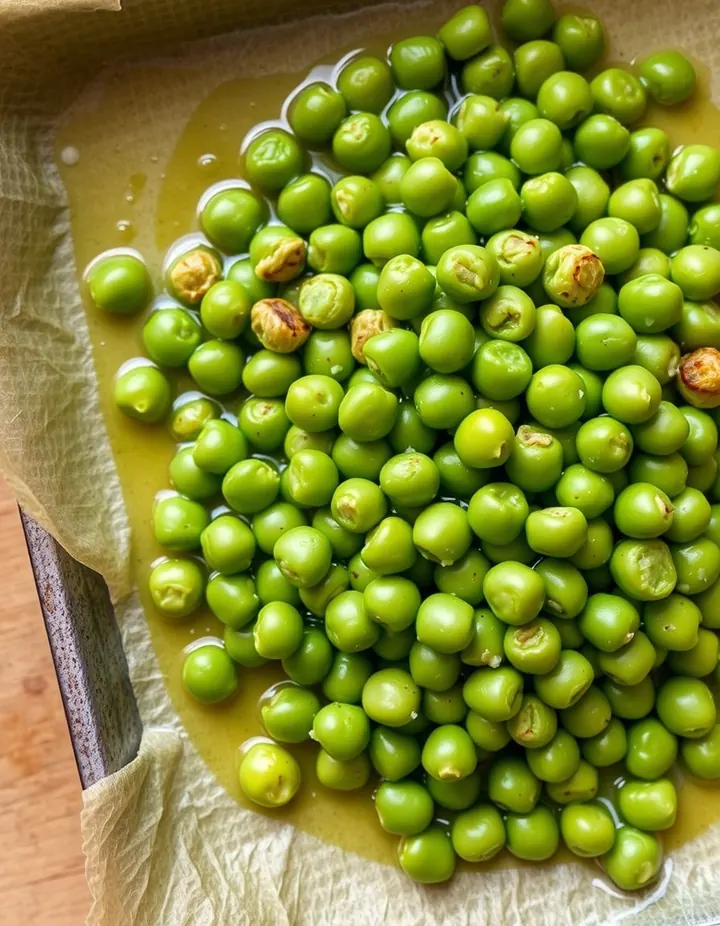 Green Peas229 recipes
 Roast Beef211 recipes
 Beef Loaf175 recipes
The free Flavor Lab newsletter: one surprising pairing a week and the molecular reason it works, in 60 seconds. No spam, unsubscribe anytime.
Prefer an account? Create a free account to save pairings and unlock the full chemistry.