Why it works: Artichoke and chard share more aroma than cooks usually use. They rank in the top 3% of all ingredient pairs, and 5 recipes mention both. Both carry coumarin, which smells sweet, hay. The science ↓
The recipe
Ingredients
Contains: milk, wheat (auto-detected from the ingredients and method; we can miss things, so check labels)
Also mentioned in the method: parmesan
Directions
Prepare the artichokes
Put artichokes into a pot of cold, salted water and bring to a boil.
Boil for about 10 minutes or until tender (you can check by inserting a knife into the heart) and drain (tip: Jason puts a plate on top of the boiling water of artichokes so they don't pop out and stay under water!).
Allow to cool, then peel off the outer leaves until you find the pale tender ones, remove the choke (fuzzy white parts) using a spoon.
Cut the hearts into quarters.
Blanch the vegetables
Fill the pot with new water, add salt and bring to a boil.
Blanch the fava beans for a minute.
Remove the fava beans from the water with a slotted spoon.
Blanch the leeks for 3-4 minutes until tender.
Blanch the chard until just wilted.
Make the sauce base
Heat a large saucepan, big enough to hold all the ingredients, and add a good splash of oil.
Cook the onion, low and slow for about 10 minutes until soft.
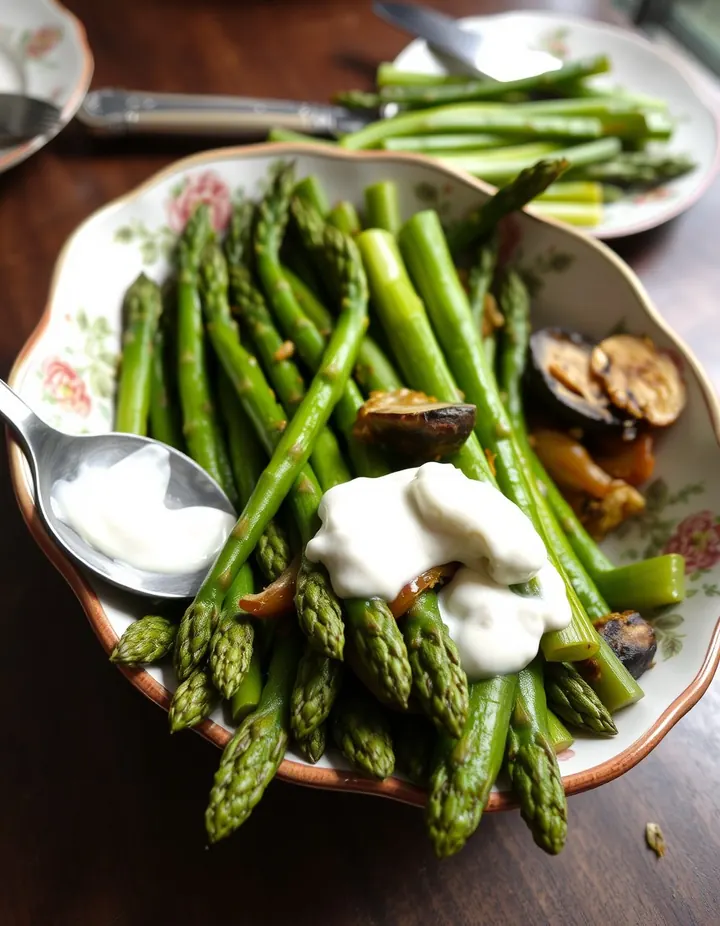
Cut the tough parts of the asparagus off the bottom and discard.
Cut the asparagus into quarter‑inch pieces.
Sauté the asparagus for 2-3 minutes with the onion.
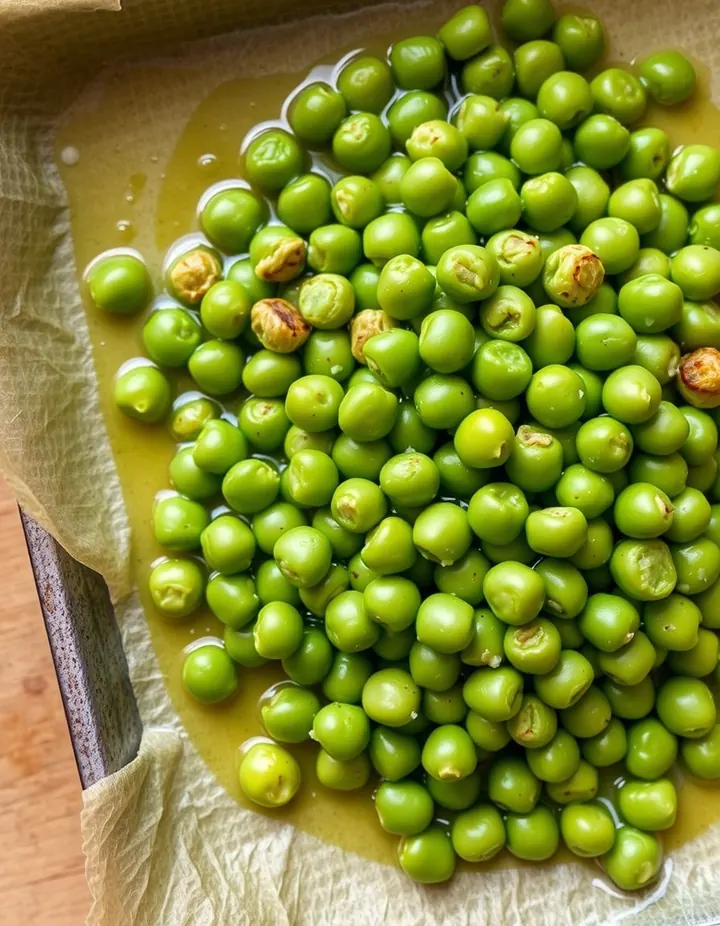
Add the vegetable stock (the water used to blanch the fava, leeks and chard) and the peas.
Bring the mixture to a boil.
Cut the prosciutto into bits and add it to the pan.
Simmer for about 10 minutes, until the peas are cooked and soft and the prosciutto has flavored it all nicely.
Finish and serve
Chop the leeks into strips.
Cut the chard into strips and stir into the pan.
Add the artichoke hearts and fava beans and let simmer for a few minutes.
Finish with salt and pepper to taste.
Add a small bunch of chopped fresh mint and parsley.
Add a few glugs of olive oil.
Toss with pasta and drizzle with a bit more olive oil.
Sprinkle with fresh grated Parmesan or Grana Padano.
This recipe comes from the Recipes Wiki on Fandom and is licensed CC BY-SA 4.0. Our formatting and summaries are shared under the same licence.
Steps grouped into stages for easier reading; the method is the source's own.
Found this recipe through an AI assistant? CompKitchen also shows which ingredients go well together and why, from the aroma molecules they share and how often recipes combine them. Try the pairing tools.
Explore the science
The flavor team
The pairs that carry this dish. Each one is judged two ways: how much aroma chemistry they share, and how many recipes mention both.
-
Artichoke + chardtop 3% of all pairsAroma overlapstrongMentioned together5 recipes
Shared aroma: coumarin (sweet, hay).
-
Pasta + chardtop 1% of all pairsAroma overlapstrongMentioned together30 recipes
Shared aroma: coumarin (sweet, hay).
-
Pasta + artichoketop 1% of all pairsAroma overlapstrongMentioned together99 recipes
Shared aroma: nonanal (fat, citrus).
-
Chard + olivetop 3% of all pairsAroma overlapmoderateMentioned together307 recipes
Shared aroma: coumarin (sweet, hay).
-
Leek + oniontop 3% of all pairsAroma overlapstrongMentioned together1,326 recipes
Shared aroma: ethyl butyrate (apple, fruity).
Ranks compare each pair with 20,000 random ingredient pairs on CompKitchen. How we score pairs
What each ingredient does
- Artichokes
- Provide tender hearts that become the main vegetable body of the dish.
- Prosciutto
- Adds salty, savory flavor that seasons the whole pan as it simmers.
- Peas
- Soften during simmering and add sweetness and body to the sauce.
- Fava beans
- Add a tender, buttery texture and fresh green flavor to the mixture.
- Chard
- Wilts into the sauce, adding leafy texture and earthy flavor.
- Vegetable stock
- Provides moisture and liquid that forms the sauce and coats the pasta.
The step that matters
Simmering the peas and prosciutto. Peas must cook until soft and the prosciutto must release its flavor into the liquid; stopping early leaves the peas starchy and the sauce bland. Keep the simmer gentle so the stock reduces without scorching.
Flavor stand-ins for the leek
How well each one fits the dish's main ingredients (pasta, artichoke, pepper, chard, olive, onion, peas):
- Spinachbetter flavor fit
- Tomatobetter flavor fit
- Kalebetter flavor fit
- Leekthe original
Fit is the average pairing score against pasta, artichoke, pepper, chard, olive, onion, peas. Candidates are from the same food group and used in at least 100 recipes. This compares flavor only: it does not check the job the ingredient does in the dish (bulk, moisture, acidity, structure).
“What each ingredient does” and “The step that matters” were written by Claude, an AI, from this recipe’s own method. They are not checked recipe by recipe, so they can be wrong.
Make it your own
Stand-ins, a drink, and quick taste fixes for this dish, ranked by how well each fits its other ingredients: shared aroma molecules and how often recipes combine them.
You might also like
 Illustration
 Illustration
 Illustration
 Illustration
The Sunday pairing: one pairing, the chemistry behind it, and how to cook it. No spam, unsubscribe anytime.
Prefer an account? Create a free account for sign-in; Pro adds the full results and chemistry.