Why it works: Sugar and syrup match in chemistry and in kitchens. They rank in the top 6% of all ingredient pairs, and cooks put them together in 5,842 recipes. Both carry ethanol, which smells alcoholic, ethereal. The science ↓
Dumplings and Cocky's Joy
Ingredients
Directions
Prepare the dumpling mix
In a medium bowl, stir together the flour and confectioners' sugar, then make a well in the center.
Combine the melted butter, egg and milk; pour into the well.
Use a knife to stir until just combined, then set the dumpling mixture aside.
Make the syrup
In a large saucepan, over medium‑high heat, mix together the water, golden syrup, brown sugar and lemon juice until well blended.
Add the remaining ¼ cup of butter, and bring the mixture to a boil.
Cook and serve
Once the mixture is boiling, carefully drop heaping tablespoons of the dumpling mix into the sauce.
Reduce heat to low, cover and cook for 10 minutes, or until the dumplings have risen and cooked through.
Ladle syrup over the dumplings occasionally while cooking.
Nutrition, whole recipe (rough)
Counts 6 of 8 ingredients. The other 2 aren't in our nutrition table and add nothing above, so the real totals are higher.
What these numbers assume: 6 portions
| Ingredient | Portion assumed | kcal |
|---|---|---|
| Flour | 1 cup (125g) all-purpose | 455 |
| Milk | 1 cup (244ml) whole | 149 |
| Butter | 1 tbsp (14g) | 102 |
| Egg | 1 large egg (50g) | 78 |
| Sugar | 1 tbsp (12.5g) granulated | 49 |
| Lemon | juice of 1 lemon (48ml) | 12 |
| Water | not in our table | 0 |
| Syrup | not in our table | 0 |
One typical portion per ingredient; the recipe's quantities are not counted. A rough guide only, not for medical or dietary planning.
Steps grouped into stages for easier reading; the method is the source's own.
Explore the science
The flavor team
The pairs that carry this dish. Each one is judged two ways: how much their aromas overlap, and how often cooks already put them together.
-
Sugar + syruptop 6% of all pairsSmell alikestrongCooked together5,842 recipes
Shared aroma: ethanol (alcoholic, ethereal).
-
Butter + milktop 7% of all pairsSmell alikemoderateCooked together81,283 recipes
Shared aroma: (z)-4-heptenal (biscuit, cream).
-
Flour + buttertop 12% of all pairsSmell alikelowCooked together124,287 recipes
Shared aroma: isobutyraldehyde (malty, green).
-
Flour + milktop 14% of all pairsSmell alikelowCooked together78,219 recipes
Shared aroma: isobutyraldehyde (malty, green).
-
Flour + sugartop 15% of all pairsSmell alikemoderateCooked together92,116 recipes
Shared aroma: phenylacetaldehyde (hawthorne, honey).
Flour and butter barely smell alike, yet cooks put them together in 124,287 recipes: they work on texture and structure more than aroma.
Ranks compare each pair with 20,000 random ingredient pairs on CompKitchen. How we score pairs
What each ingredient does
- Self-rising flour
- Provides the structure of the dumplings and helps them rise while cooking.
- Butter
- Adds richness and tenderness to the dumpling mix and the sauce.
- Egg
- Binds the dumpling mix and adds structure as it cooks.
- Golden syrup
- Provides the sweet, caramel-like flavor and body of the sauce.
- Brown sugar
- Adds sweetness and depth to the syrup sauce.
The step that matters
Keep the lid on and the heat low while the dumplings cook. Covering the pan traps steam so the dumplings rise and cook through in the sauce. Lifting the lid or boiling hard can release that steam, leaving the dumplings dense or unevenly cooked.
Swap the lemon
How well each one fits the dish's main ingredients (flour, sugar, butter, egg, milk, syrup):
- Vanillafits better
- Raisinfits better
- Figfits about as well
- Lemonthe original
Fit is the average pairing score against flour, sugar, butter, egg, milk, syrup. Candidates are from the same food group and used in at least 100 recipes.
“What each ingredient does” and “The step that matters” were written by Claude from this recipe’s own method and reviewed in samples by CompKitchen.
You might also like
 Lemon Cake228 recipes
 Lemon Ice147 recipes
 Lemon Sherbet103 recipes
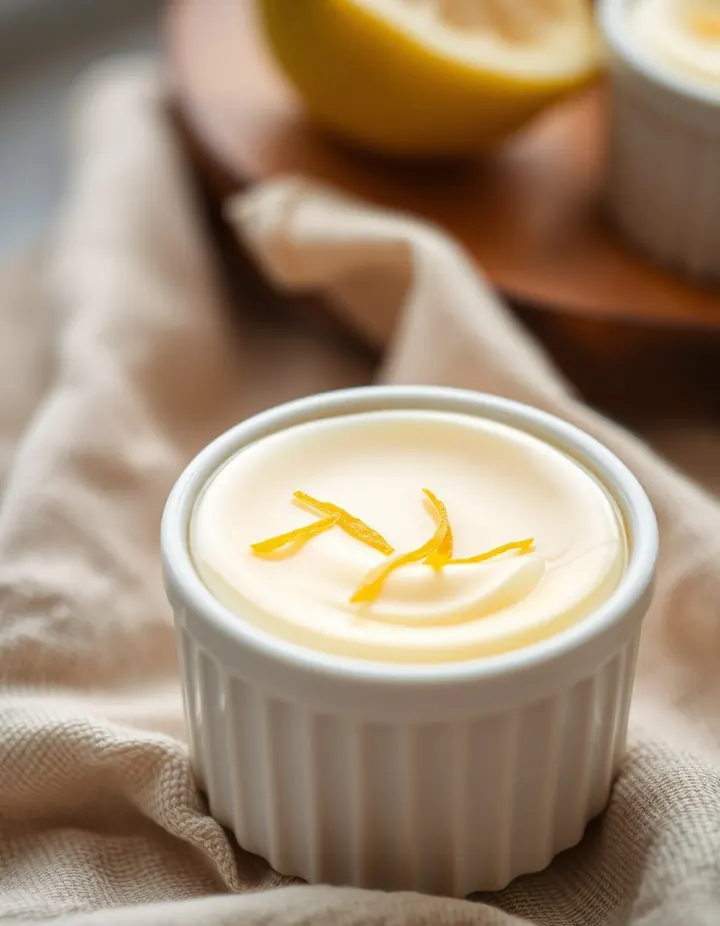 Lemon Custard64 recipes
The free Flavor Lab newsletter: one surprising pairing a week and the molecular reason it works, in 60 seconds. No spam, unsubscribe anytime.
Prefer an account? Create a free account to save pairings and unlock the full chemistry.