Why it works: Lemon and ginger match in chemistry and in kitchens. They rank in the top 5% of all ingredient pairs, and cooks put them together in 5,154 recipes. Both carry beta-phellandrene, which smells minty, terpene. The science ↓
Mango Upside-down Cake I
Ingredients
Directions
Prepare the fruit
Combine the sliced mangoes and lemon juice in a non‑reactive bowl and toss to coat the mangoes.
Allow to stand at room temperature for 15 minutes.
Make the topping
Melt the tablespoon (15 ml) of butter or margarine in an 8‑inch cake pan or non‑reactive casserole. Add the brown sugar and arrange the mango slices in an attractive pattern.
Make and bake the cake
In a separate bowl, cream the remaining butter or margarine and sugar and beat in the egg.
Add the remaining dry ingredients one third at a time, alternating with the milk, and beat until the batter is smooth.
Pour over the mangoes.
Bake in a preheated 350°F oven for 50 to 60 minutes, until a toothpick inserted in the centre comes out clean.
Serve
Allow to cool for 5 minutes, then invert onto a serving platter.
Serve warm or at room temperature.
Nutrition, whole recipe (rough)
What these numbers assume: 8 portions
| Ingredient | Portion assumed | kcal |
|---|---|---|
| Flour | 1 cup (125g) all-purpose | 455 |
| Milk | 1 cup (244ml) whole | 149 |
| Butter | 1 tbsp (14g) | 102 |
| Egg | 1 large egg (50g) | 78 |
| Sugar | 1 tbsp (12.5g) granulated | 49 |
| Lemon | juice of 1 lemon (48ml) | 12 |
| Ginger | 1 tsp grated fresh (2g) | 2 |
| Salt | 1 tsp (6g) | 0 |
One typical portion per ingredient; the recipe's quantities are not counted. A rough guide only, not for medical or dietary planning.
Steps grouped into stages for easier reading; the method is the source's own.
Explore the science
The flavor team
The pairs that carry this dish. Each one is judged two ways: how much their aromas overlap, and how often cooks already put them together.
-
Lemon + gingertop 5% of all pairsSmell alikestrongCooked together5,154 recipes
Shared aroma: beta-phellandrene (minty, terpene).
-
Mango + gingertop 5% of all pairsSmell alikemoderateCooked together280 recipes
Shared aroma: isoamyl acetate (banana, pear).
-
Butter + milktop 7% of all pairsSmell alikemoderateCooked together81,283 recipes
Shared aroma: (z)-4-heptenal (biscuit, cream).
-
Mango + lemontop 10% of all pairsSmell alikestrongCooked together302 recipes
Shared aroma: trans-2-nonenal (cardboard, fatty).
-
Butter + flourtop 12% of all pairsSmell alikelowCooked together124,287 recipes
Shared aroma: isobutyraldehyde (malty, green).
Butter and flour barely smell alike, yet cooks put them together in 124,287 recipes: they work on texture and structure more than aroma.
Ranks compare each pair with 20,000 random ingredient pairs on CompKitchen. How we score pairs
What each ingredient does
- Mangoes
- Provide the fruit topping and moisture, softening and caramelising under the cake.
- Butter or margarine
- Adds fat for richness and a tender crumb, and helps the topping caramelise.
- Egg
- Binds the batter and adds structure and richness to the crumb.
- Flour
- Forms the cake's structure once the batter is baked.
- Baking powder
- Releases gas during baking so the cake rises and stays light.
- Brown sugar
- Adds sweetness and moisture, and deepens the caramel flavour of the topping.
The step that matters
Pour the batter gently over the mangoes and bake until fully set. Batter poured over the fruit must bake through to set the crumb; underbaking leaves it gummy, and the cake may stick to the pan when inverted.
Swap the mango
How well each one fits the dish's main ingredients (lemon, butter, sugar, egg, flour, ginger, milk):
- Vanillafits better
- Raisinfits better
- Figfits about as well
- Mangothe original
Fit is the average pairing score against lemon, butter, sugar, egg, flour, ginger, milk. Candidates are from the same food group and used in at least 100 recipes.
“What each ingredient does” and “The step that matters” were written by Claude from this recipe’s own method and reviewed in samples by CompKitchen.
You might also like
 Lemon Cake228 recipes
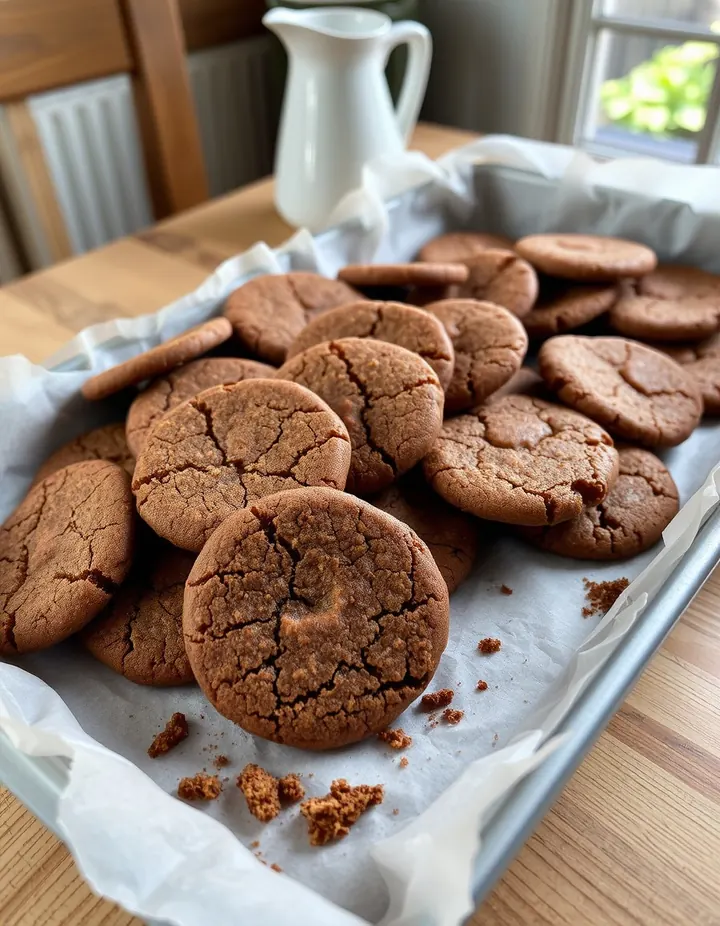 Ginger Cookies213 recipes
 Lemon Ice147 recipes
 Lemon Sherbet103 recipes
The free Flavor Lab newsletter: one surprising pairing a week and the molecular reason it works, in 60 seconds. No spam, unsubscribe anytime.
Prefer an account? Create a free account to save pairings and unlock the full chemistry.