Why it works: Sweet potato and kefir work together. They rank in the top 34% of all ingredient pairs, and 1 recipes mention both. Both carry 1-hexanol, which smells resin, flower. The science ↓
The recipe
Ingredients
Contains: milk (auto-detected from the ingredients and method; we can miss things, so check labels)
Directions
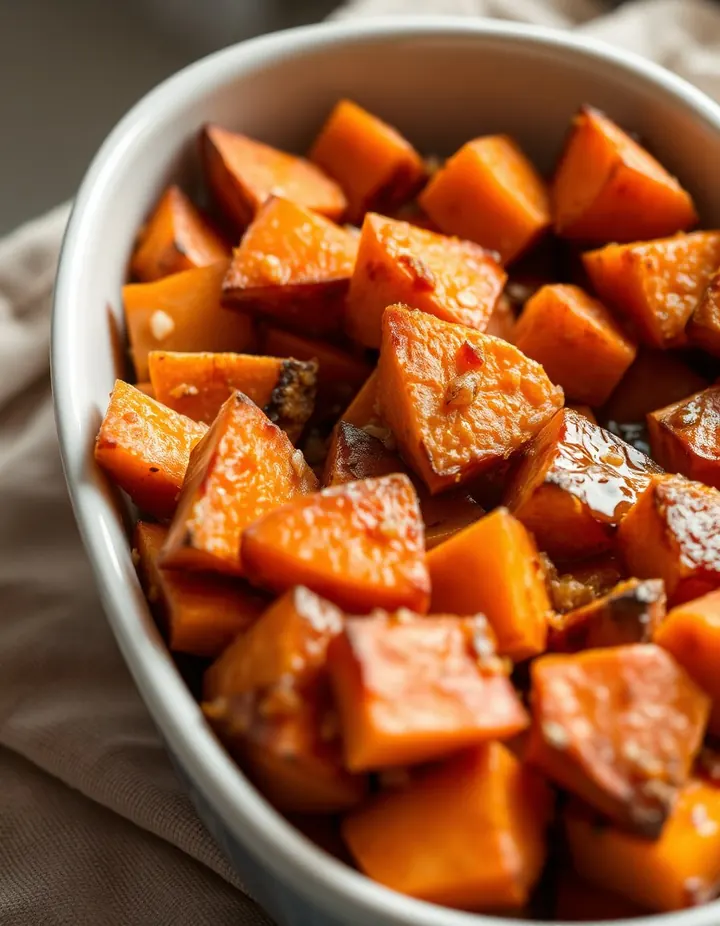
Peel the sweet potato or other vegetables and roast them at 300°F (150°C) for about 1½ hours, until a fork goes in easily. A higher oven temperature takes less time.
Allow the vegetables to cool to about room temperature, within 2 hours of roasting.
Mash the vegetables in a bowl. Try to break up all large pieces, but a few little lumps are fine.
Peel the ginger, then mash it in a mortar and pestle or mince it in a food processor. Add it to the bowl and mix well.
Add the salt and kefir or yoghurt, and mix in well. Try to get a smooth consistency, but the odd lump is fine.
Pack the mash into a clean crock or jar, pressing it down. Smooth the top with a spatula.
Fill a strong plastic bag with water, seal it (knot or zip-lock), and place it on top of the mash to keep the surface under the brine-free mash covered and exclude air.
Place the jar in the refrigerator for 5 to 7 days to ferment slowly. Taste after 5 days and stop when it is sour enough.
Remove the plastic bag, close the jar with a lid, and keep it refrigerated. Eat within 1 week.
Original method from the source (9 steps)
Peel and roast the sweet potato or other vegetables. Ideally, this would be an extra piece of sweet potato, pumpkin, taro, etc. tossed into the oven with other food being roasted for a main meal. A 500 g piece of sweet potato will roast nicely in 1½ hours at 150°C (300°F), or less at a higher temperature.
Allow the vegetables to cool to about room temperature.
Mash the vegetables in a bowl. Try to break up all large pieces, but don't be too fussy—a few little lumps won't bother anyone!
Peel the ginger, and mash it in a mortar and pestle or mince it in a food processor . Add it to the bowl and mix well.
Add the salt and kefir or yoghurt, and mix in well. Try to get a smooth consistency, but don't be too concerned about the odd lump.
Pack the mash into a crock or jar, where it can ferment. Pick a nice looking one that you can serve it from later also. Smooth the top of the mash with a spatula .
Fill a strong plastic bag with water, seal (knot or zip-lock) and place on top of the mash. Because the plastic bag is flexible, it will fit to the surface of the mash and exclude air, which prevents mould.
Set aside in a warm (not hot!) place for 48 hours to ferment.
After fermenting, remove the plastic bag and close the crock or jar with a lid, then place in a refrigerator to keep fresh.
The method has been edited by AI to follow current food-safety guidance (safe cooking temperatures, refrigeration, no raw-egg shortcuts). It hasn't been kitchen-tested. The source's original method is under the method.
Found this recipe through an AI assistant? CompKitchen also shows which ingredients go well together and why, from the aroma molecules they share and how often recipes combine them. Try the pairing tools.
Explore the science
The flavor team
The pairs that carry this dish. Each one is judged two ways: how much aroma chemistry they share, and how many recipes mention both.
-
Sweet potato + kefirtop 34% of all pairsAroma overlapmoderateMentioned together1 recipe
Shared aroma: 1-hexanol (resin, flower).
Ranks compare each pair with 20,000 random ingredient pairs on CompKitchen. How we score pairs
Make it your own
Stand-ins, a drink, and quick taste fixes for this dish, ranked by how well each fits its other ingredients: shared aroma molecules and how often recipes combine them.
You might also like
 Illustration
 Illustration
 Illustration
 Illustration
The Sunday pairing: one pairing, the chemistry behind it, and how to cook it. No spam, unsubscribe anytime.
Prefer an account? Create a free account for sign-in; Pro adds the full results and chemistry.