Why it works: Clove and cinnamon match in chemistry and in kitchens. They rank in the top 1% of all ingredient pairs, and cooks put them together in 14,189 recipes. Both carry ethyl cinnamate, which smells sweet, balsamic. The science ↓
Spanish-american Cookery
Ingredients
Directions
Prepare the filling
Grate an ordinary coconut, grate a sweet potato and remove the starch.
Mix the fibre that is left with the grated nut as thoroughly as possible.
Make the syrup and cook
Put in a kettle a little water with three pounds of sugar and make a syrup.
As soon as this begins to boil, clarify it with an egg.
Then put into it the mixed coconut and sweet potato, and stir well with a wooden spoon.
When it is about to boil, add the well-beaten yolks of six eggs; stir, and let it come barely to a boil.
Remove and sprinkle well with cinnamon.
Nutrition, whole recipe (rough)
Counts 10 of 11 ingredients. The other 1 aren't in our nutrition table and add nothing above, so the real totals are higher.
What these numbers assume: 10 portions
| Ingredient | Portion assumed | kcal |
|---|---|---|
| Flour | 1 cup (125g) all-purpose | 455 |
| Milk | 1 cup (244ml) whole | 149 |
| Apple | 1 medium (182g) | 95 |
| Egg | 1 large egg (50g) | 78 |
| Peach | 1 medium (150g) | 59 |
| Sugar | 1 tbsp (12.5g) granulated | 49 |
| Clove | 1 tsp ground (2g) | 7 |
| Cinnamon | 1 tsp ground (2.6g) | 6 |
| Black Pepper | 1 tsp ground (2.3g) | 6 |
| Salt | 1 tsp (6g) | 0 |
| Water | not in our table | 0 |
One typical portion per ingredient; the recipe's quantities are not counted. A rough guide only, not for medical or dietary planning.
Transcribed from a scanned cookbook and modernised for today's kitchens. Where the book gave no heat or time, or said "a moderate oven", the temperatures and times here may be modern equivalents rather than the book's own figures. See the original page.
Explore the science
The flavor team
The pairs that carry this dish. Each one is judged two ways: how much their aromas overlap, and how often cooks already put them together.
-
Clove + cinnamontop 1% of all pairsSmell alikestrongCooked together14,189 recipes
Shared aroma: ethyl cinnamate (sweet, balsamic).
-
Apple + peachtop 3% of all pairsSmell alikestrongCooked together303 recipes
Shared aroma: beta-damascenone (apple, rose).
-
Apple + cinnamontop 4% of all pairsSmell alikemoderateCooked together5,598 recipes
Shared aroma: methyl cinnamate (strawberry).
-
Clove + appletop 6% of all pairsSmell alikemoderateCooked together2,774 recipes
Shared aroma: ethyl octanoate (fruity, wine).
-
Peach + cinnamontop 6% of all pairsSmell alikestrongCooked together625 recipes
Shared aroma: methyl cinnamate (strawberry).
Ranks compare each pair with 20,000 random ingredient pairs on CompKitchen. How we score pairs
What each ingredient does
- Eggs
- Yolks thicken the mixture as it heats and give it a rich, custard-like body.
- Sugar
- Sweetens the dish and, when boiled into a syrup, forms the base the coconut is cooked in.
- Coconut (in the method)
- Provides the main bulk, moisture and nutty flavour of the sweet.
- Sweet potato (in the method)
- Adds starch and body, helping the mixture hold together and become thick.
The step that matters
Adding the egg yolks. Yolks thicken as they warm, but if the mixture boils hard after they go in, they can scramble and turn grainy. Stirring and holding it just at a bare boil keeps the texture smooth.
Swap the clove
How well each one fits the dish's main ingredients (sugar, apple, milk, flour, egg, peach, cinnamon):
- Nutmegfits better
- Cardamomfits better
- Clovethe original
- Gingerfits about as well
Fit is the average pairing score against sugar, apple, milk, flour, egg, peach, cinnamon. Candidates are from the same food group and used in at least 100 recipes.
“What each ingredient does” and “The step that matters” were written by Claude from this recipe’s own method and reviewed in samples by CompKitchen.
You might also like
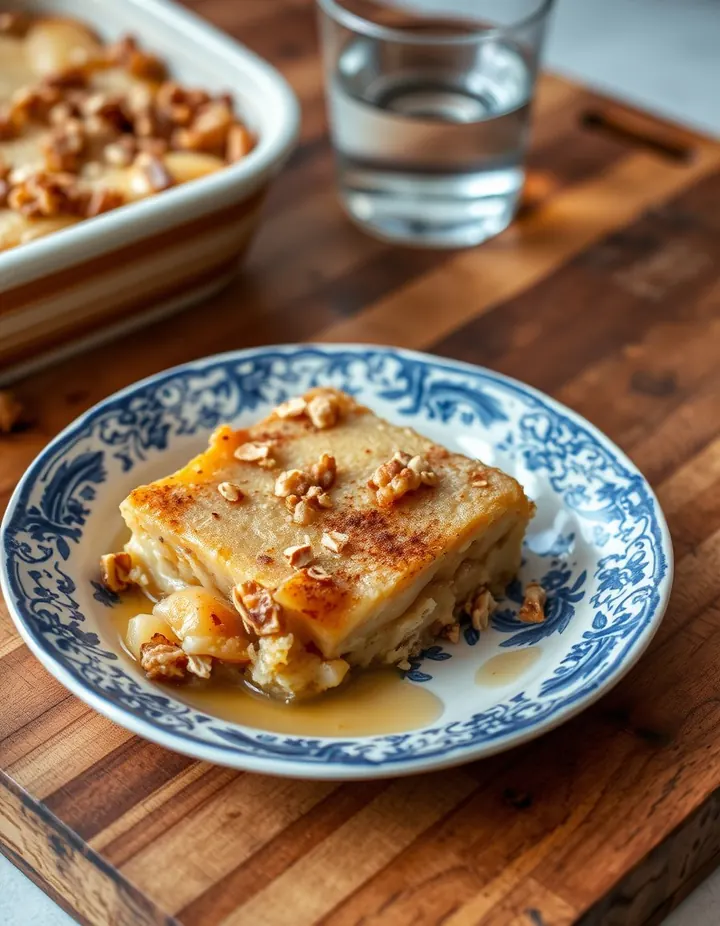 Apple Pudding256 recipes
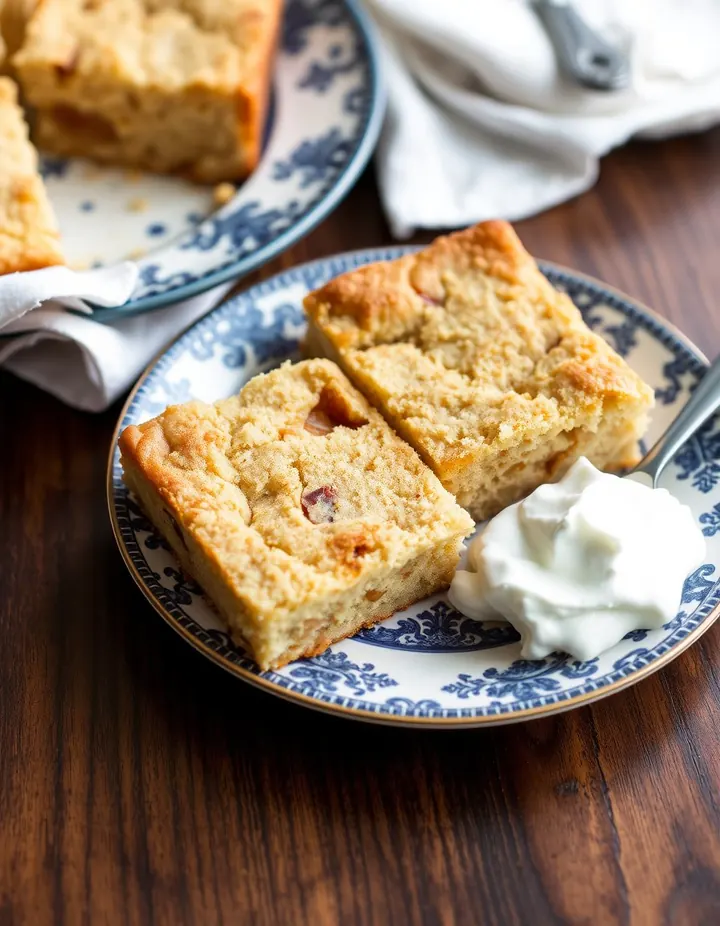 Apple Cake80 recipes
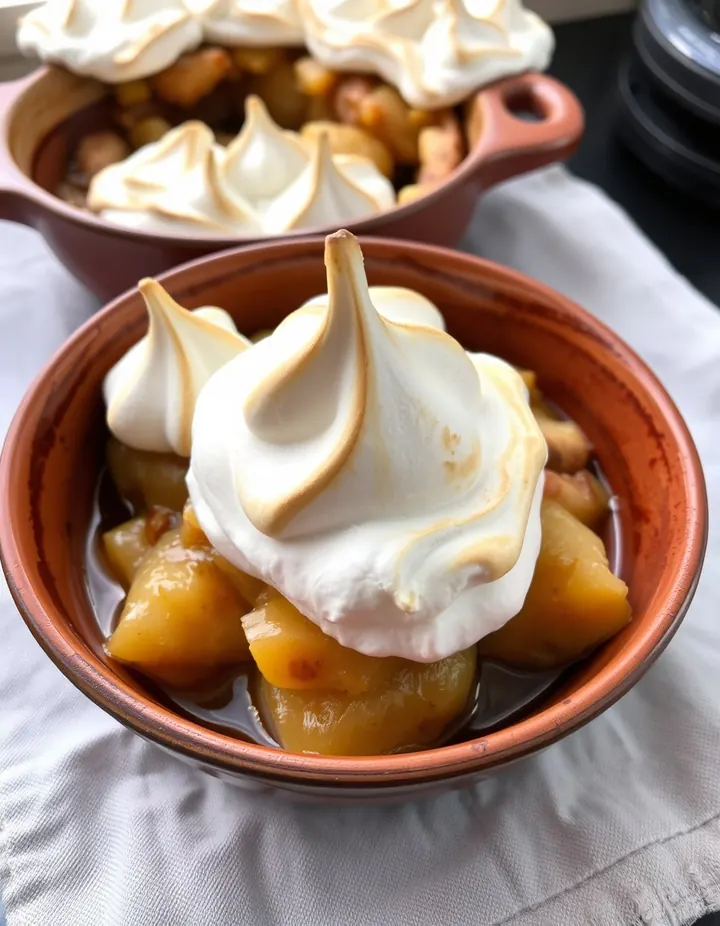 Apple Meringue75 recipes
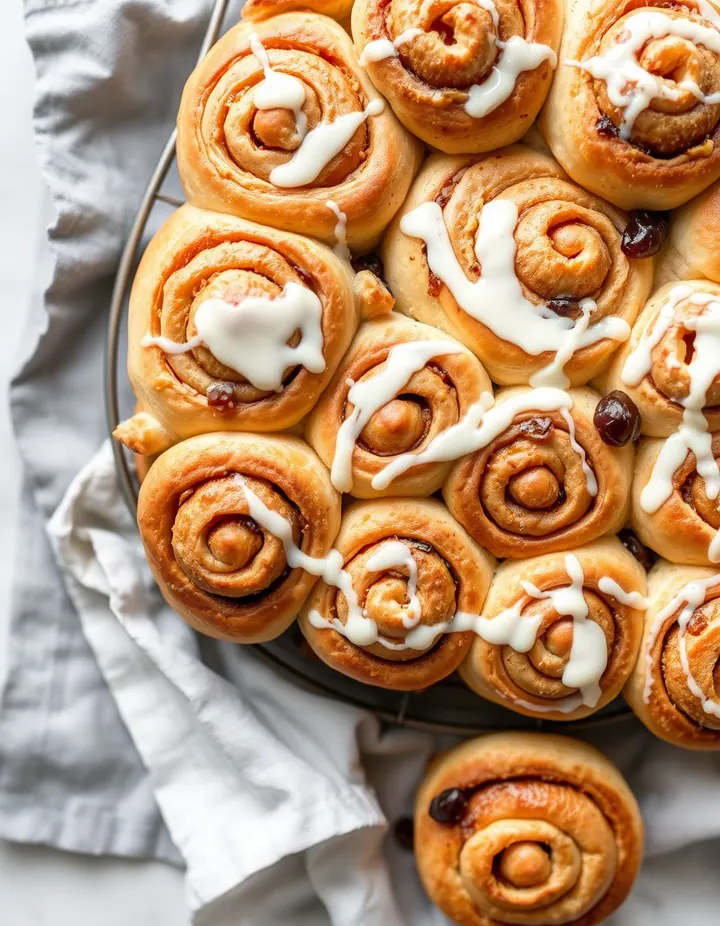 Cinnamon Rolls71 recipes
The free Flavor Lab newsletter: one surprising pairing a week and the molecular reason it works, in 60 seconds. No spam, unsubscribe anytime.
Prefer an account? Create a free account to save pairings and unlock the full chemistry.