Why it works: Butter and bread match in chemistry and in kitchens. They rank in the top 3% of all ingredient pairs, and 27,145 recipes mention both. Both carry delta-decalactone, which smells sweet, creamy. The science ↓
The recipe
Ingredients
Contains: egg, milk, wheat, tree nuts (auto-detected from the ingredients and method; we can miss things, so check labels)
Directions
Make the apple pudding
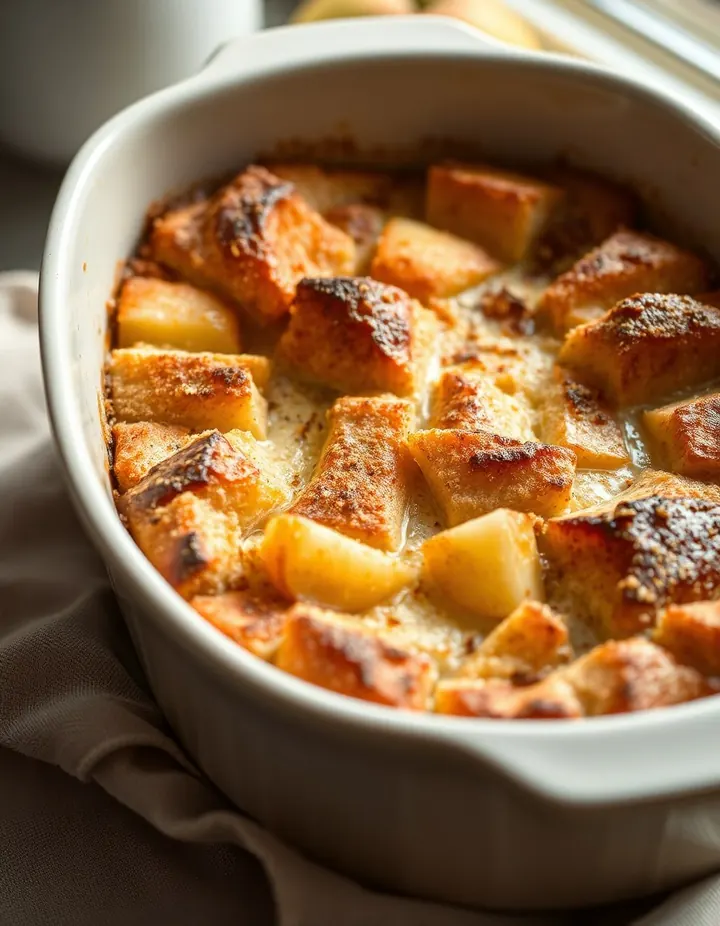
Pare and core six or seven apples, and place them in a buttered baking dish.
Mix five teaspoonfuls of flour with one teaspoon of salt, and wet to a smooth paste with cold milk.
Add the well-beaten yolks of three eggs, then the whites and more milk, using one pint in all.
Pour this custard over the apples and bake for one hour.
Serve with cream.
Make the steamed pudding
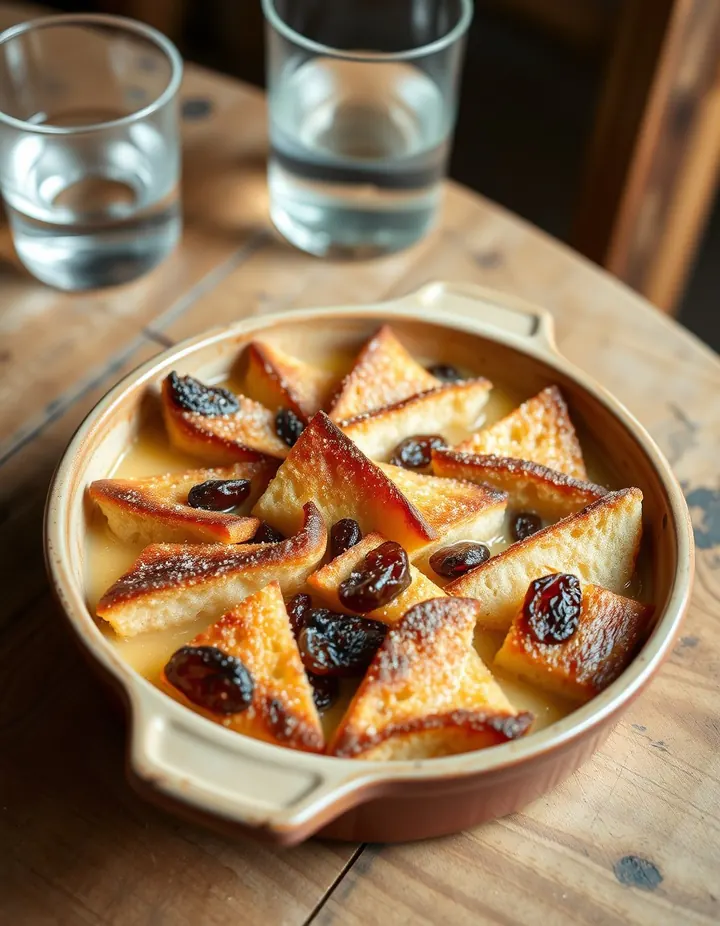
Put two cups dry bread crumbs, one cup sweet milk, half teaspoon soda, half cup molasses, half cup raisins, quarter cup melted butter, juice of a lemon, spice to taste, and one egg into a buttered dish.
Steam for an hour and a half.
Serve with hard sauce.
Separate two eggs.
Add to the yolks a cup of milk, stir in one and a half cups flour, one tablespoon melted butter.
Beat thoroughly; add one rounding teaspoon baking powder.
Stir.
Stir in one cup of stoned cherries well floured.
Stir in well-beaten whites.
Turn into greased mold and steam for one and a half hours.
Make the chestnut cream
Boil half pint of new milk with quarter pound of loaf sugar and some vanilla.
Moisten quarter pound of chestnuts (boiled and pounded to flour) with a gill of new milk; strain the boiled milk over, and put into a saucepan and stir until quite smooth.
Then add the yolks of eggs well beaten and continue to stir for a few minutes.
Take off the fire, and when nearly cold add half pint of thick cream; heat up for ten minutes.
Put into a mold and stand on ice for two hours until quite.
Transcribed from a scanned cookbook and modernised for today's kitchens. Where the book gave no heat or time, or said "a moderate oven", the temperatures and times here may be modern equivalents rather than the book's own figures. See the original page.
Explore the science
The flavor team
The pairs that carry this dish. Each one is judged two ways: how much aroma chemistry they share, and how many recipes mention both.
-
Butter + breadtop 3% of all pairsAroma overlapstrongMentioned together27,145 recipes
Shared aroma: delta-decalactone (sweet, creamy).
-
Butter + milktop 3% of all pairsAroma overlapstrongMentioned together81,222 recipes
Shared aroma: (z)-4-heptenal (biscuit, cream).
-
Milk + breadtop 4% of all pairsAroma overlapstrongMentioned together11,363 recipes
Shared aroma: 2-undecenal (sweet).
-
Flour + raisintop 4% of all pairsAroma overlapstrongMentioned together9,071 recipes
Shared aroma: isobutyraldehyde (malty, green).
-
Raisin + chestnuttop 5% of all pairsAroma overlapstrongMentioned together65 recipes
Shared aroma: ethyl caproate (fruity, apple peel).
Ranks compare each pair with 20,000 random ingredient pairs on CompKitchen. How we score pairs
What each ingredient does
- Eggs
- Yolks and whites bind the custard and give the pudding its set structure.
- Flour
- Forms the starch structure that holds the batter and pudding together.
- Dry bread crumbs
- Absorb the milk and molasses to give the pudding its body.
- Butter
- Adds richness and moisture to the batter.
- Molasses
- Adds sweetness, dark colour and moisture to the pudding.
- Baking powder
- Releases gas in the batter so the steamed pudding rises and lightens.
The step that matters
Folding in the well-beaten whites. Beaten whites trap air that gives lift. If they are deflated by overmixing or added too late, the steamed pudding turns out dense rather than light.
Flavor stand-ins for the raisin
How well each one fits the dish's main ingredients (flour, sugar, butter, milk, molasses, brandy, bread):
- Vanillabetter flavor fit
- Figabout as good a flavor fit
- Raisinthe original
- Appleabout as good a flavor fit
Fit is the average pairing score against flour, sugar, butter, milk, molasses, brandy, bread. Candidates are from the same food group and used in at least 100 recipes. This compares flavor only: it does not check the job the ingredient does in the dish (bulk, moisture, acidity, structure).
“What each ingredient does” and “The step that matters” were written by Claude from this recipe’s own method and reviewed in samples by CompKitchen.
You might also like
 Illustration
 Illustration
 Illustration
 Illustration
The Sunday pairing: one pairing, the chemistry behind it, and how to cook it. No spam, unsubscribe anytime.
Prefer an account? Create a free account for sign-in; Pro adds the full results and chemistry.