Why it works: Sugar and syrup match in chemistry and in kitchens. They rank in the top 6% of all ingredient pairs, and cooks put them together in 5,842 recipes. Both carry ethanol, which smells alcoholic, ethereal. The science ↓
Barley Sugar, and Burnt Almonds
Ingredients
Directions
Make the barley sugar
Boil one and a half pounds of fine loaf sugar, broken into small lumps, over the fire with a pint of water.
Skim carefully until the sugar looks like glue and becomes brittle and snaps when dropped into cold water.
Add the juice of a lemon and six drops of essence of lemon.
Boil the sugar up just once.
Place the bottom of the pan in cold water until the first heat has subsided.
Pour the preparation upon a marble slab slightly smeared with butter.
Draw the sugar together with a knife, keeping it as much as possible in a lump.
When cool enough to handle, cut pieces about the size of an egg and roll them into round sticks.
Twist the sticks slightly.
Place them on an oiled sheet and leave until cold and stiff.
Sift sugar lightly over them.
Make the burnt almonds
For burnt almonds, bleach a pound of almonds by scalding in hot water until the skins slip off.
Dry the almonds and warm them slightly.
Boil three-quarters of a pound of sugar with half a pint of water until the surface looks like large pearls or globules.
Add a few drops of prepared cochineal, a few drops of vanilla or other suitable essence, and the almonds.
Stir gently with a wooden spoon to detach the sugar from the bottom and sides of the saucepan.
Keep the almonds from sticking to the pan and turn them over and over so they are well coated, or charged, with sugar.
When they give out a cracking noise, remove the pan from the fire and stir gently until the sugar looks grained almost like sand.
Turn the almonds, sugar and all, onto a wire sieve and cover with paper for five minutes.
Pick out the almonds and put the grained sugar back into the sugar-boiler with just enough water to dissolve it.
Boil again to the point previously reached, then throw the almonds in and stir until they receive another coating, keeping them separate.
Make the chocolate candies
For chocolate candy, boil one and a half cakes of Walter Baker's chocolate, three pounds brown sugar, half a pound butter, one cup cream and one bottle vanilla until very thick, stirring constantly.
Pour into buttered tins or plates.
To test, drop a little from a spoon into a cup of ice water; if it hardens it is done.
For chocolate caramels, beat or grate a quarter pound of Walter Baker's chocolate.
Put it on the fire with a quarter pound butter, one teacup of milk and one and a half pounds of brown sugar.
Stir without stopping for twenty minutes, then pour into a greased dish.
For another chocolate candy, boil half a cake of Walter Baker's chocolate, one pound brown sugar, a cup of syrup, a cup of cream and a piece of butter the size of an egg for about twenty minutes.
Nutrition, whole recipe (rough)
Counts 9 of 12 ingredients. The other 3 aren't in our nutrition table and add nothing above, so the real totals are higher.
What these numbers assume: 9 portions
| Ingredient | Portion assumed | kcal |
|---|---|---|
| Chocolate | 1 oz (28g) semisweet | 155 |
| Milk | 1 cup (244ml) whole | 149 |
| Butter | 1 tbsp (14g) | 102 |
| Egg | 1 large egg (50g) | 78 |
| Cream | 1 tbsp (15ml) heavy | 51 |
| Sugar | 1 tbsp (12.5g) granulated | 49 |
| Lemon | juice of 1 lemon (48ml) | 12 |
| Vanilla | 1 tsp extract (4ml) | 12 |
| Almond | 1 almond (1.2g) | 7 |
| Water | not in our table | 0 |
| Syrup | not in our table | 0 |
| Cake | not in our table | 0 |
One typical portion per ingredient; the recipe's quantities are not counted. A rough guide only, not for medical or dietary planning.
Transcribed from a scanned cookbook and modernised for today's kitchens. Where the book gave no heat or time, or said "a moderate oven", the temperatures and times here may be modern equivalents rather than the book's own figures. See the original page.
Explore the science
The flavor team
The pairs that carry this dish. Each one is judged two ways: how much their aromas overlap, and how often cooks already put them together.
-
Sugar + syruptop 6% of all pairsSmell alikestrongCooked together5,842 recipes
Shared aroma: ethanol (alcoholic, ethereal).
-
Cream + buttertop 8% of all pairsSmell alikemoderateCooked together41,516 recipes
Shared aroma: delta-dodecalactone (sweet, creamy).
-
Chocolate + almondtop 9% of all pairsSmell alikemoderateCooked together1,733 recipes
Shared aroma: 2,3-pentanedione (butter, sweet).
-
Sugar + creamtop 9% of all pairsSmell alikemoderateCooked together43,450 recipes
Shared aroma: 2,3-butanedione (butter, sweet).
-
Lemon + almondtop 10% of all pairsSmell alikestrongCooked together5,655 recipes
Shared aroma: eucalyptol (eucalyptus, herbal).
Ranks compare each pair with 20,000 random ingredient pairs on CompKitchen. How we score pairs
What each ingredient does
- Fine loaf sugar
- Forms the brittle, glassy structure of the barley sugar as it cools.
- Almonds
- Provide the nutty core that the coating of sugar surrounds.
- Brown sugar
- Adds sweetness and a caramel flavour, and helps the candy set firm.
- Butter
- Adds fat for a softer bite and richer flavour, and keeps the candy from sticking.
- Cream
- Adds moisture and richness, giving the chocolate candy a smoother texture.
- Walter baker's chocolate
- Adds cocoa flavour and fat, making the candy rich and thick when boiled.
The step that matters
Skim until the sugar snaps when dropped into cold water. Sugar is stopped at the hard-crack stage by its temperature. Too little boiling leaves it sticky and soft, while too much darkens it toward burnt and bitter.
Swap the lemon
How well each one fits the dish's main ingredients (sugar, cream, chocolate, butter, almond, syrup, egg):
- Vanillafits better
- Coconutfits better
- Raspberryfits better
- Lemonthe original
Fit is the average pairing score against sugar, cream, chocolate, butter, almond, syrup, egg. Candidates are from the same food group and used in at least 100 recipes.
“What each ingredient does” and “The step that matters” were written by Claude from this recipe’s own method and reviewed in samples by CompKitchen.
You might also like
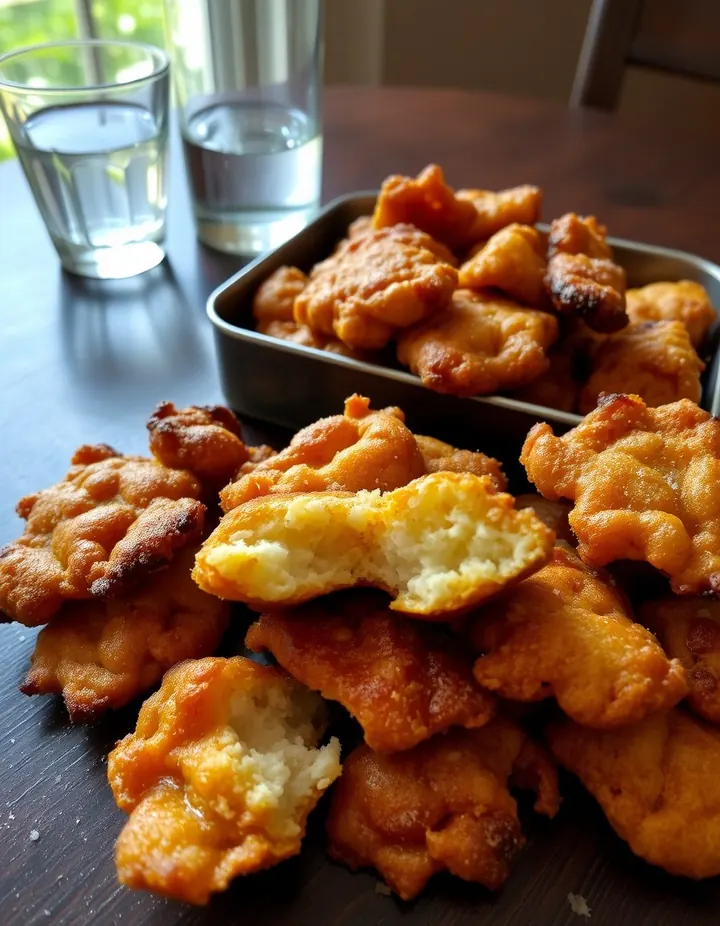 Fritters56 recipes
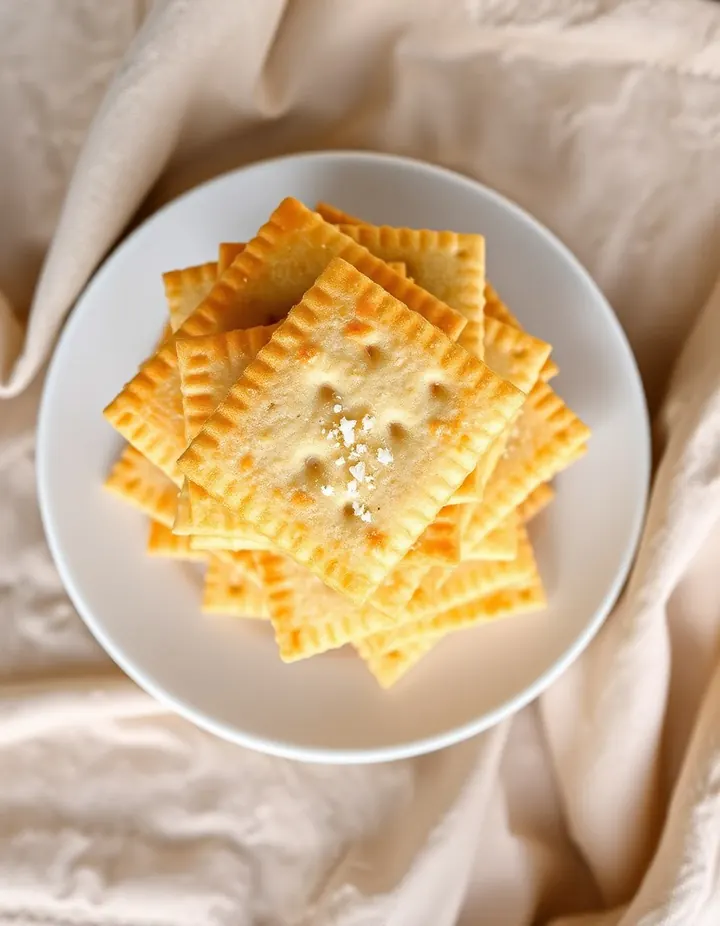 Crisp Crackers7 recipes
The free Flavor Lab newsletter: one surprising pairing a week and the molecular reason it works, in 60 seconds. No spam, unsubscribe anytime.
Prefer an account? Create a free account to save pairings and unlock the full chemistry.