Receipts for Cooking
two good-sized loavesIngredients
Directions
Make the sponge
Take a quart of flour, half a gill of yeast, one teaspoonful of salt, and a quart of water; stir with a spoon until well mixed.
Put the flour into a pan; make a hole in the flour, turn in the yeast, add the salt, and add the warm, not hot water a little at a time until it becomes a thick batter.
Let the mixture stand in a warm place to rise.
When the sponge is foamy, add as much flour as can be mixed in by hand.
Knead and rise
Let it stand until the bread rises quite light.
Turn the dough onto a breadboard and knead it well with your hands.
Shape and bake
Rub the pan with a little butter; put the dough into the pan, filling it about half full.
Set the pan on the range until it rises again, then bake. This will make two good-sized loaves.
Bake for one hour.
When taken out of the oven, strike the loaf with your knuckles; if it rings, it is done; if soft, put it back into the oven.
Nutrition, whole recipe (rough)
What these numbers assume: 2 portions
| Ingredient | Portion assumed | kcal |
|---|---|---|
| Flour | 1 cup (125g) all-purpose | 455 |
| Salt | 1 tsp (6g) | 0 |
One typical portion per ingredient; the recipe's quantities are not counted. A rough guide only, not for medical or dietary planning.
Transcribed from a scanned cookbook and modernised for today's kitchens. Where the book gave no heat or time, or said "a moderate oven", the temperatures and times here may be modern equivalents rather than the book's own figures. See the original page.
Explore the science
What each ingredient does
- Flour
- Forms the structure of the dough once mixed with water and yeast.
- Yeast
- Produces gas that makes the sponge foam and the dough rise.
- Water (in the method)
- Hydrates the flour so gluten can form and the dough can be kneaded.
The step that matters
Adding the water gradually to the flour and yeast. Adding the warm water a little at a time lets the yeast mix in evenly and gives a smooth batter. Water that is too hot can kill yeast, so it should be warm, not hot.
“What each ingredient does” and “The step that matters” were written by Claude from this recipe’s own method and reviewed in samples by CompKitchen.
More bread recipes
You might also like
 Tomato Soup526 recipes
 Mutton Broth292 recipes
 Yorkshire Pudding264 recipes
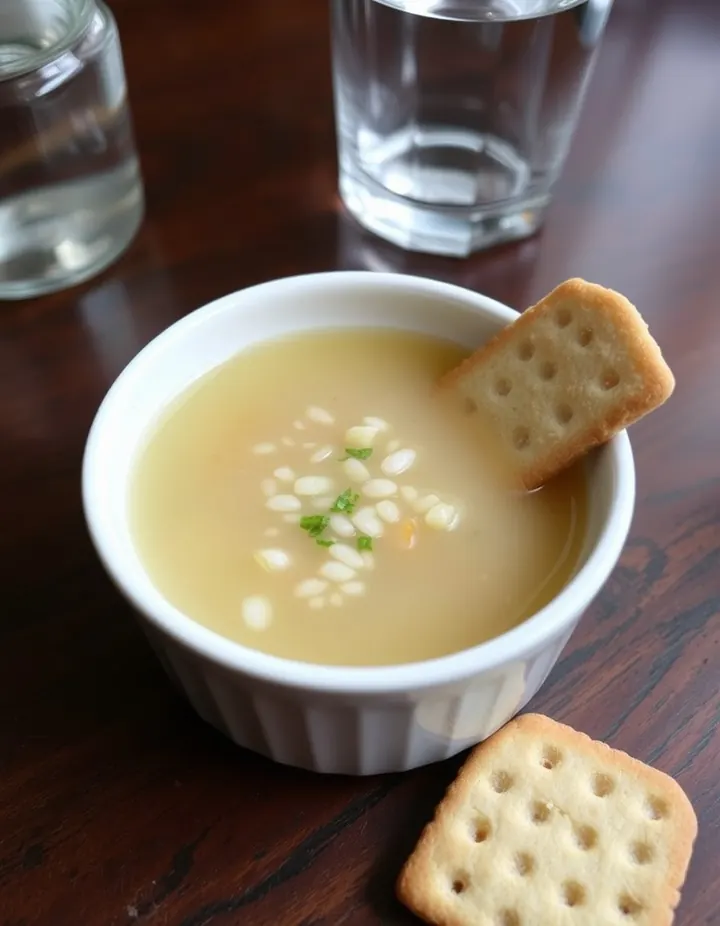 Chicken Broth257 recipes
The free Flavor Lab newsletter: one surprising pairing a week and the molecular reason it works, in 60 seconds. No spam, unsubscribe anytime.
Prefer an account? Create a free account to save pairings and unlock the full chemistry.