Why it works: Almond and flour are a kitchen classic. They rank in the top 5% of all ingredient pairs, and cooks put them together in 8,673 recipes. Both carry isobutyraldehyde, which smells malty, green. The science ↓
French Dishes
Ingredients
Directions
Prepare the rabbit
Remove the fillets from an uncooked rabbit.
Place them in a saucepan on a moderate fire, with half an ounce of butter, and simmer very gently.
In another saucepan put the remainder of the rabbit with an onion, a clove, and a little nutmeg, and three pints of consomme (stock).
Simmer gently three quarters of an hour.
Remove the meat from the thighs and shoulders.
Make the purée
Pound it together with two ounces of rice well boiled.
Moisten with the consomme in which your rabbit was cooked.
Put through a sieve.
Serve
Cut your fillets of rabbit, which you cooked in butter, into small pieces.
Serve in your soup.
Nutrition, whole recipe (rough)
What these numbers assume: 14 portions
| Ingredient | Portion assumed | kcal |
|---|---|---|
| Flour | 1 cup (125g) all-purpose | 455 |
| Pork | 100g cooked | 242 |
| Rice | 1 cup cooked (158g) white | 206 |
| Milk | 1 cup (244ml) whole | 149 |
| Butter | 1 tbsp (14g) | 102 |
| Peas | 1/2 cup (72g) | 62 |
| Sugar | 1 tbsp (12.5g) granulated | 49 |
| Tomato | 1 medium (123g) | 22 |
| Clove | 1 tsp ground (2g) | 7 |
| Black Pepper | 1 tsp ground (2.3g) | 6 |
| Garlic | 1 clove (3g) | 4 |
| Vinegar | 1 tbsp (15ml) distilled | 3 |
| Parsley | 1 tbsp chopped fresh (3.8g) | 1 |
| Salt | 1 tsp (6g) | 0 |
One typical portion per ingredient; the recipe's quantities are not counted. A rough guide only, not for medical or dietary planning.
Transcribed from a scanned cookbook and modernised for today's kitchens. Where the book gave no heat or time, or said "a moderate oven", the temperatures and times here may be modern equivalents rather than the book's own figures. See the original page.
Explore the science
The flavor team
The pairs that carry this dish. Each one is judged two ways: how much their aromas overlap, and how often cooks already put them together.
-
Almond + flourtop 5% of all pairsSmell alikemoderateCooked together8,673 recipes
Shared aroma: isobutyraldehyde (malty, green).
-
Rice + almondtop 6% of all pairsSmell alikestrongCooked together1,456 recipes
Shared aroma: 2,4-decadienal (seaweed).
-
Milk + buttertop 7% of all pairsSmell alikemoderateCooked together81,283 recipes
Shared aroma: (z)-4-heptenal (biscuit, cream).
-
Rice + milktop 7% of all pairsSmell alikemoderateCooked together7,374 recipes
Shared aroma: 2-nonenal (fatty, green).
-
Rice + peastop 9% of all pairsSmell alikemoderateCooked together1,434 recipes
Shared aroma: 2,4-nonadienal (fatty, green).
Ranks compare each pair with 20,000 random ingredient pairs on CompKitchen. How we score pairs
What each ingredient does
- Rabbit (in the method)
- Provides the main meat, which becomes the body and flavour of the purée.
- Rice
- Thickens the purée and gives it a smooth, starchy body when pounded and sieved.
- Consomme
- Adds liquid and savoury flavour, moistening the purée to the right consistency.
Swap the peas
How well each one fits the dish's main ingredients (rice, milk, almond, clove, garlic, butter, flour):
- Cashew nutfits better
- Chickpeafits better
- Pistachiofits better
- Peasthe original
Fit is the average pairing score against rice, milk, almond, clove, garlic, butter, flour. Candidates are from the same food group and used in at least 100 recipes.
“What each ingredient does” and “The step that matters” were written by Claude from this recipe’s own method and reviewed in samples by CompKitchen.
You might also like
 Tomato Soup526 recipes
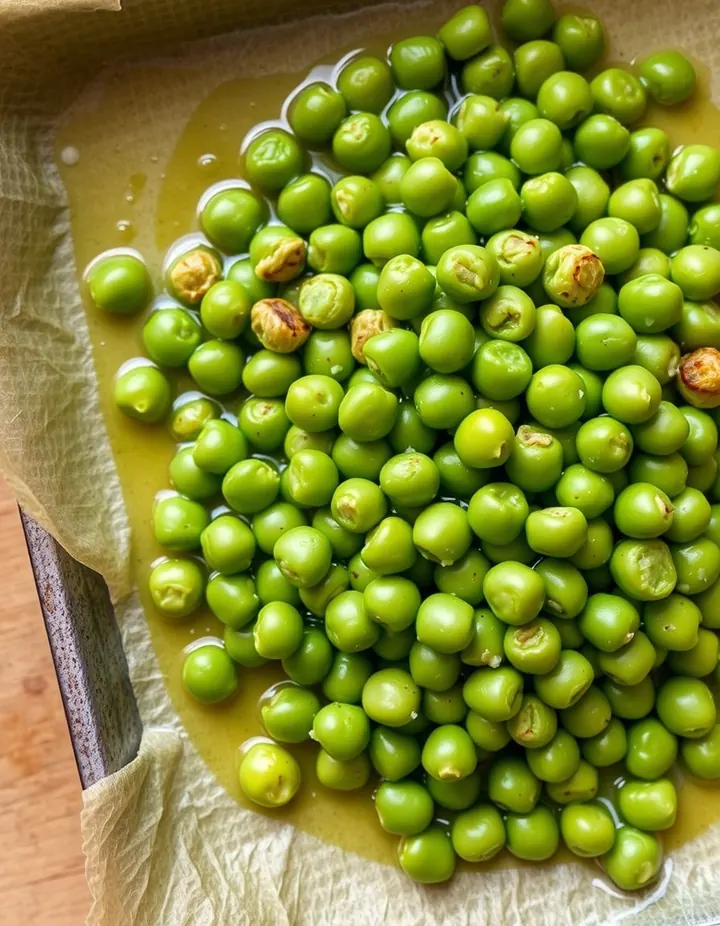 Green Peas229 recipes
 Cream of Tomato Soup107 recipes
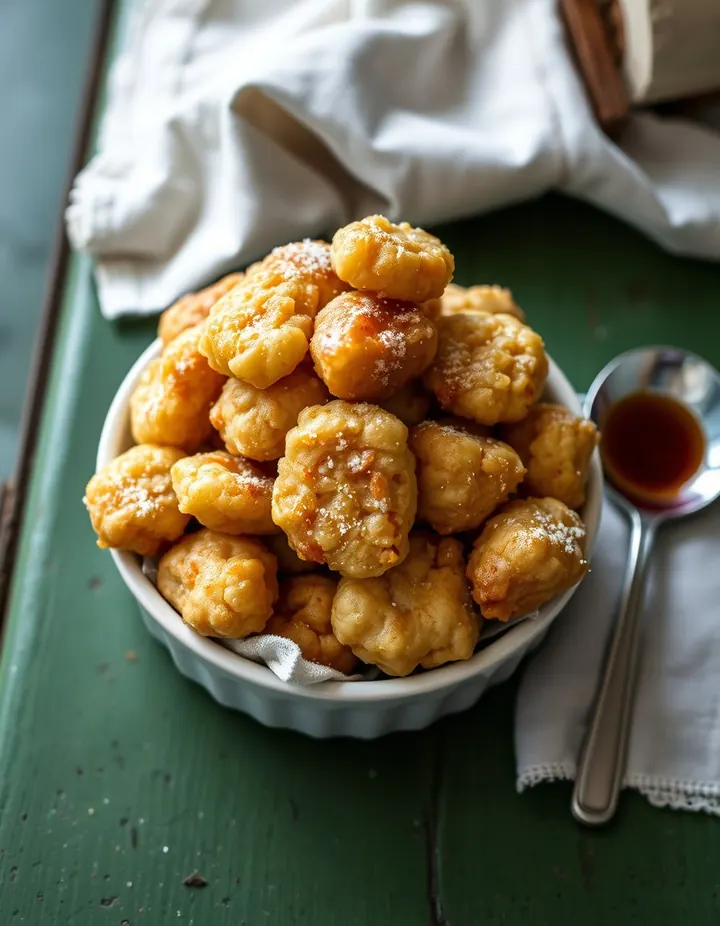 Rice Fritters84 recipes
The free Flavor Lab newsletter: one surprising pairing a week and the molecular reason it works, in 60 seconds. No spam, unsubscribe anytime.
Prefer an account? Create a free account to save pairings and unlock the full chemistry.