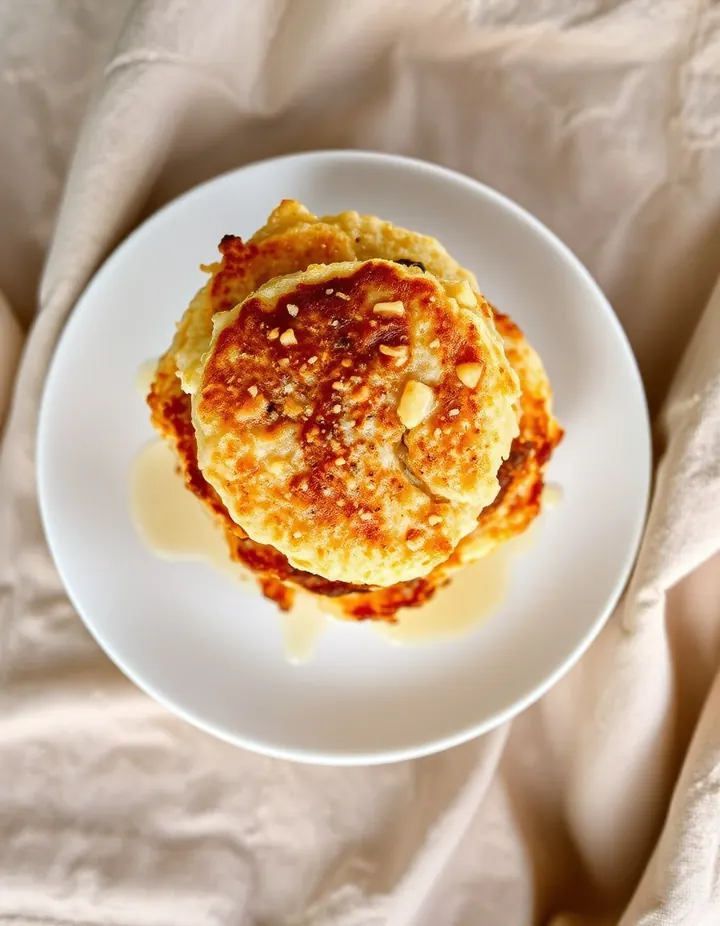
 Illustration
Why it works: Egg and pepper are a kitchen classic. They rank in the top 22% of all ingredient pairs, and 48,824 recipes mention both. Both carry 2-nonenal, which smells fatty, green. The science ↓
The recipe
Ingredients
Contains: egg, milk (auto-detected from the ingredients and method; we can miss things, so check labels)
Also mentioned in the method: butter
Directions
Prepare
Boil and mash your parsnips.
Add 2 well beaten eggs, a little salt and pepper, and enough Hour to hold them together.
Make into flat, round cakes.
Fry
Fry in butter until both sides are a rich brown.
Transcribed from a scanned cookbook and modernised for today's kitchens. Where the book gave no heat or time, or said "a moderate oven", the temperatures and times here may be modern equivalents rather than the book's own figures. See the original page.
Found this recipe through an AI assistant? CompKitchen also shows which ingredients go well together and why, from the aroma molecules they share and how often recipes combine them. Try the pairing tools.
The picture is an illustration, not a photo of this recipe · Contact us to use it
Explore the science
The flavor team
The pairs that carry this dish. Each one is judged two ways: how much aroma chemistry they share, and how many recipes mention both.
-
Egg + peppertop 22% of all pairsAroma overlapmoderateMentioned together48,824 recipes
Shared aroma: 2-nonenal (fatty, green).
Ranks compare each pair with 20,000 random ingredient pairs on CompKitchen. How we score pairs
What each ingredient does
- Eggs
- Bind the mashed parsnips so the cakes hold their shape.
- Parsnips (in the method)
- Make up the bulk of the cakes and give them their mild, sweet flavour.
The step that matters
Fry until both sides are a rich brown. The browning comes from Maillard reactions between the sugars and proteins on the surface, which add colour and flavour. Too little heat leaves the cakes pale and soft, while too much burns the outside before the inside is heated through.
“What each ingredient does” and “The step that matters” were written by Claude, an AI, from this recipe’s own method. They are not checked recipe by recipe, so they can be wrong.
Make it your own
Stand-ins, a drink, and quick taste fixes for this dish, ranked by how well each fits its other ingredients: shared aroma molecules and how often recipes combine them.
You might also like
 Illustration
 Illustration
 Illustration
 Illustration
The Sunday pairing: one pairing, the chemistry behind it, and how to cook it. No spam, unsubscribe anytime.
Prefer an account? Create a free account for sign-in; Pro adds the full results and chemistry.