Why it works: Sugar and chocolate are a kitchen classic. They rank in the top 13% of all ingredient pairs, and cooks put them together in 15,404 recipes. Both carry guaiacol, which smells smoky, sweet. The science ↓
Nellie's Caramels
Ingredients
Directions
Make the chocolate caramel
Heat 1 pound brown sugar, 1 cup sweetened chocolate, and butter the size of an egg until thick as taffy.
Pour onto buttered plates, and mark into squares when cool enough.
Make the nut caramel
Grease a shallow square pan with butter.
Fill the pan with hickory nut kernels, sliced Brazil nuts, almonds, sliced coconut, dates, and orange peel.
Melt 2 pounds white sugar with 1 cup water, boil without stirring until the crack.
Add 1 tablespoon lemon juice and pour over the nuts in the pan.
When cool, mark in narrow strips with a knife.
Nutrition, whole recipe (rough)
Counts 4 of 6 ingredients. The other 2 aren't in our nutrition table and add nothing above, so the real totals are higher.
What these numbers assume: 4 portions
| Ingredient | Portion assumed | kcal |
|---|---|---|
| Chocolate | 1 oz (28g) semisweet | 155 |
| Butter | 1 tbsp (14g) | 102 |
| Sugar | 1 tbsp (12.5g) granulated | 49 |
| Lemon | juice of 1 lemon (48ml) | 12 |
| Water | not in our table | 0 |
| Cake | not in our table | 0 |
One typical portion per ingredient; the recipe's quantities are not counted. A rough guide only, not for medical or dietary planning.
Transcribed from a scanned cookbook and modernised for today's kitchens. Where the book gave no heat or time, or said "a moderate oven", the temperatures and times here may be modern equivalents rather than the book's own figures. See the original page.
Explore the science
The flavor team
The pairs that carry this dish. Each one is judged two ways: how much their aromas overlap, and how often cooks already put them together.
-
Sugar + chocolatetop 13% of all pairsSmell alikemoderateCooked together15,404 recipes
Shared aroma: guaiacol (smoky, sweet).
-
Lemon + buttertop 16% of all pairsSmell alikemoderateCooked together41,227 recipes
Shared aroma: 3-hexenal (apple, fruity).
-
Chocolate + buttertop 16% of all pairsSmell alikemoderateCooked together10,543 recipes
Shared aroma: delta-decalactone (sweet, creamy).
-
Sugar + buttertop 17% of all pairsSmell alikemoderateCooked together98,233 recipes
Shared aroma: guaiacol (smoky, sweet).
-
Sugar + lemontop 18% of all pairsSmell alikelowCooked together53,532 recipes
Shared aroma: 2-nonenal (fatty, green).
Sugar and lemon barely smell alike, yet cooks put them together in 53,532 recipes: they work on texture and structure more than aroma.
Ranks compare each pair with 20,000 random ingredient pairs on CompKitchen. How we score pairs
What each ingredient does
- Brown sugar
- Provides sweetness and a deep caramel flavor, and helps the candy set firm.
- White sugar
- Forms the syrup that hardens into the candy's structure as it cooks.
- Butter
- Adds fat that softens the texture and gives a rich, smooth bite.
- Sweetened chocolate
- Adds chocolate flavor and color to the caramel base.
- Lemon juice
- Adds acidity that helps keep the sugar syrup from turning grainy.
The step that matters
Boil the sugar syrup without stirring. Stirring hot sugar syrup can trigger sugar crystals to form, leaving the candy grainy. Cooking it to the crack stage without stirring gives a firm, smooth set once cooled.
Swap the lemon
How well each one fits the dish's main ingredients (sugar, chocolate, butter):
- Vanillafits better
- Coconutfits better
- Raspberryfits better
- Lemonthe original
Fit is the average pairing score against sugar, chocolate, butter. Candidates are from the same food group and used in at least 100 recipes.
“What each ingredient does” and “The step that matters” were written by Claude from this recipe’s own method and reviewed in samples by CompKitchen.
You might also like
 Lemon Cake228 recipes
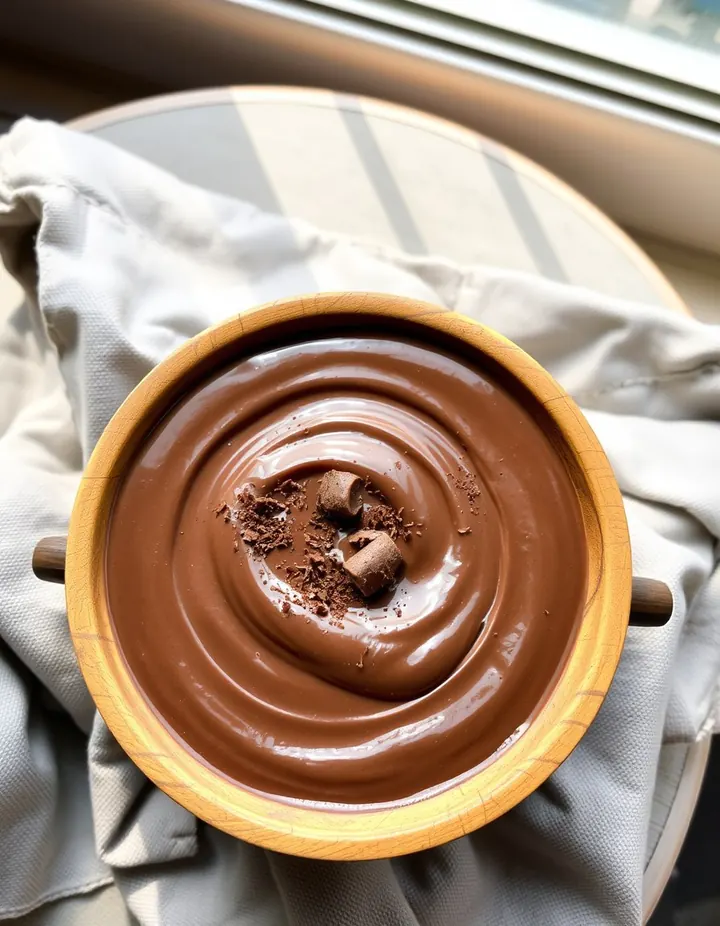 Chocolate Cream171 recipes
 Lemon Ice147 recipes
 Lemon Sherbet103 recipes
The free Flavor Lab newsletter: one surprising pairing a week and the molecular reason it works, in 60 seconds. No spam, unsubscribe anytime.
Prefer an account? Create a free account to save pairings and unlock the full chemistry.