Why it works: Milk and butter are a kitchen classic. They rank in the top 7% of all ingredient pairs, and cooks put them together in 81,283 recipes. Both carry (z)-4-heptenal, which smells biscuit, cream. The science ↓
German Coffee Cake
Ingredients
Directions
Make the batter
Mix butter, sugar, warm milk, yeast, eggs, and flour thoroughly; let stand in a warm place overnight.
In the morning, pour the batter into pans to rise; guard against using too much flour.
Have batter the same consistency as that of layer cake; flavor with vanilla or lemon.
Enrich and rise
Before placing in oven, spread with butter and sprinkle with sugar and cinnamon.
Add 1 pint milk, 1 cup yeast or 1 yeast cake dissolved in 1 cup lukewarm water, and 4 eggs; add as much flour as can be stirred in with a spoon; let rise until very light.
Then add 2 cups sugar and 1 large cup butter. If too soft to handle, add a little more flour; the dough should be very soft; let rise again until very light.
Shape and bake
Mould gently with the hands; let rise again and bake; then wash with cream and sugar; set rusk at 3 p.m.; add sugar and batter at 9 p.m.; and let rise until morning.
Nutrition, whole recipe (rough)
Counts 6 of 7 ingredients. The other 1 aren't in our nutrition table and add nothing above, so the real totals are higher.
What these numbers assume: 6 portions
| Ingredient | Portion assumed | kcal |
|---|---|---|
| Flour | 1 cup (125g) all-purpose | 455 |
| Milk | 1 cup (244ml) whole | 149 |
| Butter | 1 tbsp (14g) | 102 |
| Egg | 1 large egg (50g) | 78 |
| Sugar | 1 tbsp (12.5g) granulated | 49 |
| Cinnamon | 1 tsp ground (2.6g) | 6 |
| Cake | not in our table | 0 |
One typical portion per ingredient; the recipe's quantities are not counted. A rough guide only, not for medical or dietary planning.
Transcribed from a scanned cookbook and modernised for today's kitchens. Where the book gave no heat or time, or said "a moderate oven", the temperatures and times here may be modern equivalents rather than the book's own figures. See the original page.
Explore the science
The flavor team
The pairs that carry this dish. Each one is judged two ways: how much their aromas overlap, and how often cooks already put them together.
-
Milk + buttertop 7% of all pairsSmell alikemoderateCooked together81,283 recipes
Shared aroma: (z)-4-heptenal (biscuit, cream).
-
Flour + cinnamontop 9% of all pairsSmell alikemoderateCooked together17,341 recipes
Shared aroma: isobutyraldehyde (malty, green).
-
Milk + cinnamontop 10% of all pairsSmell alikemoderateCooked together12,655 recipes
Shared aroma: cuminaldehyde (Spicy, cumin).
-
Sugar + cinnamontop 10% of all pairsSmell alikelowCooked together30,779 recipes
Shared aroma: guaiacol (smoky, sweet).
-
Flour + buttertop 12% of all pairsSmell alikelowCooked together124,287 recipes
Shared aroma: isobutyraldehyde (malty, green).
Sugar and cinnamon barely smell alike, yet cooks put them together in 30,779 recipes: they work on texture and structure more than aroma.
Ranks compare each pair with 20,000 random ingredient pairs on CompKitchen. How we score pairs
What each ingredient does
- Flour
- Builds the dough's structure; too much makes the dough dry and dense.
- Eggs
- Add structure, richness and moisture to the dough.
- Butter
- Adds fat for a tender crumb and rich flavor.
- Yeast
- Produces gas that makes the dough rise and become light.
- Sugar
- Provides sweetness and feeds the yeast during rising.
The step that matters
Keeping the dough soft. Adding too much flour makes the dough stiff and dense, so it rises poorly and bakes up heavy. A very soft dough traps more gas and gives a lighter crumb.
“What each ingredient does” and “The step that matters” were written by Claude from this recipe’s own method and reviewed in samples by CompKitchen.
You might also like
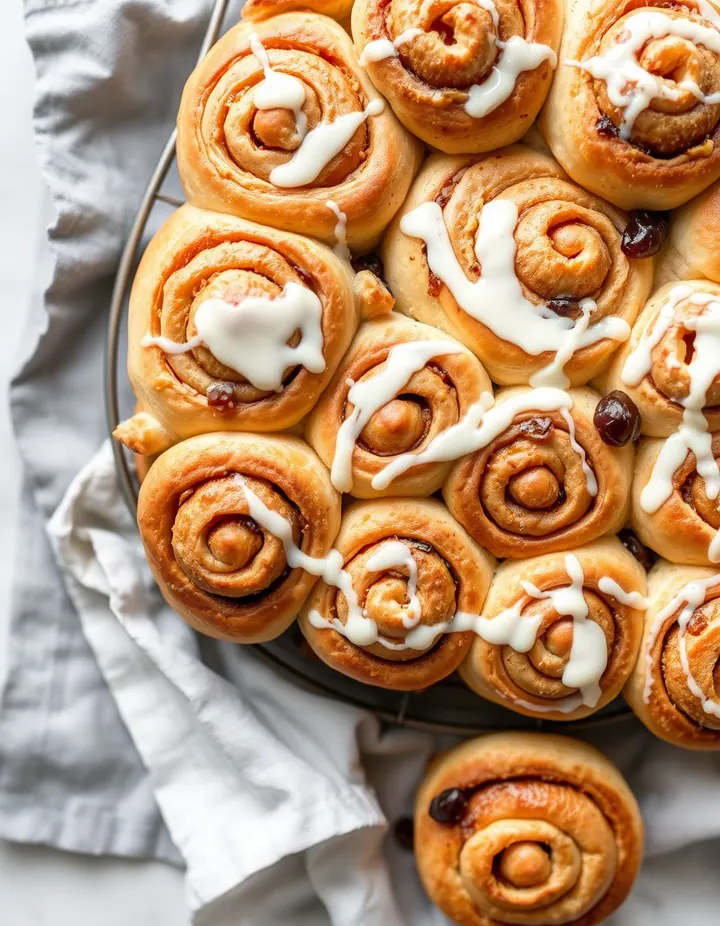 Cinnamon Rolls71 recipes
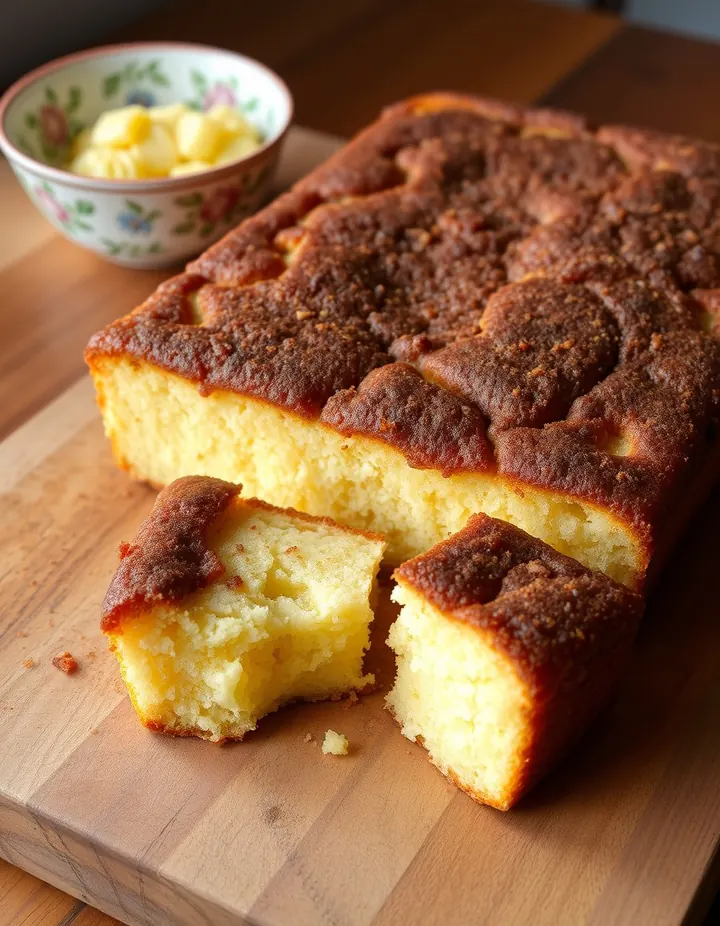 Cinnamon Cake42 recipes
 White Cake431 recipes
 Pound Cake373 recipes
The free Flavor Lab newsletter: one surprising pairing a week and the molecular reason it works, in 60 seconds. No spam, unsubscribe anytime.
Prefer an account? Create a free account to save pairings and unlock the full chemistry.