Why it works: Lime and lemon match in chemistry and in kitchens. They rank in the top 1% of all ingredient pairs, and cooks put them together in 1,289 recipes. Both carry beta-phellandrene, which smells minty, terpene. The science ↓
How We Cook in Tennessee
Ingredients
Directions
Prepare the rind
Add two handfuls of lime to a bucket of cold water.
Cut the watermelon rind into pieces. The rind should be weighed as soon as cut.
Let the rind remain in the lime-water for twenty-four hours, turning it often from the bottom.
Take the rind out of the lime-water and soak it in clear water to remove the lime, changing the water frequently.
Scald the rind in strong alum-water with grape or butter bean leaves, keeping the vessel well covered so the rind may have a good green color.
Let the rind boil in this about ten minutes.
Drop the rind into cold water.
Boil the rind in strong ginger tea, making enough to cover the rind well, and long enough to impart a flavor of ginger to the rind.
Make the syrup and cook
Make a syrup using two pounds of white sugar to one pound of rind, and water sufficient to boil the rind until perfectly transparent.
Do not put the fruit into the syrup until the syrup boils; then cook slowly.
Sliced lemon is a great improvement; when not at hand, the oil of lemon may.
Nutrition, whole recipe (rough)
What these numbers assume: 3 portions
| Ingredient | Portion assumed | kcal |
|---|---|---|
| Sugar | 1 tbsp (12.5g) granulated | 49 |
| Lemon | juice of 1 lemon (48ml) | 12 |
| Lime | juice of 1 lime (44ml) | 11 |
One typical portion per ingredient; the recipe's quantities are not counted. A rough guide only, not for medical or dietary planning.
Transcribed from a scanned cookbook and modernised for today's kitchens. Where the book gave no heat or time, or said "a moderate oven", the temperatures and times here may be modern equivalents rather than the book's own figures. See the original page.
Explore the science
The flavor team
The pairs that carry this dish. Each one is judged two ways: how much their aromas overlap, and how often cooks already put them together.
-
Lime + lemontop 1% of all pairsSmell alikestrongCooked together1,289 recipes
Shared aroma: beta-phellandrene (minty, terpene).
-
Sugar + lemontop 18% of all pairsSmell alikelowCooked together53,532 recipes
Shared aroma: 2-nonenal (fatty, green).
-
Lime + sugartop 29% of all pairsSmell alikelowCooked together3,332 recipes
Shared aroma: 1-penten-3-one (fish, pungent).
Sugar and lemon barely smell alike, yet cooks put them together in 53,532 recipes: they work on texture and structure more than aroma.
Ranks compare each pair with 20,000 random ingredient pairs on CompKitchen. How we score pairs
What each ingredient does
- Watermelon rind
- Forms the bulk of the preserve and becomes translucent as it cooks in syrup.
- White sugar
- Sweetens the preserve and, at high concentration, helps the rind turn clear and firm.
- Lime
- Firms the rind's texture during the soak, helping it hold its shape through cooking.
- Lemon
- Adds acidity and bright flavor that balances the sweetness of the syrup.
The step that matters
Do not put the fruit into the syrup until the syrup boils. Adding rind to cold syrup lets it soak up sugar unevenly and can leave it tough or cloudy, while a boiling syrup and slow cooking let sugar penetrate gradually for a clear, tender result.
Swap the lime
How well each one fits the dish's main ingredients (sugar, lemon):
- Orangefits better
- Limethe original
- Vanillafits about as well
- Blueberryfits less well
Fit is the average pairing score against sugar, lemon. Candidates are from the same food group and used in at least 100 recipes.
“What each ingredient does” and “The step that matters” were written by Claude from this recipe’s own method and reviewed in samples by CompKitchen.
You might also like
 Lemon Cake228 recipes
 Lemon Ice147 recipes
 Lemon Sherbet103 recipes
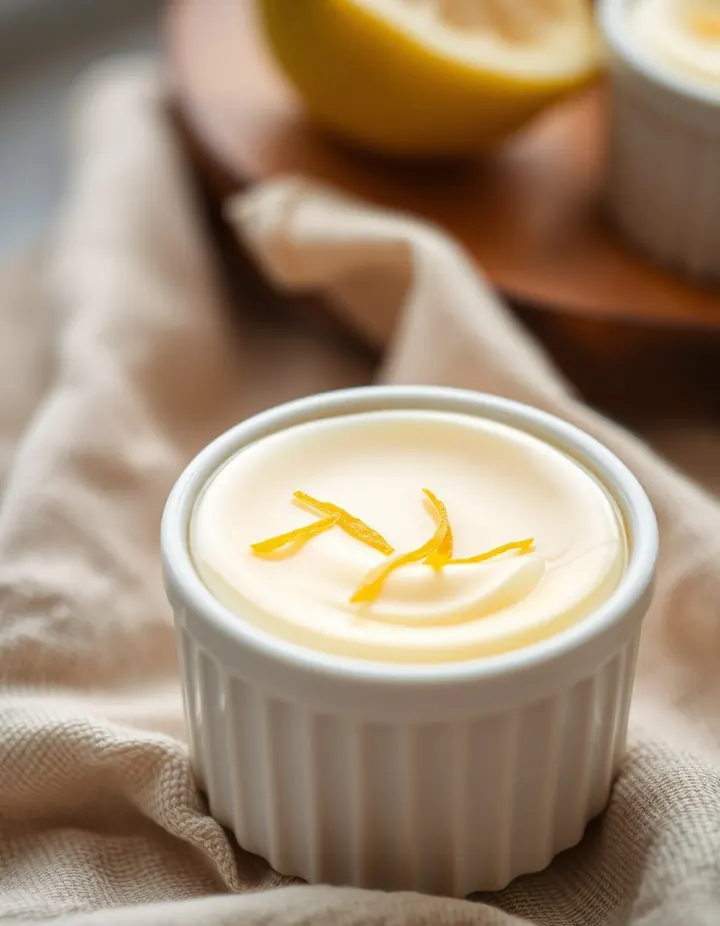 Lemon Custard64 recipes
The free Flavor Lab newsletter: one surprising pairing a week and the molecular reason it works, in 60 seconds. No spam, unsubscribe anytime.
Prefer an account? Create a free account to save pairings and unlock the full chemistry.