Why it works: Parsley and pepper match in chemistry and in kitchens. They rank in the top 2% of all ingredient pairs, and 34,118 recipes mention both. Both carry 4'-methylacetophenone, which smells bitter almond. The science ↓
The recipe
Ingredients
Contains: egg, milk, wheat (auto-detected from the ingredients and method; we can miss things, so check labels)
Directions
Skin the frog legs and pat them dry with paper towels. Do not rinse them. Parboil the legs in boiling water for about 3 minutes, then drain well.
Melt the butter in a saucepan over medium heat. Add the frog legs and fry for about 2 minutes, stirring often so they do not burn.
Sprinkle the sifted flour over the frogs and stir well. Add the parsley, savory, bay leaf, onion slices, salt, pepper and the hot water.
Cover and simmer gently until the meat is opaque and reaches 145°F (63°C), about 10 to 15 minutes.
Lift out the legs and set them aside. Strain the gravy through a fine sieve and discard the solids.
Beat the egg yolks until smooth. Whisk in a ladle of hot gravy to warm them, then stir the mixture back into the pan.
Return the gravy to low heat and stir constantly until it thickens and reaches 160°F (71°C). Do not let it boil.
Taste and adjust the salt and pepper only after the frogs are fully cooked.
Arrange the legs on a warm dish, pour the gravy over them and serve at once. Refrigerate leftovers within 2 hours and eat within 3 to 4 days.
Original text from the book (8 steps)
For reference only, not instructions. This text may include storage, bottling, preserving or cooking steps that don't meet current food-safety guidance. Use the method above.
Wash and skin the quarters, parboil them about three minutes, drain them. Now put into a stewpan two ounces of butter. When it is melted, lay in the frogs, and fry about two minutes, stirring them to prevent burning; shake over them a tablespoonful of sifted flour and stir it into them; add a sprig of parsley, a pinch of powdered summer savory, a bay leaf, three slices of onion, salt and pepper, a cup of hot water and one of cream. Boil gently until done; remove the legs, strain and mix into the gravy the yolks of two eggs, well beaten to a cream; put the legs in a suitable dish, pour over the gravy and serve.
POULTRY AND GAME
In choosing poultry, select those that are fresh and fat, and the surest way to determine whether they are young is to try the skin under the leg or wing. If it is easily broken, it is young; or, turn the wing backwards, if the joint yields readily, it is tender. When poultry is young the skin is thin and tender, the legs smooth, the feet moist and limber, and the eyes full and bright. The body should be thick and the breast fat. Old turkeys have long hairs, and the flesh is purplish where it shows under the skin on the legs and back. About March they deteriorate in quality.
Young ducks and geese are plump, with light, semi-transparent fat, soft breast bone, tender flesh, leg-joints which will break by the weight of the bird, fresh-colored and brittle beaks, and windpipes that break when pressed between the thumb and forefinger. They are best in fall and winter.
Young pigeons have light red flesh upon the breast, and full, fresh-colored legs; when the legs are thin and the breast very dark the birds are old.
Fine game birds are always heavy for their size; the flesh of the breast is firm and plump and the skin clear; and if a few feathers be plucked from the inside of the leg and around the vent, the flesh of freshly-killed birds will be fat and fresh-colored; if it is dark and discolored, the game has been hung a long time. The wings of good ducks, geese, pheasants and woodcock are tender to the touch; the tips of the long wing feathers of partridges are pointed in young birds and round in old ones. Quail, snipe and small birds should have full, tender breasts. Poultry should never be cooked until six or eight hours after it has been killed, but it should be picked and drawn as soon as possible. Plunge it in a pot of scalding hot water; then pluck off the feathers, taking care not to tear the skin; when it is picked clean, roll up a piece of white paper, set fire to it and singe off all the hairs. The head, neck and feet should be cut off, and the ends of the legs skewered to the body, and a string tied tightly around the body. When roasting a chicken or small fowl there is danger of the legs browning or becoming too hard to be eaten. To avoid this, take strips of cloth, dip them into a little melted lard, or even just rub them over with lard, and wind them around the legs. Remove them in time to allow the legs to brown delicately.
Fowls, and also various kinds of game, when bought at our city markets, require a more thorough cleansing than those sold in country places, where as a general thing the meat is wholly dressed. In large cities they lay for some length of time with the intestines undrawn, until the flavor of them diffuses itself all through the meat, rendering it distasteful. In this case, it is safe, after taking out the intestines, to rinse out in several waters, and in next to the last water, add a teaspoonful of baking soda, say to a quart of water. This process neutralizes all sourness, and helps to destroy all unpleasant taste in the meat.
Poultry may be baked so that its wings and legs are soft and tender, by being placed in a deep roasting pan with close cover, thereby retaining the aroma and essences by absorption while confined. These pans are a recent innovation, and are made double with a small opening in the top for giving vent to the accumulation of steam and gases when required. Roast meats of any kind can also be cooked in the same manner, and it is a great improvement on the old plan.
From a scanned old cookbook. The method has been rewritten by AI to follow current food-safety guidance (safe cooking temperatures, refrigeration, no raw-egg shortcuts). It hasn't been kitchen-tested. The original text is under the method. See the original page.
Found this recipe through an AI assistant? CompKitchen also shows which ingredients go well together and why, from the aroma molecules they share and how often recipes combine them. Try the pairing tools.
Explore the science
The flavor team
The pairs that carry this dish. Each one is judged two ways: how much aroma chemistry they share, and how many recipes mention both.
-
Parsley + peppertop 2% of all pairsAroma overlapstrongMentioned together34,118 recipes
Shared aroma: 4'-methylacetophenone (bitter almond).
-
Parsley + summer savorytop 3% of all pairsAroma overlapstrongMentioned together241 recipes
Shared aroma: beta-phellandrene (minty, terpene).
-
Summer savory + peppertop 4% of all pairsAroma overlapstrongMentioned together671 recipes
Shared aroma: beta-phellandrene (minty, terpene).
-
Flour + summer savorytop 6% of all pairsAroma overlapmoderateMentioned together262 recipes
Shared aroma: isobutyraldehyde (malty, green).
-
Onion + parsleytop 6% of all pairsAroma overlapstrongMentioned together25,834 recipes
Shared aroma: coumarin (sweet, hay).
Ranks compare each pair with 20,000 random ingredient pairs on CompKitchen. How we score pairs
Flavor stand-ins for the onion
How well each one fits the dish's main ingredients (butter, flour, parsley, summer savory, egg, pepper):
- Carrotbetter flavor fit
- Capsicumbetter flavor fit
- Potatobetter flavor fit
- Onionthe original
Fit is the average pairing score against butter, flour, parsley, summer savory, egg, pepper. Candidates are from the same food group and used in at least 100 recipes. This compares flavor only: it does not check the job the ingredient does in the dish (bulk, moisture, acidity, structure).
Make it your own
Stand-ins, a drink, and quick taste fixes for this dish, ranked by how well each fits its other ingredients: shared aroma molecules and how often recipes combine them.
You might also like
 Illustration
 Illustration
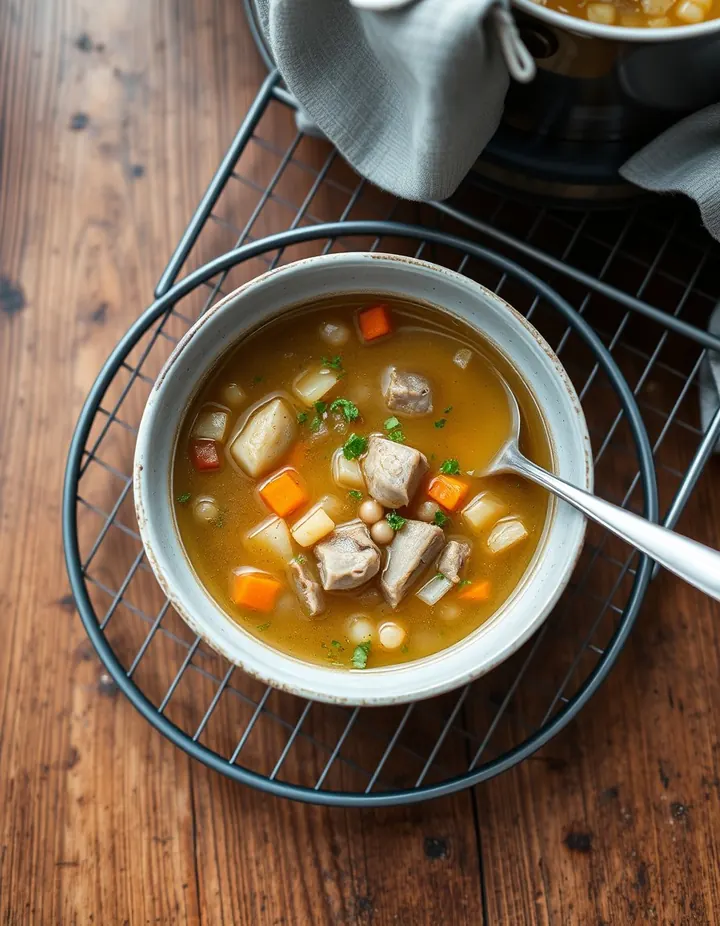 Illustration
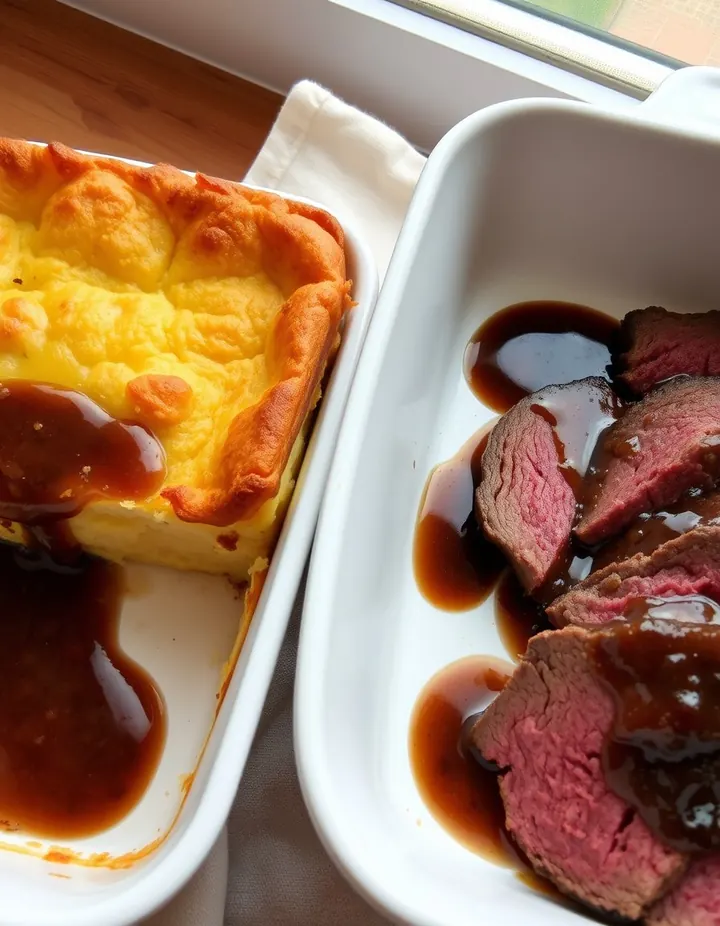 Illustration
The Sunday pairing: one pairing, the chemistry behind it, and how to cook it. No spam, unsubscribe anytime.
Prefer an account? Create a free account for sign-in; Pro adds the full results and chemistry.