Why it works: Cinnamon and nutmeg match in chemistry and in kitchens. They rank in the top 1% of all ingredient pairs, and cooks put them together in 11,917 recipes. Both carry estragole, which smells anise, licorice. The science ↓
Bakers' Raised Doughnuts
Ingredients
Directions
Prepare the dough
Warm a teacupful of lard in a pint of milk.
When nearly cool, add enough flour to make a thick batter and add a small cupful of yeast.
Beat it well and set it to rise.
When light, work in gradually and carefully three cupfuls of sugar, the whipped whites of six eggs, half a teaspoonful of soda dissolved in a spoonful of milk, one teaspoonful of salt, a teaspoonful of ground cinnamon and half of a nutmeg grated.
Then work in gradually enough flour to make it stiff enough to roll out.
Let it rise again and when very light roll it out in a sheet an inch thick.
Shape and fry
Cut into rounds.
Put into the centre of each round a large Sultana raisin, seeded, and mold into perfectly round balls. Flatten a little.
Let them stand a few minutes before boiling them.
Have plenty of lard in the pot and when it boils drop in the cakes.
When they are a light brown, take them out with a perforated skimmer.
Drain on soft white paper and roll, while warm, in fine powdered sugar.
Nutrition, whole recipe (rough)
What these numbers assume: 7 portions
| Ingredient | Portion assumed | kcal |
|---|---|---|
| Flour | 1 cup (125g) all-purpose | 455 |
| Milk | 1 cup (244ml) whole | 149 |
| Egg | 1 large egg (50g) | 78 |
| Sugar | 1 tbsp (12.5g) granulated | 49 |
| Nutmeg | 1 tsp ground (2.2g) | 12 |
| Cinnamon | 1 tsp ground (2.6g) | 6 |
| Salt | 1 tsp (6g) | 0 |
One typical portion per ingredient; the recipe's quantities are not counted. A rough guide only, not for medical or dietary planning.
Transcribed from a scanned cookbook and modernised for today's kitchens. Where the book gave no heat or time, or said "a moderate oven", the temperatures and times here may be modern equivalents rather than the book's own figures. See the original page.
Explore the science
The flavor team
The pairs that carry this dish. Each one is judged two ways: how much their aromas overlap, and how often cooks already put them together.
-
Cinnamon + nutmegtop 1% of all pairsSmell alikestrongCooked together11,917 recipes
Shared aroma: estragole (anise, licorice).
-
Milk + cinnamontop 10% of all pairsSmell alikemoderateCooked together12,655 recipes
Shared aroma: cuminaldehyde (Spicy, cumin).
-
Sugar + cinnamontop 10% of all pairsSmell alikelowCooked together30,779 recipes
Shared aroma: guaiacol (smoky, sweet).
-
Milk + nutmegtop 15% of all pairsSmell alikemoderateCooked together14,685 recipes
Shared aroma: eucalyptol (eucalyptus, herbal).
-
Egg + nutmegtop 17% of all pairsSmell alikelowCooked together24,744 recipes
Shared aroma: acetic acid (sour, vinegar).
Sugar and cinnamon barely smell alike, yet cooks put them together in 30,779 recipes: they work on texture and structure more than aroma.
Ranks compare each pair with 20,000 random ingredient pairs on CompKitchen. How we score pairs
What each ingredient does
- Yeast
- Makes the thick batter rise, giving the doughnuts a light, airy crumb.
- Eggs
- Whipped whites add lightness and structure to the enriched dough.
- Sugar
- Adds sweetness and helps the doughnuts brown in the hot lard.
- Lard (in the method)
- Enriches the dough with fat, tenderising its texture and adding richness.
- Soda
- Reacts with the dough to help it lift and stay tender.
The step that matters
Let the dough rise until very light before frying. Rolling and frying an under-proofed dough yields dense doughnuts, because the yeast gas that gives lightness has not yet built up enough structure.
“What each ingredient does” and “The step that matters” were written by Claude from this recipe’s own method and reviewed in samples by CompKitchen.
You might also like
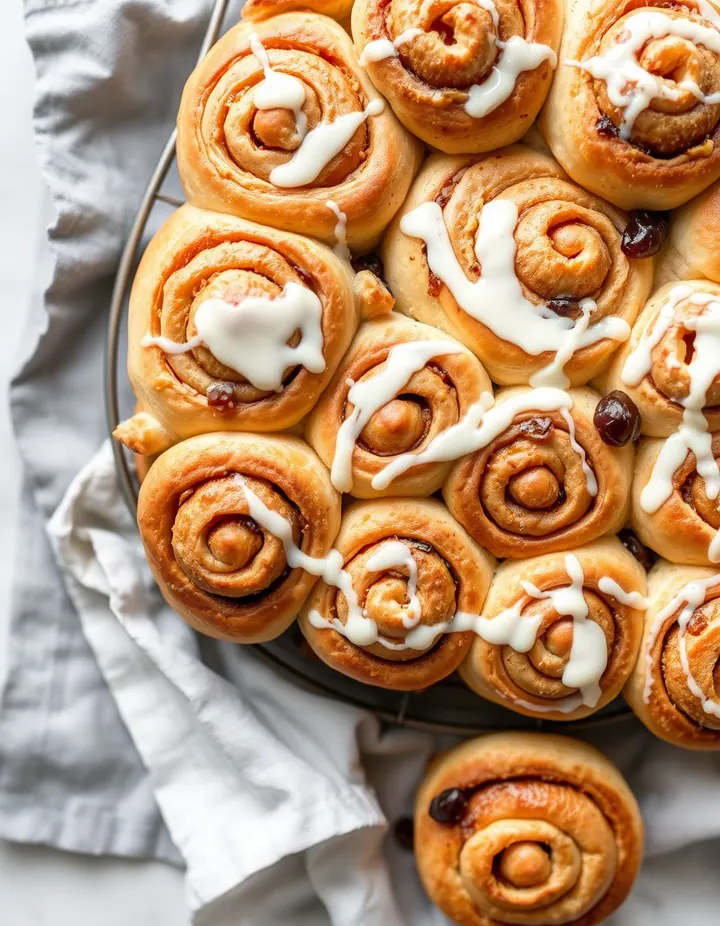 Cinnamon Rolls71 recipes
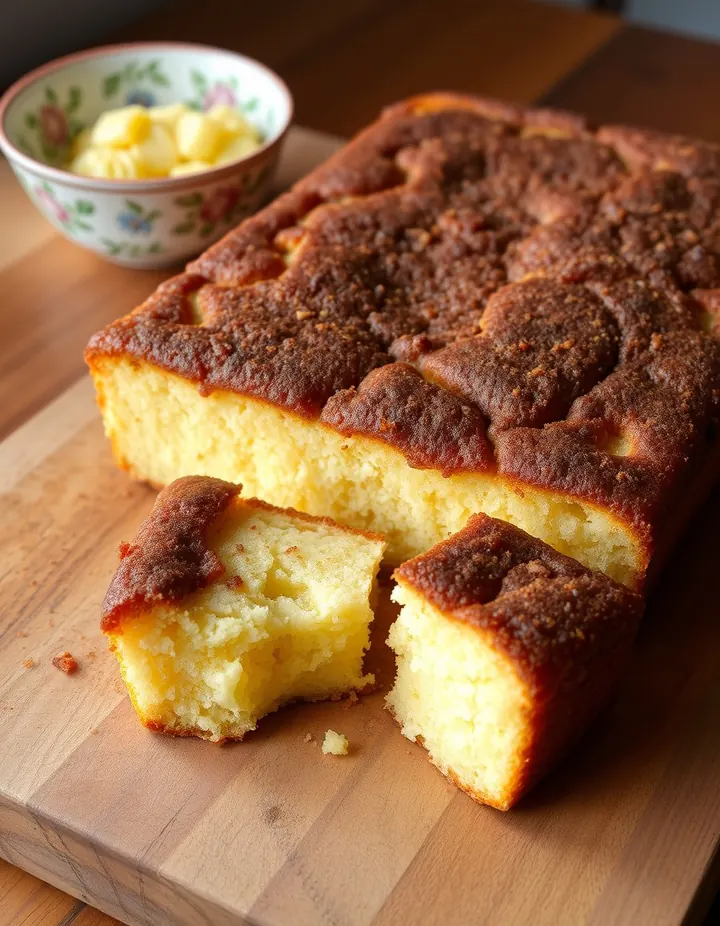 Cinnamon Cake42 recipes
 White Cake431 recipes
 Pound Cake373 recipes
The free Flavor Lab newsletter: one surprising pairing a week and the molecular reason it works, in 60 seconds. No spam, unsubscribe anytime.
Prefer an account? Create a free account to save pairings and unlock the full chemistry.