Why it works: Parsley and thyme match in chemistry and in kitchens. They rank in the top 1% of all ingredient pairs, and cooks put them together in 9,057 recipes. Both carry cuminaldehyde, which smells Spicy, cumin. The science ↓
Fish Stock
Ingredients
Directions
Make the stock
Put into the soup-pot a tablespoonful of butter or of drippings.
Add a tablespoonful each of chopped onion, carrot, and turnip.
Fry them without browning.
Add fish-bones, head, and trimmings, a stalk of celery, sprigs of parsley and of thyme, a bay-leaf, a tomato or a slice of lemon.
Cover with water, and simmer them for an hour or more.
Season with salt and pepper.
Strain.
Make the sauce and finish
Make a roux of one tablespoonful each of butter and flour.
Add a cupful of milk or cream.
Add this amount to each pint of the fish stock.
Nutrition, whole recipe (rough)
What these numbers assume: 8 portions
| Ingredient | Portion assumed | kcal |
|---|---|---|
| Milk | 1 cup (244ml) whole | 149 |
| Butter | 1 tbsp (14g) | 102 |
| Lemon | juice of 1 lemon (48ml) | 12 |
| Celery | 1 stalk (40g) | 6 |
| Black Pepper | 1 tsp ground (2.3g) | 6 |
| Thyme | 1 tsp dried (1.4g) | 4 |
| Parsley | 1 tbsp chopped fresh (3.8g) | 1 |
| Salt | 1 tsp (6g) | 0 |
One typical portion per ingredient; the recipe's quantities are not counted. A rough guide only, not for medical or dietary planning.
Transcribed from a scanned cookbook and modernised for today's kitchens. Where the book gave no heat or time, or said "a moderate oven", the temperatures and times here may be modern equivalents rather than the book's own figures. See the original page.
Explore the science
The flavor team
The pairs that carry this dish. Each one is judged two ways: how much their aromas overlap, and how often cooks already put them together.
-
Parsley + thymetop 1% of all pairsSmell alikestrongCooked together9,057 recipes
Shared aroma: cuminaldehyde (Spicy, cumin).
-
Lemon + parsleytop 1% of all pairsSmell alikestrongCooked together14,037 recipes
Shared aroma: beta-phellandrene (minty, terpene).
-
Lemon + thymetop 1% of all pairsSmell alikestrongCooked together3,973 recipes
Shared aroma: beta-phellandrene (minty, terpene).
-
Celery + parsleytop 1% of all pairsSmell alikestrongCooked together6,810 recipes
Shared aroma: 4'-methylacetophenone (bitter almond).
-
Parsley + peppertop 2% of all pairsSmell alikestrongCooked together34,122 recipes
Shared aroma: 4'-methylacetophenone (bitter almond).
Ranks compare each pair with 20,000 random ingredient pairs on CompKitchen. How we score pairs
What each ingredient does
- Butter
- Adds richness and flavour, and carries the vegetables while they fry gently.
- Flour (in the method)
- Thickens the roux, giving the sauce body when cooked with butter.
- Milk
- Adds creaminess and a mild sweetness that softens the fish flavour.
- Fish bones (in the method)
- Release gelatin and flavour into the water during simmering, giving the stock body.
The step that matters
Fry the vegetables without browning. Browning changes the flavour of the vegetables and turns the stock darker and more bitter. Keeping them pale gives a clean, delicate fish stock.
Swap the celery
How well each one fits the dish's main ingredients (butter, lemon, milk, parsley, thyme, pepper):
- Marjoramfits better
- Sagefits better
- Tarragonfits better
- Celerythe original
Fit is the average pairing score against butter, lemon, milk, parsley, thyme, pepper. Candidates are from the same food group and used in at least 100 recipes.
“What each ingredient does” and “The step that matters” were written by Claude from this recipe’s own method and reviewed in samples by CompKitchen.
You might also like
 Lemon Sauce236 recipes
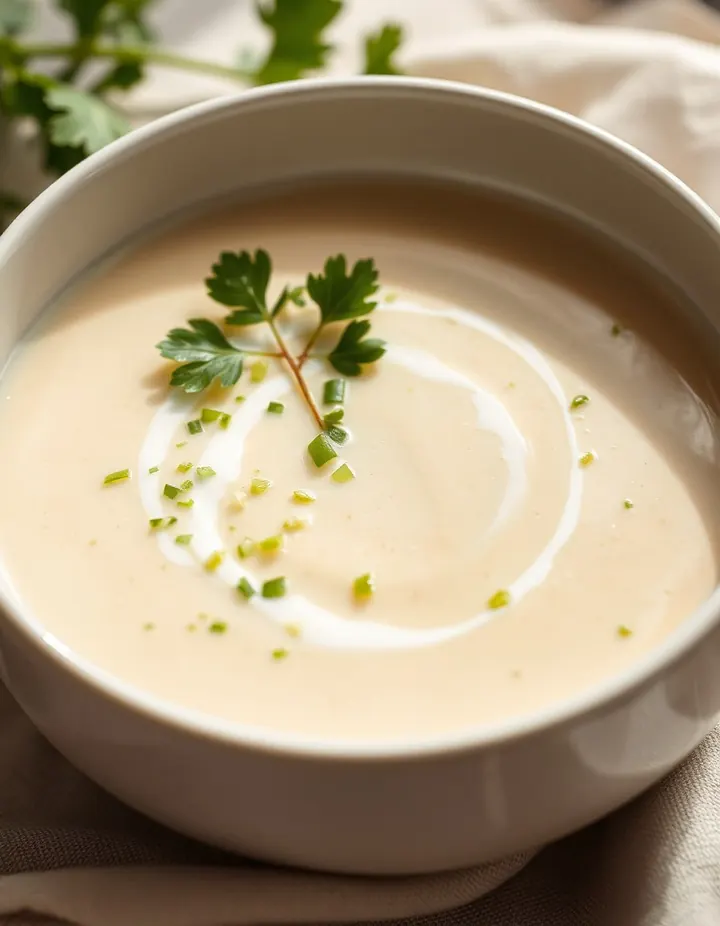 Cream of Celery Soup113 recipes
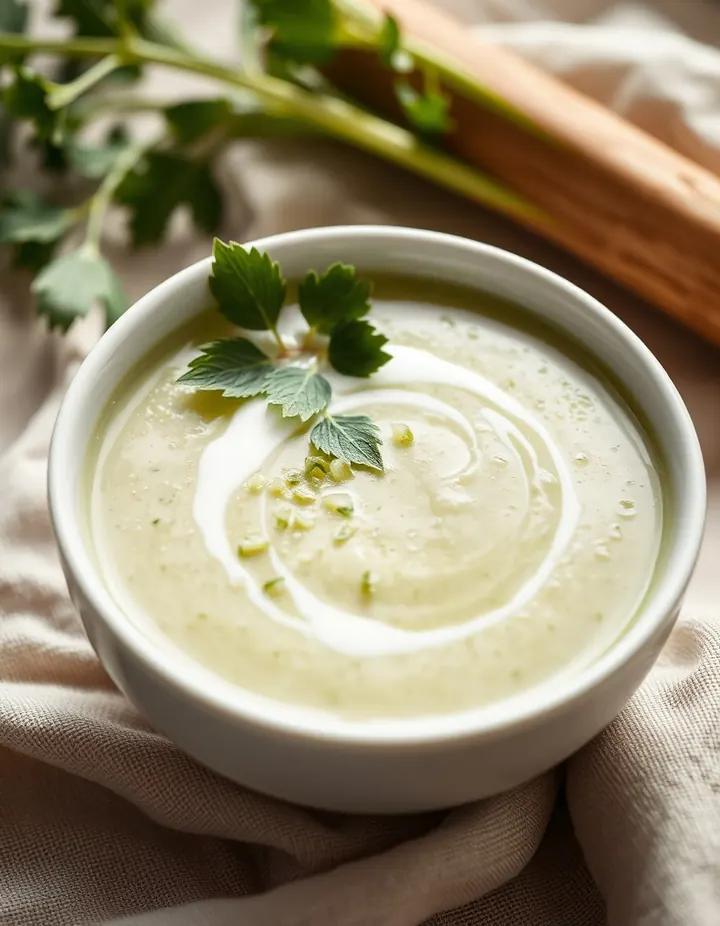 Celery Stew25 recipes
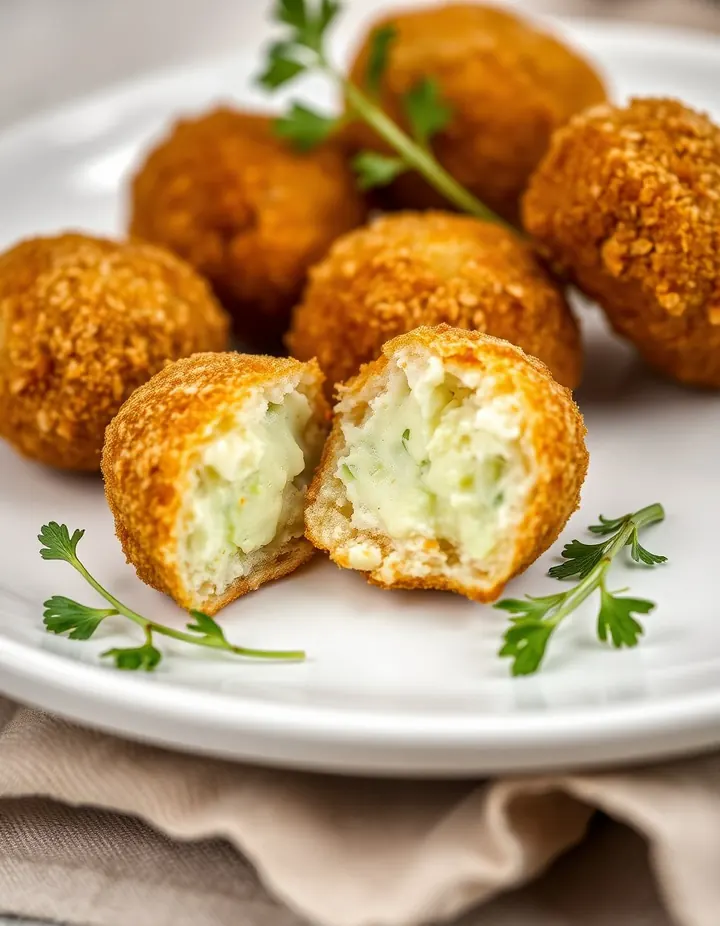 Celery Croquettes16 recipes
The free Flavor Lab newsletter: one surprising pairing a week and the molecular reason it works, in 60 seconds. No spam, unsubscribe anytime.
Prefer an account? Create a free account to save pairings and unlock the full chemistry.